


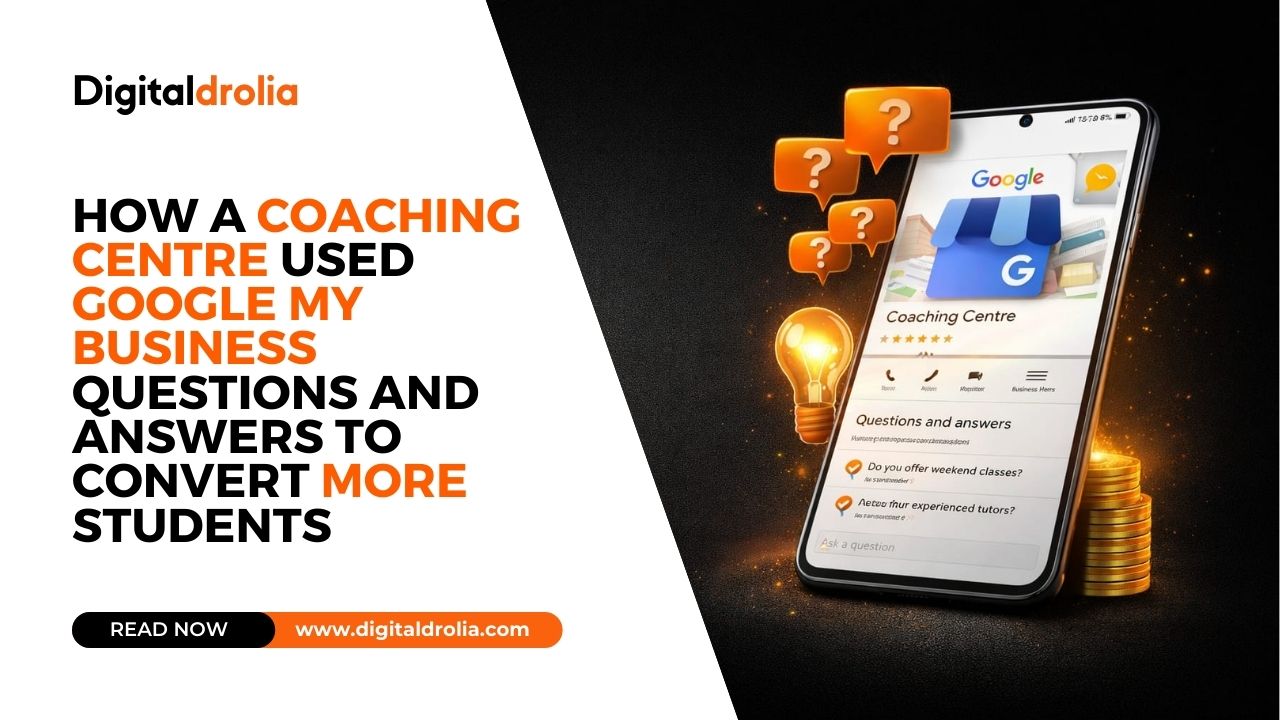
How a Coaching Centre Used Google My Business Questions and Answers to Convert More Students



Let me introduce you to Priya Sharma.
Priya runs a mid-sized coaching centre in Bhopal. She teaches Mathematics and Science to Class 9 to 12 students preparing for board exams and competitive entrance tests. She has been running her institute for seven years. Her results are genuinely good — students from her centre consistently score well, and she has a small but loyal base of families who refer her to others.
But for a long time, Priya had a problem she could not quite put her finger on.
Enquiries were coming in. Parents were finding her on Google Maps, looking at her profile, reading her reviews — and then not calling. Or calling once, asking a few basic questions, and then going quiet. She would follow up, but many of them had already enrolled somewhere else.
She assumed the problem was competition. There were other coaching centres in Bhopal with bigger buildings, more teachers, and larger advertising budgets. She figured parents were simply choosing them over her.
Then one evening, a parent who had enrolled her daughter explained something that changed Priya’s entire perspective.
“We almost did not call you,” the mother said. “We had so many questions — about the batch timings, about whether you take Class 11 Commerce students, about your fee structure, about whether you give any demo class. We could not find the answers anywhere on your Google listing. So we looked at three other places first. Two of them had answers to most of our questions right there on Google. We almost went with one of them. But my daughter insisted on trying you because her friend recommended you.”
Priya went home that evening and opened her Google Business Profile. She clicked on the Questions and Answers section for the first time in seven years of having the listing.
What she found stopped her cold.
There were eleven questions sitting there, asked by parents and prospective students over the past two years. Questions like “Do you offer demo classes?” and “What are the batch timings for Class 12?” and “Is there a separate batch for weak students?” and “Do you teach Physics for JEE?”
Not a single one had been answered. By anyone.
Some of them had been answered by random Google users — people who were not affiliated with her coaching centre at all, giving guesses or outdated information. One answer was flat-out wrong.
For two years, parents had been arriving at her Google listing with genuine, purchase-ready questions and finding either silence or incorrect information. And Priya had never known.
That evening, she spent forty-five minutes answering every question thoroughly. Over the following weeks, she proactively added questions and answers of her own. And within two months, her enquiry conversion rate — the percentage of people who viewed her listing and actually called — had improved measurably.
This is her story. And it is a blueprint that every coaching centre, every school, every local education business in India can follow.
What Is the Google My Business Questions and Answers Feature — and Why Does Nobody Use It?
Before we go deeper into what Priya did and how it worked, let us make sure we are on the same page about what this feature actually is.
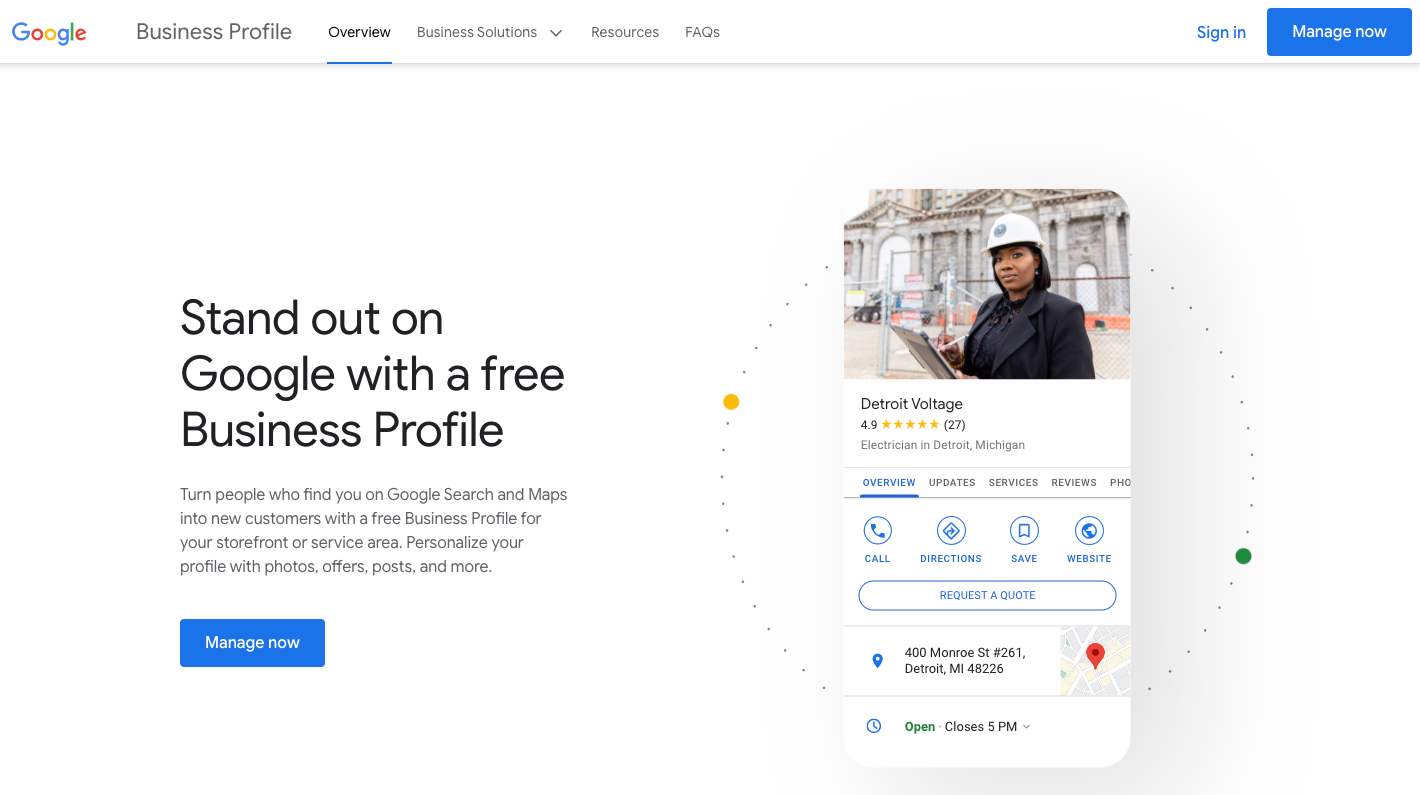
Google My Business — officially called Google Business Profile — has a section on every business listing called Questions and Answers. It is exactly what it sounds like: a public forum where anyone can post a question about your business, and anyone — including you, the business owner — can post an answer.
The questions and answers are visible to everyone who visits your listing. They appear in Google Search and Google Maps, right on your profile. A parent searching for coaching centres on a Sunday evening can read through the Q&A section and get detailed information about your institute without ever having to pick up the phone.
This is extraordinarily powerful. And almost nobody uses it properly.
Why? A few reasons.
Most business owners do not know the feature exists. Google My Business has many features — posts, photos, services, insights, messaging — and the Q&A section is not the most prominently advertised among them. Owners who set up their profile and move on without exploring it deeply simply never encounter it.
Among those who do know about it, most assume someone will ask a question if they have one, and they will answer it then. They treat it as a reactive feature rather than a proactive one. This means the section sits empty for months or years, offering nothing to the prospective customers who visit.
And among those who have actually received questions — like Priya — many are unaware because Google does not send prominent notifications by default. Questions accumulate unanswered while the owner is completely oblivious.
The result is that across thousands of local coaching centres, schools, and education businesses in India, one of the most conversion-powerful features on their most visible digital platform is sitting completely unused.
The Psychology of the Unanswered Question
To understand why this matters so much, you need to think about the mindset of a parent looking for a coaching centre.
This is not a casual purchase. Enrolling a child in a coaching centre involves a significant investment — both financial and in terms of the child’s time and academic future. Parents are careful. They research. They compare. They ask questions.
And here is the critical thing about questions: an unanswered question does not just leave the parent uninformed. It creates doubt. It creates a small but real anxiety. It makes them wonder whether the business is attentive, whether it communicates well, whether it is the kind of place that takes parent concerns seriously.
Think about how you feel when you send a message to a business and get no response. Or when you ask a shopkeeper a question and they shrug. The absence of an answer is itself a signal — and it is a negative one.
Now multiply that across eleven unanswered questions sitting publicly on your Google listing, visible to every parent who visits. Every one of those questions is a tiny doubt-seed planted in the mind of a prospective customer. Collectively, they create an impression of a business that does not engage, does not communicate, and perhaps does not care.
This is what was happening to Priya’s profile for two years without her knowing it. And this is what is happening to thousands of coaching centres across India right now.
What Priya Did — The Complete Strategy
When Priya decided to take her Q&A section seriously, she did not just answer the existing questions and call it done. She developed a complete, systematic approach that transformed the section from a neglected corner of her profile into one of her most effective conversion tools.
Here is exactly what she did, step by step.
Step One: Answering Every Existing Question Thoroughly

The first thing Priya did was go through all eleven existing questions and write detailed, genuinely helpful answers to each one.
She did not write one-line responses. She wrote answers the way a knowledgeable, caring person would respond to a parent asking face to face.
For the question “Do you offer demo classes?” — she did not just write “Yes.” She wrote: “Yes, we offer a free demo class for all new students. You can attend one full session in the relevant batch before making any enrollment decision. Please call us or WhatsApp us to schedule your demo — we run them on weekdays and Saturdays.”
For the question “What are batch timings for Class 12?” — she wrote out the full batch schedule, broken down by subject and day, with morning and evening options clearly listed.
For the question that had been answered incorrectly by a random user — she wrote a detailed, accurate correction and thanked the person for trying to help while clarifying the right information.
This thoroughness was not accidental. Priya understood that parents reading these answers were not just looking for information — they were evaluating her as an educator. The quality and care with which she answered questions said something about the quality and care with which she would teach their children.
Step Two: Proactively Adding the Most Common Questions Herself

Here is something most business owners do not know: you do not have to wait for someone to ask a question. As the business owner, you can post questions to your own listing and then answer them yourself.
This is not a trick or a loophole. It is an intentional feature that Google built into the platform specifically to allow businesses to provide useful information proactively.
Priya sat down and thought about every question she had ever been asked by a parent calling for the first time. She thought about the questions she answered on WhatsApp every week. She thought about the hesitations parents expressed before enrolling. She thought about the comparisons parents made between her centre and others.
From this exercise, she identified the fifteen most common and most important questions — the ones that, if answered well, would remove the biggest obstacles between a prospective parent and an enrollment decision.
She posted all fifteen questions herself and answered each one thoroughly.
Here is a sample of what she added:
Q: Is there a separate batch for students who are weak in Maths? A: Yes. We run foundation batches specifically designed for students who need to build their basics before tackling the full board syllabus. These batches are smaller in size — maximum 12 students — so each student gets more individual attention. We assess every new student before placing them in a batch to ensure they are in the right group for their current level.
Q: What happens if a student misses a class? A: Every class is covered in our notes, which are shared with students. For students who miss a class, we offer a makeup session on Saturdays. We also maintain a WhatsApp group for each batch where important points and assignments are shared after every class.
Q: Do you provide study material or does the student need to buy books separately? A: We provide comprehensive printed study material for all subjects, included in the course fee. Students do not need to purchase any additional books or guides for the topics covered in our syllabus.
Q: How many students are there in each batch? A: We deliberately keep our batches small — between 15 and 20 students maximum. This allows us to give individual attention to each student and track their progress closely. We do not run large classroom batches.
Q: Do you teach JEE and NEET preparation alongside board exams? A: Yes. We have an integrated program for students targeting JEE Main and NEET, which covers both the Class 11 and 12 board syllabus and the competitive exam syllabus simultaneously. This is a separate batch with a different schedule and fee structure — please call or WhatsApp us for details.
Notice what these answers are doing. They are not just providing information. They are selling. Each answer highlights something that makes Priya’s coaching centre look good — small batches, individual attention, included study material, makeup classes, integrated competitive prep. Every answer is an opportunity to differentiate and to address a concern before it becomes a reason to look elsewhere.
Step Three: Setting Up Notifications So No Question Goes Unanswered

After fixing her existing questions, Priya made sure she would never again miss a new one.
She turned on notifications in her Google Business Profile settings so that she receives an alert every time a new question is posted. She made it a habit to respond within 24 hours — ideally the same day.
This responsiveness itself became a signal to prospective parents. When a parent visits a listing and sees that questions are consistently answered quickly and thoroughly, they get a direct preview of what communication with that business will feel like. If the owner responds to a stranger’s question on a public forum within a few hours, chances are good they will respond to a parent’s WhatsApp message promptly too.
That impression — of a communicative, attentive, responsive business — is worth more than almost any advertisement.
Step Four: Treating New Questions as Market Research

Over the following months, something interesting happened. New questions started coming in from prospective parents — and those questions were ones Priya had not anticipated.
“Do you offer online classes for students who cannot come in person?”
“Is there a sibling discount if I enroll two children?”
“Do you teach in Hindi medium or English medium?”
“What is your result track record for Class 12 boards?”
Each of these questions was a window into what parents were thinking, what they were unsure about, what was making them hesitate. Priya started treating every new question not just as something to answer but as a piece of market research.
She answered each one thoroughly. But she also used them to improve other parts of her profile — adding her result data to her business description, clarifying her language of instruction, adding a mention of her sibling discount policy to her services section.
The Q&A section had become a two-way information channel — not just a place to push out information, but a place to listen to what her market was asking.
The Results That Followed
Within two months of implementing this strategy, Priya noticed a clear shift in the nature of the enquiries she was receiving.
Previously, most calls started with basic questions — “What subjects do you teach?” “What are the timings?” “How much is the fee?” These were useful questions, but they indicated that the parent was still in early research mode. They had not yet decided whether to consider Priya’s centre seriously.
After the Q&A overhaul, the nature of calls changed. Parents were now calling already knowing the basics — because they had read the answers on Google. The calls started from a more advanced position: “I read that you have a foundation batch for weak students — my son is struggling with Algebra specifically, can we discuss?” or “I saw you have an integrated JEE program, can you tell me more about the schedule?”
These were warmer leads. These were parents who had already done their research, already found satisfactory answers to their initial questions, and were now in the final decision-making stage. The conversion rate — the percentage of enquiries that became enrollments — improved noticeably.
Priya also noticed that the average time between first contact and enrollment decision shortened. Previously, parents would call, gather basic information, go away to think and compare, and come back — sometimes — days or weeks later. Now, having already processed the basic information through the Q&A section, they were moving faster. Some enrolled within a day or two of the first call.
The Q&A section was doing the early work of the sales process — filtering, informing, and pre-convincing — so that by the time a parent called, they were much closer to a yes.
Why This Works Even Better for Education Businesses
The Google My Business Q&A strategy works for any local business. But it works with particular power for coaching centres, schools, and education businesses, for a few specific reasons.
Education is a high-involvement purchase. Parents are not choosing between two cups of tea. They are choosing where to invest their child’s academic future. They research more, ask more questions, compare more carefully. The more information you can provide upfront — in a place they are already looking — the better positioned you are.
Parents have highly specific and predictable questions. Unlike many businesses where customer questions are varied and unpredictable, coaching centre questions follow very consistent patterns. Batch timings, fee structure, batch size, teacher qualifications, result history, demo classes, study material — these questions come up again and again. Once you have answered them thoroughly in your Q&A section, you are serving every future parent who has those same questions without any additional effort.
Trust is an especially high barrier in education. Parents are handing over their child’s time and their family’s money. They need to feel confident in their choice. A Q&A section that is detailed, accurate, and well-maintained communicates professionalism and trustworthiness in a way that a plain listing cannot.
Competition is intense. In most Indian cities, coaching centres are competing in a crowded market. Parents have many options. The centres that make it easiest for parents to get the information they need — without friction, without having to call and wait and follow up — have a significant advantage.
How to Implement This Strategy for Your Coaching Centre
If you run a coaching centre and you want to replicate what Priya did, here is your complete action plan.
This week: Open your Google Business Profile, navigate to the Q&A section, and read every question that has been posted. Note which ones are unanswered and which ones have been answered incorrectly by others. Answer every unanswered question thoroughly. Correct any wrong answers.
Turn on notifications: Go into your Google Business Profile settings and make sure you are receiving email or app notifications for new questions. This ensures no future question goes unanswered.
Identify your top twenty questions: Spend thirty minutes writing down every question you have ever been asked by a parent — in person, by phone, by WhatsApp. Rank them by how often they come up and how much they influence the enrollment decision. These are your priority Q&A topics.
Post and answer your top twenty questions yourself: Using the Google Business Profile app or dashboard, post each question as if a parent were asking it, and answer it as thoroughly and helpfully as you can. Write answers that not only inform but also differentiate — use each answer as an opportunity to highlight what makes your centre good.
Review and update quarterly: Every three months, review your Q&A section. Are there new questions you should add? Have any answers become outdated — new fee structure, new batches, new policies? Keep the section current.
Monitor and respond promptly: When new questions come in, answer them within 24 hours. This responsiveness signals attentiveness and care to every parent who sees it.
The Bigger Lesson — Your Google Listing Is a Sales Conversation Happening Without You
Here is the thing that Priya’s experience really illustrates, and it is something every local business owner needs to understand deeply.
Your Google Business Profile is not a static sign. It is not a yellow pages listing. It is a dynamic, interactive, constantly-visited platform where potential customers are actively engaging with information about your business right now — while you are teaching a class, eating dinner, sleeping.
Every part of that profile is a conversation that is happening without you in the room. Your photos are saying something about your space. Your reviews are telling a story about your customer experiences. Your hours are telling people whether they can visit today. And your Q&A section is either answering the questions that stand between a prospective customer and an enrollment decision — or it is leaving those questions hanging in silence.
The businesses that understand this — that treat their Google profile as a living, working, always-on sales and trust-building tool — are the ones that consistently outperform their competitors, even when those competitors have bigger buildings, louder advertising, and larger teams.
Priya did not build a new classroom. She did not hire more teachers. She did not increase her advertising budget. She spent a few hours making sure that the parents who were already looking at her Google listing got the information they needed to say yes.
That is it. That is the whole story.
And the results were real, measurable, and lasting.
Final Thought — The Questions Are Already There. Go Answer Them.

If you have a Google Business Profile for your coaching centre — and if you have had it for more than a few months — there is a very good chance that questions are already sitting in your Q&A section right now. Unanswered. Waiting.
Parents who were considering your centre asked those questions. Some of them waited for an answer and never got one. Some of them got an answer from a random stranger who may or may not have known what they were talking about. Some of them moved on to a competitor whose listing was more informative.
Go look. Right now. Open Google Maps, search your coaching centre, scroll to the Questions and Answers section.
What you find there might surprise you. And what you do about it could change your enrollment numbers more than any pamphlet, banner ad, or social media campaign ever has.
The conversation is already happening. Make sure your voice is in it.
Written by Digital Drolia — helping local education businesses and coaching centres grow smarter through practical, no-budget digital strategies. Found this useful? Share it with a coaching centre owner who is still leaving their Q&A section empty.