


How Google Ads Gives Small Businesses the Ability to Compete With Industry Giants

Let me tell you about two furniture stores in Bengaluru.
The first is a large national chain. You know the kind — multiple floors, hundreds of products on display, a marketing department with a dedicated team, a budget that runs into crores every year. They advertise on television. They have hoardings on major roads across the city. They run full-page newspaper ads during festive seasons. Their brand name is familiar to almost every household in India. When people think of buying furniture, this chain’s name comes to mind automatically, almost reflexively.
The second is a small handcrafted furniture workshop run by a man named Suresh in a relatively quiet part of Whitefield. Suresh has seven employees, a workshop attached to his showroom, and a genuine talent for creating solid wood furniture that lasts for decades. His prices are competitive. His quality is exceptional. His existing customers are fiercely loyal — many of them have bought from him two or three times and referred friends and family.
But for years, Suresh had a problem that loyalty alone could not solve.
Nobody outside his existing network knew he existed.
The large chain spent crores to make sure their name was everywhere. Suresh spent nothing on advertising because he did not know where to begin — and because every traditional advertising channel he looked into required a budget he did not have and offered reach that was far broader than he needed.
He did not need to reach all of Bengaluru. He needed to reach the people in Bengaluru who were actively looking to buy handcrafted solid wood furniture right now.
Traditional advertising had no way to make that distinction. It was all of Bengaluru or nobody.
Then Suresh started running Google Ads.
Within six months, he was appearing at the top of search results when people in Bengaluru typed “solid wood furniture,” “handcrafted dining table Bengaluru,” “custom furniture workshop near me.” People who were specifically, actively looking for what he made were finding him — not because he had a crore-rupee marketing budget, but because he had a well-structured Google Ads campaign targeting exactly the right searches at exactly the right moment.
His enquiries tripled. His conversion rate was high because the people finding him were pre-qualified — they had searched for exactly what he offered. And his cost per acquired customer was substantially lower than any traditional advertising channel he had investigated.
The large furniture chain still has its television ads and its hoardings. Suresh is not competing with them for brand awareness — that battle would be impossible and irrelevant. He is competing with them for the customer who is sitting at home on a Sunday evening, phone in hand, searching for furniture to buy. And in that specific, decisive moment — the moment that actually results in a sale — Suresh can appear right alongside the national chain, sometimes above them, at a fraction of their advertising cost.
This is the story of what Google Ads makes possible for small businesses. And it is one of the most genuinely remarkable shifts in the competitive landscape of business that has happened in a generation.
The Traditional Advertising Problem — Why Size Always Won Before

To appreciate what Google Ads changes, you need to understand how business competition worked before it existed — and why small businesses were structurally disadvantaged in a way that had nothing to do with the quality of their product or service.
Traditional advertising — television, radio, newspaper, outdoor hoardings, direct mail — operated on a simple and brutal principle: reach is purchased. The more you spend, the more people you reach. The more people you reach, the more familiar your brand becomes. The more familiar your brand becomes, the more people default to choosing it when they need what you sell.
This created a self-reinforcing cycle that favoured incumbents and large businesses almost automatically. The company that could spend the most on advertising built the most recognition, which generated the most sales, which generated the most revenue to spend on more advertising.
Small businesses were not powerless in this system — they could advertise locally, build community relationships, rely on word of mouth. But they were competing against brands whose recognition advantages were so deeply embedded in consumer consciousness that overcoming them through product quality and local reputation alone was a slow, uncertain, decades-long process.
More fundamentally, traditional advertising was inefficient in a way that disproportionately hurt small businesses. When a large chain ran a television ad, they were paying to reach ten million people — knowing that perhaps two percent of them might be in the market for their product right now, and accepting that wasted ninety-eight percent as a cost of building mass awareness. They could afford this inefficiency because their volume justified it.
When a small business ran a local newspaper ad, they faced the same structural inefficiency at a smaller scale — paying to reach everyone who read the paper, hoping a small fraction would be relevant. But at smaller scale, the economics were often impossible to make work. The minimum viable reach of most traditional advertising channels exceeded what a small business needed. You could not advertise to only the people on your street who were thinking about buying furniture today. You had to advertise to the whole city and accept the waste.
Google Ads fundamentally dismantled this structure. Not gradually, not partially — but completely and at the foundational level.
The Auction — Where the Playing Field Flattens

The mechanism that makes Google Ads uniquely accessible to small businesses is the auction system — and understanding it reveals why even a business with a tiny budget can appear alongside companies spending thousands of times more.
When someone types a search query into Google, an auction happens in milliseconds. Every advertiser who has bid on keywords related to that search query enters the auction. Google evaluates each advertiser’s bid — the maximum amount they are willing to pay per click — alongside their Quality Score — a measure of how relevant and useful their ad is to the person searching.
The ad’s position in the results is determined not by bid alone but by the combination of bid and Quality Score. This combination produces what Google calls Ad Rank — and the advertiser with the highest Ad Rank wins the best position.
Here is why this matters profoundly for small businesses.
Quality Score is determined by three factors: the expected click-through rate of the ad, the relevance of the ad to the search query, and the quality of the landing page the ad leads to. None of these factors have anything to do with the size of the advertiser. A small business with a highly relevant, well-written ad pointing to a focused landing page can achieve a higher Quality Score than a large corporation with a generic ad pointing to a cluttered homepage.
And a higher Quality Score means that a small business can win a higher ad position than a large competitor who is bidding more money but achieving lower relevance.
In practice, this means that Suresh’s furniture workshop — with a specific ad targeting “handcrafted solid wood furniture Bengaluru” pointing to a landing page that speaks directly to that search — can achieve a higher Ad Rank for that specific search than the large furniture chain whose generic ad and generic landing page score lower on relevance.
The large chain spends more. Suresh wins the position.
This is not a loophole or an anomaly. It is the deliberate design of the system. Google has every incentive to show the most relevant result to each searcher, because Google’s revenue depends on people trusting and using Google Search. Showing a less relevant ad from a higher bidder would degrade the user experience and, over time, reduce Google’s own value.
Quality Score is Google’s mechanism for ensuring that relevance competes alongside spend — and this mechanism is the foundation of the small business opportunity that Google Ads creates.
The Precision Advantage — Reaching the Right Person, Not Every Person
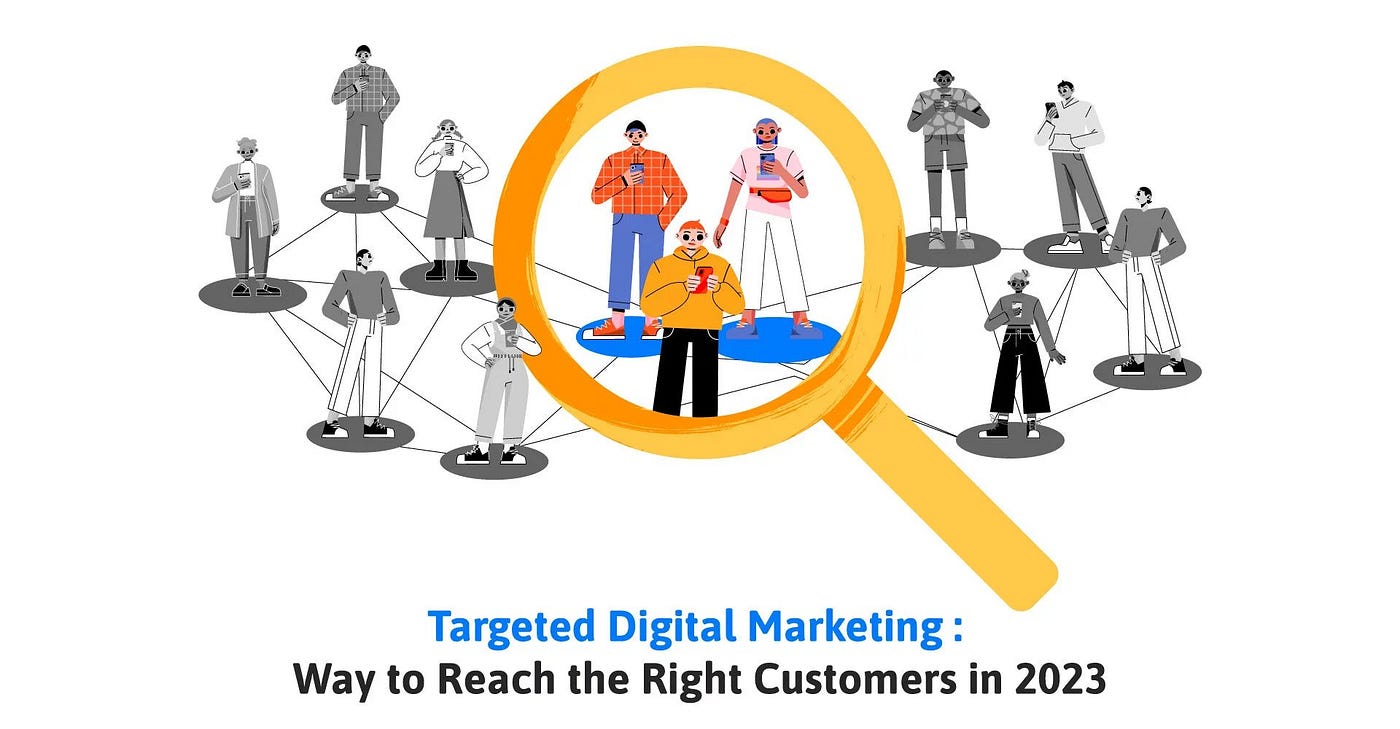

The second major structural advantage that Google Ads gives small businesses is precision — the ability to reach specifically the people who are most likely to become customers, without paying for anyone else.
This precision operates at several levels.
Keyword precision means your ad only appears when someone searches for terms directly related to what you sell. Suresh is not advertising to everyone in Bengaluru who might someday want furniture. He is advertising specifically to people who are typing furniture-related search queries right now — people who have already self-selected as being in the market.
Geographic precision means you can limit your ads to people in a specific city, neighbourhood, or radius around your location. A local bakery does not need to advertise to the whole country. They can run ads exclusively to people within five kilometres of their shop. A regional services business can target specific districts or pin codes. This geographic precision means your budget reaches the geographic audience that can actually become your customer — not a broader audience that is geographically irrelevant.
Time-based precision means you can choose the hours and days when your ads run. A restaurant that is busiest for lunch and dinner can run ads specifically during the hours when people are making dining decisions — not at 4 AM when the only people searching are on the other side of the world. A business that only takes calls during working hours can run ads only when their team is available to answer.
Device precision means you can choose whether your ads appear primarily on mobile phones, desktop computers, or tablets — and adjust your bids based on which devices your customers use most. A local service business whose customers almost always call from mobile phones can prioritise mobile visibility and ensure their call extension is prominent.
Audience precision allows you to layer demographic and behavioural targeting on top of keyword targeting — reaching people who searched for your keywords and who also match specific audience characteristics.
Each layer of precision means your budget goes further — reaching more of the right people and less of the wrong ones. For a small business with a limited budget, this efficiency is not just convenient. It is the difference between advertising that is financially viable and advertising that is not.
The large chain does not need this precision. They can afford to reach everyone and accept the waste. The small business cannot afford waste — and Google Ads gives them a system designed specifically to minimise it.
Budget Control — Competing Without Financial Risk
One of the most significant barriers that traditionally prevented small businesses from advertising was the financial risk of the commitment required.
Running a television commercial required producing the ad — typically tens of lakhs — and then buying the airtime, committing to a schedule months in advance, and paying regardless of whether it worked. A newspaper ad required paying for the space whether the phone rang or not. A hoarding required months of rental commitment with no performance guarantee.
For a small business with limited cash flow, these upfront commitments and their associated risk were often prohibitive. The potential reward of advertising was real, but the financial risk of a campaign that did not work could be existential.
Google Ads changed the financial model of advertising for small businesses in three fundamental ways.
Pay per click, not per impression. You only pay when someone actually clicks on your ad — not when they see it. If your ad appears a thousand times and only fifty people click, you pay for fifty clicks. The nine hundred and fifty who saw but did not click cost you nothing. For small businesses, this means that advertising exposure itself carries no financial risk — only actual engagement does.
Complete budget control with no minimum. You can start with a daily budget of five hundred rupees. You can pause your campaign the moment you choose and stop all spending instantly. You can increase your budget when cash flow is strong and reduce it when it is tight. There is no contractual minimum spend, no commitment period, no penalty for pausing. The financial flexibility this offers to small businesses is extraordinary — advertising that scales with your business rather than demanding a commitment your business may not be able to sustain.
Real-time performance data. Because Google Ads tracks every click, every conversion, and every rupee spent in real time, you can see almost immediately whether your investment is generating returns. If a campaign is not performing, you can adjust or pause within hours — not weeks or months after a newspaper has already run and cannot be recalled.
This combination — pay per performance, complete budget flexibility, immediate measurability — fundamentally changes the risk profile of advertising for small businesses. It does not eliminate risk entirely. But it reduces it to a level that is manageable for businesses operating with the kind of careful cash flow management that small business survival requires.
The Long Tail — Where Small Businesses Often Beat Large Ones
There is a concept in search marketing called the long tail — the vast number of very specific, lower-volume search queries that collectively account for the majority of all searches on Google.
At one end of the search spectrum are high-volume, generic searches: “furniture,” “shoes,” “insurance.” These searches are dominated by large brands with massive budgets that can afford the fierce competition for these terms. A small business entering this competition is outgunned — the bids are expensive, the competition is intense, and the generic nature of the search means conversion rates are often lower.
At the other end are long-tail searches — specific, detailed, often locally-modified searches: “handcrafted solid wood dining table Bengaluru,” “custom teak bookshelf under fifty thousand,” “artisan furniture workshop near Whitefield.” These searches have lower volume individually, but they have dramatically higher purchase intent. Someone searching this specifically knows exactly what they want. They are closer to a purchase decision. They are easier to convert.
And crucially — they are often less competitive. The large furniture chain may not bother bidding on “handcrafted solid wood dining table Bengaluru” because the volume is too small to justify attention in their massive campaigns. But for Suresh, whose entire business is handcrafted solid wood furniture in Bengaluru — that search is the perfect customer at the perfect moment.
Long-tail keywords are where small businesses can achieve dominance that would be impossible in the high-volume, high-competition territory that large brands occupy. The specificity that makes these keywords lower volume is the same specificity that makes them highly relevant to businesses whose offering is equally specific.
A small business that builds its Google Ads strategy around the long tail — hundreds of specific, relevant, lower-competition searches that collectively represent its ideal customers — can achieve extraordinary efficiency and results without ever competing directly with the big budgets at the head of the tail.
This is not a workaround or a compromise. It is a genuine strategic advantage. The customer searching with that level of specificity is often the best customer — already informed, already decided on the category, already clear on what they want, and looking specifically for someone who offers it.
Quality Score as the Great Equaliser — A Deeper Look

We touched on Quality Score earlier as the mechanism that allows small businesses to compete on position with larger advertisers. It is worth going deeper on this because the implications are genuinely significant.
Quality Score is calculated for each keyword and each ad combination. It reflects three things: how likely the ad is to be clicked when shown (expected click-through rate), how closely the ad relates to the user’s search query (ad relevance), and how useful and relevant the landing page is after the click (landing page experience).
Large companies often have lower Quality Scores than small ones — not because they are bad at advertising, but because of scale and structure. A national furniture chain with hundreds of products and dozens of store locations is running campaigns that necessarily involve some degree of generality. Their ads often reference the broad brand rather than the specific product the searcher wants. Their landing pages often lead to category pages or homepages rather than product-specific pages.
A small business that has built its campaigns with surgical specificity — matching each keyword group to a specific, highly relevant ad that leads to a specific, highly relevant landing page — achieves higher Quality Scores almost by default, simply because specificity and relevance are easier to achieve at small scale than at large scale.
This translates directly into cost advantage. An advertiser with a Quality Score of eight pays less per click to achieve the same position as an advertiser with a Quality Score of five. This is not a small difference. The cost differential can be substantial — meaning a small business with a high Quality Score can appear in the same position as a large competitor while paying significantly less per click.
Over thousands of clicks and across months of campaigns, this Quality Score advantage compounds into a meaningful cost-of-customer-acquisition advantage. The small business acquires customers at a lower cost than the large competitor — not because they have more money, but because they have built more relevance.
Relevance, in the Google Ads ecosystem, is a kind of capital. And it is capital that small businesses — with their specificity of offering, their depth of knowledge about their specific customer, and their ability to build tightly focused campaigns — can accumulate as effectively as any large enterprise.
The Remarketing Advantage — Small Budgets, Big Impact
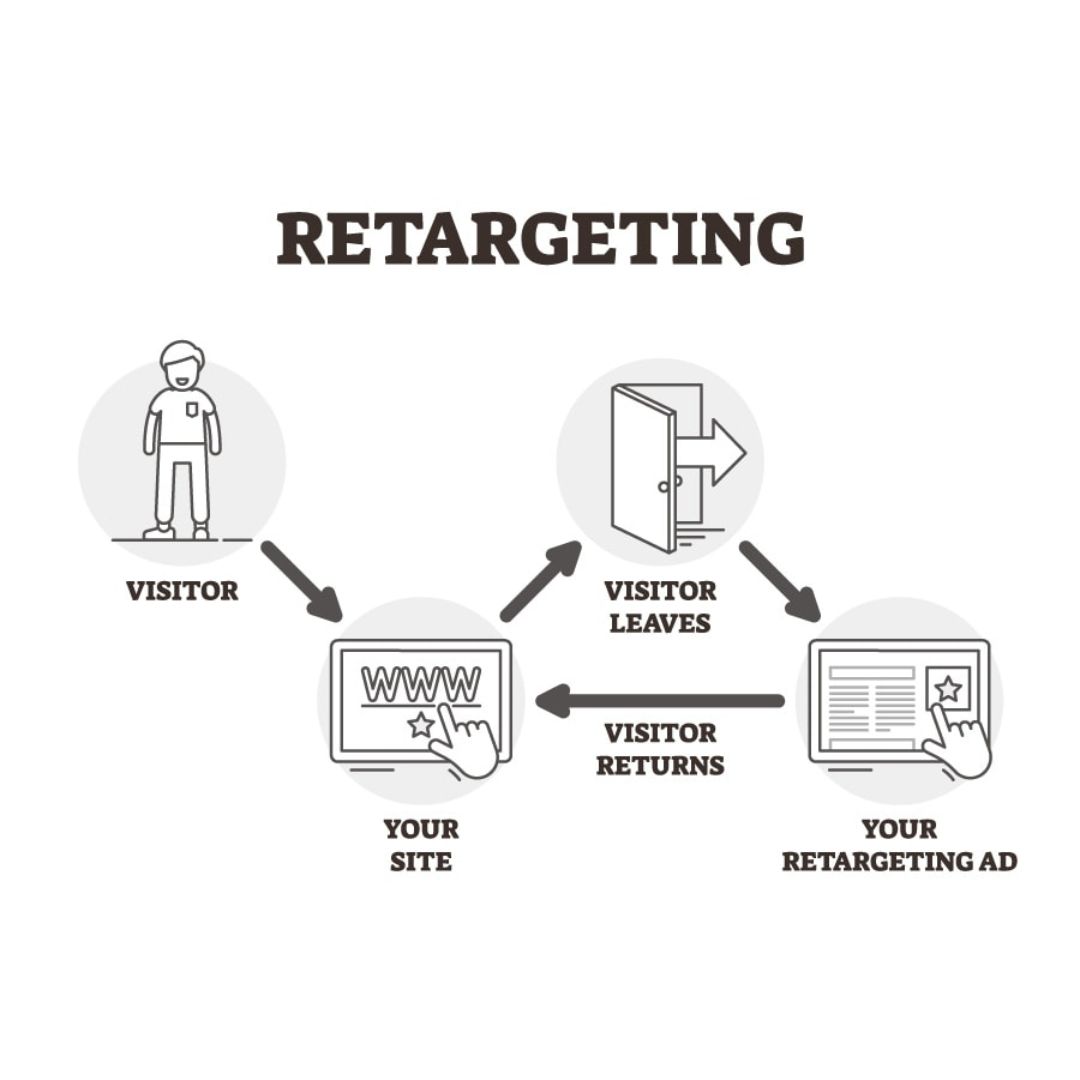
Remarketing — the ability to show ads specifically to people who have previously visited your website — is another area where Google Ads gives small businesses a disproportionately powerful tool.
A visitor who has been to your website is not a cold prospect. They found you somehow, they were interested enough to click through, they spent time on your site looking at your product or service. Something drew them there. And something prevented them from taking the next step — booking an appointment, making a purchase, submitting an enquiry.
Maybe they got distracted. Maybe they wanted to compare options first. Maybe the timing was not right. Maybe they had a question that was not answered on the page.
Remarketing allows you to show targeted ads specifically to these people — people who already know your business and have already demonstrated interest — as they continue browsing the internet. These ads remind them of your business, reinforce the message, and often include a specific incentive to return and complete the action they did not complete on their first visit.
The conversion rate of remarketing audiences is dramatically higher than cold audiences — because the relationship has already been established. The question is not whether to trust this business but whether to come back and take action.
For a small business, remarketing is extraordinarily efficient because the audience is small but highly qualified. Rather than spending budget reaching thousands of strangers who may or may not be interested, remarketing spends budget reaching a smaller group of people who have already raised their hand.
A small business with five hundred website visitors per month has a remarketing audience of five hundred — small in absolute terms but potentially representing a significant portion of their near-term customer acquisition opportunity. Running remarketing ads to that audience can be done for modest daily budgets and consistently produces strong returns relative to cold audience campaigns.
This efficiency — reaching the most qualified possible audience at the most efficient possible cost — is another expression of the precision advantage that makes Google Ads so accessible and so effective for small businesses.
Real Businesses, Real Stories — The Pattern Across Industries
Suresh’s furniture workshop is not an isolated example. The pattern of small businesses using Google Ads to compete effectively with larger players plays out across every industry and every city in India.
A single-dentist clinic in Coimbatore running Google Ads for “dentist near me” and “teeth whitening Coimbatore” — appearing alongside corporate dental chains with dozens of locations, competing effectively because their ads are specific, their landing page is focused, and their response time to enquiries is faster than the larger organisations.
A boutique wedding photographer in Jaipur bidding on “wedding photographer Jaipur” and “pre-wedding shoot Rajasthan” — appearing in results alongside established studios with larger portfolios, winning bookings because their ads speak directly to the specific aesthetic couples searching for that category care about.
A home-based tiffin service in Thane running Google Ads for “tiffin service near me” and “homemade food delivery Thane” — capturing a steady stream of new customers who want home-cooked food rather than restaurant delivery, competing not with the large food delivery platforms but specifically for the customer who wants what only a home-based service can offer.
A small tutoring centre in Chandigarh bidding on “JEE coaching near me” and “Class 12 Maths tuition Chandigarh” — finding students whose parents are actively searching for coaching help, competing with larger institutes on the strength of their ads’ specificity and their landing page’s clarity about batch sizes, teaching methodology, and results.
In every case, the pattern is similar. The small business is not trying to win the brand awareness battle — that is the wrong fight. They are trying to win the moment of active search — the moment when a specific customer is looking for a specific thing — by being the most relevant, most credible, most accessible answer to that specific search.
Google Ads is the system that makes winning that moment possible, regardless of the size of the advertising budget behind it.
What Small Businesses Need to Get Right — The Three Non-Negotiables
The opportunity that Google Ads creates for small businesses is real. But it is not automatic. Small businesses that approach Google Ads without understanding the key principles consistently fail to realise the opportunity — and sometimes waste meaningful budget in the process.
Three things must be in place for a small business Google Ads campaign to work.
Specificity in targeting
Generic keywords waste budget. “Furniture” as a keyword will expose a small furniture workshop to competition from every national chain, every online marketplace, every tangentially related search. The cost is high, the competition is brutal, and the conversion rate is low because the search intent is too broad.
Specific, long-tail keywords that exactly match what the business offers and what its ideal customer is searching for — these are the foundation of effective small business Google Ads. The specificity that limits volume is the same specificity that concentrates quality. Target the searches that only your ideal customer would make.
Relevance between ad and landing page
The chain that connects keyword to ad to landing page must be unbroken. The person searching for “handcrafted solid wood furniture Bengaluru” should see an ad that speaks specifically to handcrafted solid wood furniture in Bengaluru — not a generic furniture ad. And when they click, they should land on a page that immediately confirms they are in exactly the right place — showing the products they searched for, speaking to the quality and craftsmanship that the search implied they cared about, and making it easy to take the next step.
Every break in this chain — a generic ad for a specific search, a homepage that does not immediately address what the ad promised — reduces Quality Score, reduces conversion rate, and increases cost per acquisition. Relevance throughout the chain is not optional. It is the mechanism through which small businesses extract disproportionate value from modest budgets.
Conversion tracking and continuous optimisation
Without knowing which keywords generate enquiries, which ads generate clicks, and which landing page versions convert visitors into customers — a Google Ads campaign cannot improve. It runs, it spends, and it produces results that cannot be understood or refined.
Setting up conversion tracking — whether through phone call tracking, form submission tracking, or purchase tracking for e-commerce — is the infrastructure that makes a Google Ads campaign a learning system rather than a spending system. Every week of data is an opportunity to improve: to identify underperforming keywords and pause them, to identify high-performing ad variations and scale them, to identify landing page weaknesses and address them.
Small businesses cannot afford to waste budget on non-learnings. Conversion tracking turns every rupee spent into data that makes future spending more efficient.
The Mindset Shift — From Competing for Awareness to Competing for Intent
The most important thing a small business owner needs to understand about using Google Ads to compete with large companies is this: you are not competing for the same thing.
Large companies compete for awareness — for the front-of-mind presence that means people think of them first when a need arises. This battle requires massive, sustained investment over years and decades. It is a battle that cannot be won with a modest budget.
But awareness is not where purchase decisions are ultimately made. Purchase decisions are made in the moment of active search — when a person with a felt need picks up their phone and types a query. In that moment, all the awareness advantage in the world is challenged by a more relevant, more specific, more immediately useful result.
This is the competition that small businesses can win. Not the awareness battle — the intent battle. The competition to be the most relevant answer to the specific search of the most qualified customer at the exact moment they are searching.
Google Ads is the system that makes this competition possible. And in this competition — unlike in the awareness competition — budget size is less important than relevance quality. The small business with the more specific keyword, the more relevant ad, and the more focused landing page competes on equal or superior footing with the large company that has spent ten times as much building brand recognition.
Suresh is not trying to become as well-known as the national furniture chain. He is trying to be the most relevant result when someone in Bengaluru searches for handcrafted solid wood furniture. That is a winnable competition. And Google Ads gives him the tools to win it.
The Democratic Revolution in Advertising — What This Means for the Future
Pull back far enough and what Google Ads has done for small businesses is genuinely historic.
For most of commercial history, the ability to reach new customers efficiently was proportional to the money available to spend on advertising. Large businesses reached many people. Small businesses reached few. The playing field was tilted by capital.
Google Ads did not level this playing field completely — large budgets still matter, and large companies still have advantages in brand recognition that do not disappear because of any advertising platform. But it created, for the first time, a mechanism by which the relevance of what you offer — the quality of the match between your specific product and a specific customer’s specific need at a specific moment — competes alongside the size of your budget in determining whether you reach that customer.
This is a democratic revolution in the economics of advertising. Not perfect democracy — money still matters. But a meaningful redistribution of competitive power toward quality, relevance, and specificity, and away from pure budget dominance.
For small businesses in India — for the millions of Sureshs in millions of industries across thousands of cities, offering genuine quality and real value but lacking the capital to compete in traditional advertising markets — this redistribution represents an opportunity that simply did not exist a generation ago.
The opportunity is available. The tools are accessible. The knowledge to use them effectively is learnable.
The only question is whether the small businesses that stand to benefit most from this democratic revolution will take the time to understand and seize it — before the window narrows as more competitors wake up to the same opportunity.
Closing Thought — The Giant Does Not Always Win Anymore
Suresh’s furniture workshop is not going to become a national chain. That is not his goal and not the point of this story.
The point is that Suresh no longer has to watch customers walk past his workshop to buy furniture from a chain simply because the chain’s name is more familiar — not because the chain’s furniture is better, not because the chain’s price is fairer, but simply because advertising spend had made them more visible.
Today, the customer who wants exactly what Suresh makes — solid, handcrafted, lasting furniture from a craftsman who takes personal pride in his work — can find Suresh just as easily as they find the national chain. Sometimes more easily, because Suresh’s ad is more specific, more relevant, and more directly addresses what that customer typed into Google.
The giant does not always win anymore.
Not because the giant has become smaller. But because the tools of visibility — tools that used to be available only to those who could afford mass advertising — are now available to every business with a relevant product, a focused campaign, and the knowledge to use them well.
That is what Google Ads gives small businesses. Not just advertising. Not just clicks and impressions. A genuine, evidence-based ability to compete for the customers who matter most, on terms that do not require outspending opponents who have been in the market for decades.
The playing field is not perfectly level. But for the first time in the history of commerce, it is level enough that quality can win.
And that changes everything.
Written by Digital Drolia — helping small and medium businesses understand and use digital advertising to compete, grow, and win in markets where they were once outgunned by budget alone. Found this valuable? Share it with a small business owner who believes the big players always have an insurmountable advantage — and needs to hear that they do not.