

How Google Performance Max Campaigns Are Changing the Way Ads Work in 2026

Let me start with a conversation that is happening in marketing offices, agency meeting rooms, and small business WhatsApp groups all across India right now.
Someone mentions they are running Google Ads. Someone else asks which campaign type. The first person says Performance Max. And then — almost without fail — one of two things happens.
Either the room fills with enthusiastic agreement from people who have seen remarkable results from it. Or someone leans forward with a slightly pained expression and says: “We tried it. We have no idea what it is doing or why. But Google keeps telling us to use it.”
This split reaction — genuine excitement on one side, genuine confusion on the other — tells you almost everything you need to know about where Performance Max sits in the world of digital advertising in 2026.
It is simultaneously one of the most powerful advertising tools that has ever been made available to businesses of any size — and one of the most misunderstood, most opaque, and most polarising products Google has ever released.
In this post, I want to cut through both the hype and the frustration. I want to explain clearly and honestly what Performance Max is, how it actually works, what it is genuinely changing about the way advertising works in 2026, where it excels, where it falls short, and how businesses — large and small, sophisticated and just getting started — should be thinking about it right now.
By the end, you will have a clearer picture of this campaign type than most people running it today. And that clarity is worth more than any automation.
What Performance Max Actually Is — Beyond the Marketing Language
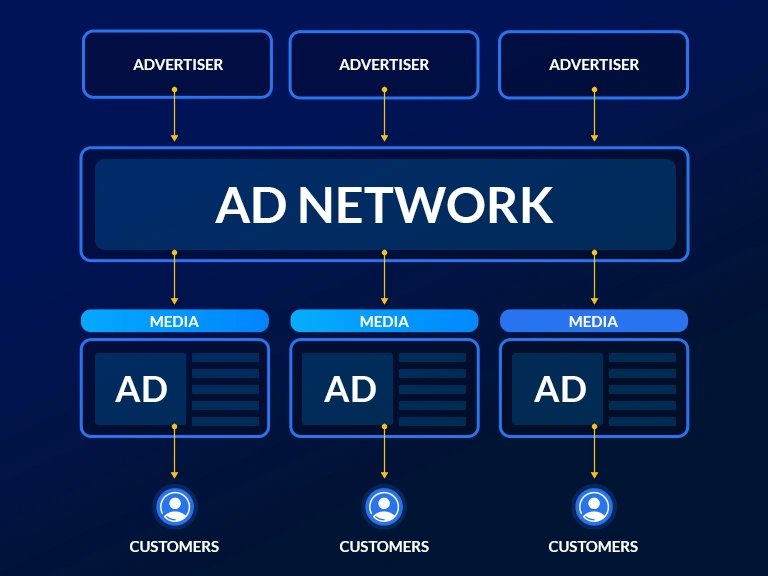
Google describes Performance Max — universally shortened to PMax — as a goal-based campaign type that allows advertisers to access all of Google’s advertising inventory from a single campaign.
That sentence contains a lot. Let us unpack it.
“Goal-based” means that instead of managing bids, placements, and targeting manually, you tell Google what you want to achieve — purchases, leads, store visits, calls — and Google’s automation works toward that goal using its machine learning systems.
“All of Google’s advertising inventory” means that a single Performance Max campaign can run ads across Google Search, Google Display Network, YouTube, Gmail, Google Maps, and Google Discover — all simultaneously, all from within one campaign.
“Single campaign” means that instead of building and managing separate campaigns for each channel — a Search campaign here, a Display campaign there, a YouTube campaign elsewhere — everything is consolidated.
This is genuinely new. Nothing quite like this existed before Performance Max. The ability to run a cohesive advertising strategy across every Google-owned surface, managed by a single unified system optimising toward a single goal, represents a real architectural shift in how Google advertising works.
Whether that shift is good for your business depends enormously on your specific situation, your data quality, your creative assets, and how well you understand the system well enough to set it up correctly and guide it effectively.
The History That Explains Why PMax Exists
To understand where Performance Max is going in 2026, it helps to understand where it came from and why Google built it.
For most of Google Ads’ history, the platform was built on a foundation of human control. Advertisers chose their keywords, wrote their ad copy, selected their placements, set their bids, and made constant manual adjustments based on performance data. The platform provided tools and data. The advertiser provided judgment and direction.
This model worked well — extraordinarily well — for businesses that had the expertise, the time, and the analytical capability to manage campaigns intelligently. Digital marketing agencies and sophisticated in-house teams could squeeze remarkable performance from manually managed campaigns through careful keyword research, continuous testing, and granular bid optimisation.
But this model had a ceiling. It required human expertise that many small and medium businesses simply did not have. It required hours of management time each week. It was complex, opaque to beginners, and easy to do badly.
Google had a business problem alongside an advertiser problem. The business problem was that the complexity of Google Ads was a barrier to entry for the enormous number of small businesses that Google wanted to bring onto the platform. The advertiser problem was that manual management, however powerful in skilled hands, could not process the enormous volume of signals — device type, location, time, audience behaviour, search context, competitive landscape — that Google’s machine learning systems could evaluate in milliseconds.
Performance Max was Google’s answer to both problems simultaneously.
For small businesses without expertise: a campaign type that handles complexity automatically, requiring only clear goals, good creative assets, and a reasonable budget.
For all advertisers: access to Google’s machine learning at a scale and speed that human management cannot match, processing billions of signals to find the most efficient path to conversions.
The vision was compelling. The execution, as we will see, has been genuinely impressive in some ways and genuinely frustrating in others.
How Performance Max Actually Works — The Engine Under the Hood
The heart of Performance Max is Google’s Smart Bidding system — an automated bidding technology that uses machine learning to set bids in real time, for every individual ad auction, based on the probability of a conversion occurring.
Every time a potential customer is about to see an ad — whether in a Google search result, on a YouTube video, in their Gmail inbox, or on a website in the Display Network — Google’s system evaluates hundreds of signals simultaneously. The person’s search history. Their location. Their device. The time of day. Their demographic signals. Their past behaviour with similar advertisers. The competitive landscape in that particular auction. And many others.
Based on this evaluation, the system estimates: how likely is this person to convert if they see this ad? And it sets a bid accordingly — higher for high-probability conversions, lower for low-probability ones.
This happens in milliseconds, millions of times per day, across every surface where your ads might appear. No human team could replicate this at speed or at scale. The machine learning advantage is real and significant.
But Smart Bidding alone does not make Performance Max what it is. The other critical component is what Google calls Asset Groups.
Rather than writing specific ads for specific placements — a display ad for websites, a video ad for YouTube, a text ad for search — Performance Max asks you to provide a library of creative assets: headlines, descriptions, images, logos, and videos. The system then assembles these assets into ads automatically, in the format appropriate for whatever placement it is targeting, for whatever audience it is reaching at that moment.
A set of assets that you upload once can become a search ad on Google, a banner ad on a website, a pre-roll video on YouTube, a card in Gmail, and a listing on Google Maps — all generated automatically by Google’s system, which has learned which combinations of assets perform best for which audiences and contexts.
This automated assembly is powerful in theory. In practice, the quality of what Google assembles depends heavily on the quality of what you provide. Weak assets produce weak ads regardless of how sophisticated the assembly system is.
What Performance Max Has Changed in 2026
The landscape of Performance Max in 2026 is meaningfully different from what it was at launch, and significantly different even from what it was eighteen months ago. Google has been actively developing the product in response to advertiser feedback — some of which was quite pointed — and several important changes have reshaped how the campaign type works and how it should be used.
Significantly Improved Reporting and Transparency
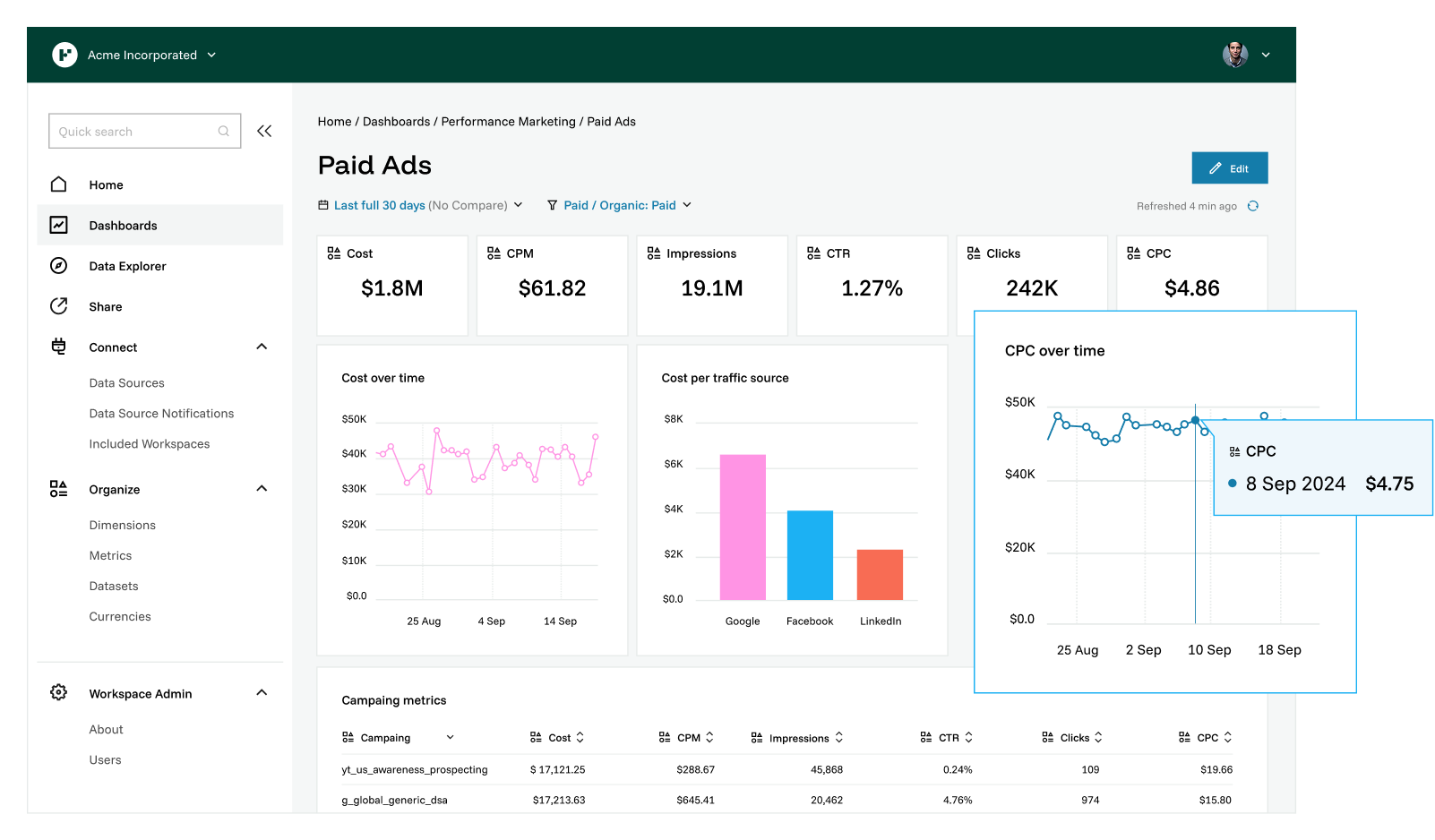
The most consistent and most legitimate criticism of Performance Max since its introduction has been its opacity. Advertisers could see overall campaign results but had very limited visibility into where their ads were showing, which assets were performing, which audiences were converting, and how budget was being distributed across channels.
This opacity made optimisation difficult and trust hard to establish. How do you improve a campaign you cannot see inside?
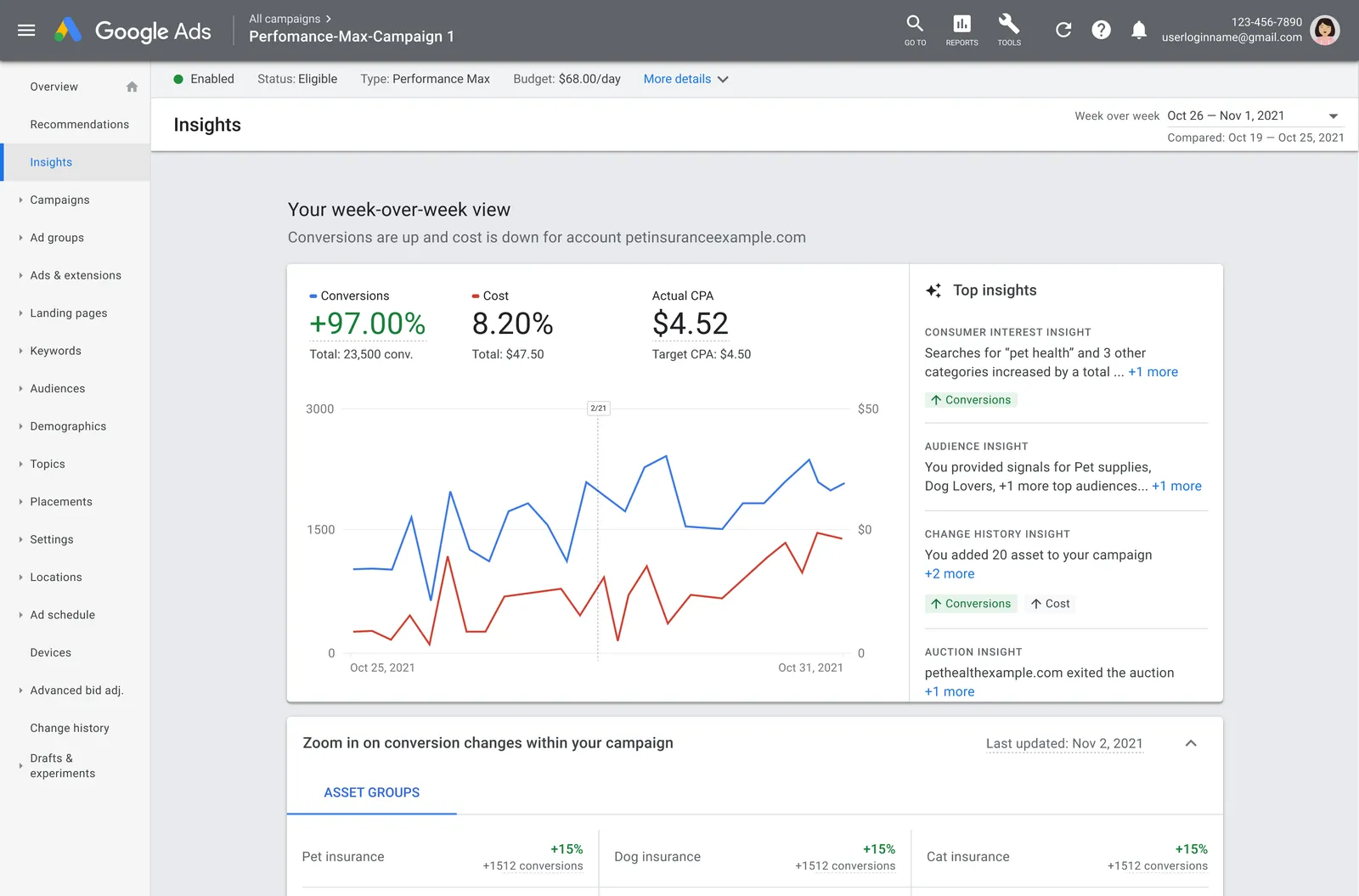
Google has made meaningful progress on this front in recent versions. The Search Terms Insights report now shows — in aggregated form — the themes of searches that triggered ads. Asset group performance reporting is more detailed. Audience insights have improved. Channel-level performance data is more accessible.
It is not yet at the level of granularity that experienced advertisers would prefer. But it is substantially better than it was, and the trend is clearly toward more transparency over time.
Better Interaction With Search Campaigns
One of the early concerns about Performance Max was that it would cannibalise existing Search campaigns — that it would grab the searches your carefully managed keyword campaigns were designed to capture, sometimes at less efficiency.
Google has implemented clearer rules about how PMax and Search campaigns interact. Exact match keywords in standard Search campaigns now take priority over Performance Max for those specific searches. This means advertisers can protect their highest-value, most carefully managed search traffic while allowing Performance Max to find incremental volume across other searches and channels.
This coexistence model — where Search and PMax work alongside each other with clearer rules of engagement — is more sophisticated and more workable than the earlier situation where the interaction was less predictable.
Enhanced Creative Guidance and Asset Testing
Google now provides more specific guidance on which assets are performing and why — including asset-level performance labels and recommendations for improving underperforming creative. The system also does more systematic testing of asset combinations, giving advertisers clearer signals about which creative directions are resonating with their audience.
Broader Availability of Customer Data Integration
The ability to feed Customer Match audiences — lists of existing customers or leads — into Performance Max has improved, and the system makes better use of this data than earlier versions. This is significant because Performance Max performs most effectively when it has high-quality signal data to learn from. Customer Match provides that signal, telling the system what your best customers look like so it can find more of them.
Where Performance Max Genuinely Excels — The Use Cases That Work

Performance Max is not universally superior or universally inferior to other campaign types. It performs extremely well in specific situations and less well in others. Understanding the difference is critical to using it appropriately.
E-Commerce With a Rich Product Catalogue
Performance Max was originally built around Google Shopping — and for e-commerce businesses with well-structured product feeds in Google Merchant Center, it remains most powerful. PMax can dynamically assemble Shopping ads, Display ads, and YouTube ads featuring specific products, targeting them to the most relevant audiences at the most efficient bids.
A clothing retailer with five hundred SKUs in a well-optimised feed, a history of conversion data, and quality product images is an ideal PMax candidate. The system can find buyers for different products across different surfaces — discovering demand for items that a manually managed Shopping campaign might never have surfaced.
Lead Generation With Strong Conversion Tracking
For service businesses that generate leads — consultancies, real estate agencies, financial services, healthcare providers — PMax can be effective when conversion tracking is properly set up and when there is sufficient conversion volume for the system to learn from.
The key qualifier is conversion volume. Performance Max’s machine learning needs data to optimise effectively. The general guidance is that a campaign should be generating at least thirty to fifty conversions per month before the system has enough signal to make intelligent optimisation decisions. Below that threshold, the system is effectively guessing — and the results are correspondingly unreliable.
Multi-Channel Brand Presence
For businesses that want to maintain awareness across multiple Google surfaces simultaneously — showing up in search results, on YouTube, in Gmail, across the Display Network — Performance Max offers a unified way to achieve this without building and managing separate campaigns for each channel. The automation handles the cross-channel allocation, adjusting spend distribution based on where conversions are most efficiently captured at any given time.
Seasonal Peaks and Budget Bursts
During high-demand periods — Diwali, festive season, product launches — Performance Max is particularly effective at scaling spend rapidly to capture demand across all available channels simultaneously. Manual campaign management during these peaks requires constant attention and adjustment. PMax handles the scaling automatically, finding conversion opportunities wherever they exist in Google’s ecosystem.
Where Performance Max Struggles — The Honest Limitations

Alongside the genuine strengths, Performance Max has real limitations that too many businesses discover only after spending significant budget.
Low Conversion Volume Environments
This is the most fundamental limitation. Performance Max’s machine learning needs conversions to learn. If your business generates fewer than thirty conversions per month — whether because your budget is small, your market is niche, your conversion cycle is long, or your product is high-consideration — the system does not have enough data to optimise effectively.
In these situations, Performance Max often performs worse than well-managed manual or Smart Bidding search campaigns, because those campaigns can be more directly guided by human judgment when machine learning signals are thin.
For businesses in this situation, starting with Standard Search campaigns to build conversion history before transitioning to Performance Max is almost always the better approach.
Brand Awareness Cannibalisation
Performance Max will happily spend budget showing ads to people who were already going to find your business — people searching your exact brand name, existing customers, people who are so familiar with your brand they would have converted regardless.
This is not necessarily wrong — brand defence has value — but it can distort the apparent performance of a PMax campaign. If a significant portion of your conversions are coming from brand searches or existing customers who would have converted without the ad, your cost per acquisition looks good but you are not actually acquiring new customers at that cost.
Managing this requires feeding Customer Match lists of existing customers as negative audiences — telling PMax not to target people already in your database — and monitoring brand search volume separately to understand how much of PMax’s performance is truly incremental.
Limited Control Over Placement Quality
Performance Max will place ads wherever Google’s system believes there is conversion opportunity. This includes Display Network placements — websites and apps that host Google ads — where content quality and audience relevance can be highly variable.
Unlike standard Display campaigns where you can exclude specific placements, websites, or app categories, Performance Max placement exclusions are more limited. You can exclude some placement categories and specific URLs, but the level of granular control that experienced advertisers prefer is not available.
For brands with strict content safety requirements — where appearing alongside certain types of content would be reputationally damaging — this limitation requires careful attention to placement exclusion settings and ongoing monitoring.
Creative Fatigue Without Active Management
The automated asset combination system requires active creative input to prevent fatigue. If you upload a set of assets and leave them unchanged for months, the system will exhaust the most effective combinations and performance will decline. Refreshing creative — new images, new headlines, new video variations — is necessary to keep PMax campaigns performing at their best.
This is not unique to PMax — all advertising requires creative refresh — but because PMax handles creative assembly automatically, it can feel like the creative side is handled. It is not. The system assembles what you give it. If what you give it gets stale, your ads get stale.
The Asset Group — The Creative Foundation That Determines Everything
If Performance Max has a single point of failure that accounts for more disappointing results than any other factor, it is the quality of the asset group.
An asset group is the collection of creative inputs you provide to Performance Max: up to fifteen headlines, up to four descriptions, up to fifteen images, up to five logos, and up to five videos. From these inputs, Google assembles ads for every surface in its ecosystem.
Most businesses that set up Performance Max do not spend nearly enough time on their asset groups. They write generic headlines, upload a few standard product photos, skip the videos entirely, and wonder why results are mediocre.
The system can only work with what it is given. If you provide fifteen distinct, specific, compelling headlines that speak to different customer needs, different product benefits, and different emotional triggers — the system has rich material to work with. If you provide five generic headlines that all say roughly the same thing — “Buy Quality Products Today,” “Best Prices Available,” “Shop Now for Great Deals” — the system has almost nothing to distinguish your ads from the most generic advertising imaginable.
The most important investment you can make in a Performance Max campaign is in the quality and variety of your creative assets. This means:
Headlines that are specific and benefit-driven, not generic and vague. “Pain-Free in 4 Weeks — Physiotherapy That Works” is a headline. “Quality Physiotherapy Services Available” is filler.
Images that are high-resolution, visually distinct, and represent different aspects of your product or service — product shots, lifestyle images, before-and-after comparisons, team photographs, customer testimonials in visual format.
Videos — and this is where most advertisers fall down badly. Video assets are increasingly important in PMax because they unlock YouTube inventory. Even a simple, genuine sixty-second video — a business owner talking to camera about what they do, a customer sharing their experience, a product demonstration — is dramatically better than no video at all. Without video assets, PMax cannot access YouTube, which is one of Google’s highest-reach surfaces.
Descriptions that address different customer concerns and questions — not variations of the same message but genuinely different angles on why someone should choose you.
The time you invest in creating genuinely excellent asset groups will repay itself many times over in campaign performance. Treat the asset group not as an administrative setup task but as the core creative work of your PMax campaign.
The Audience Signal — Teaching the Machine About Your Customer
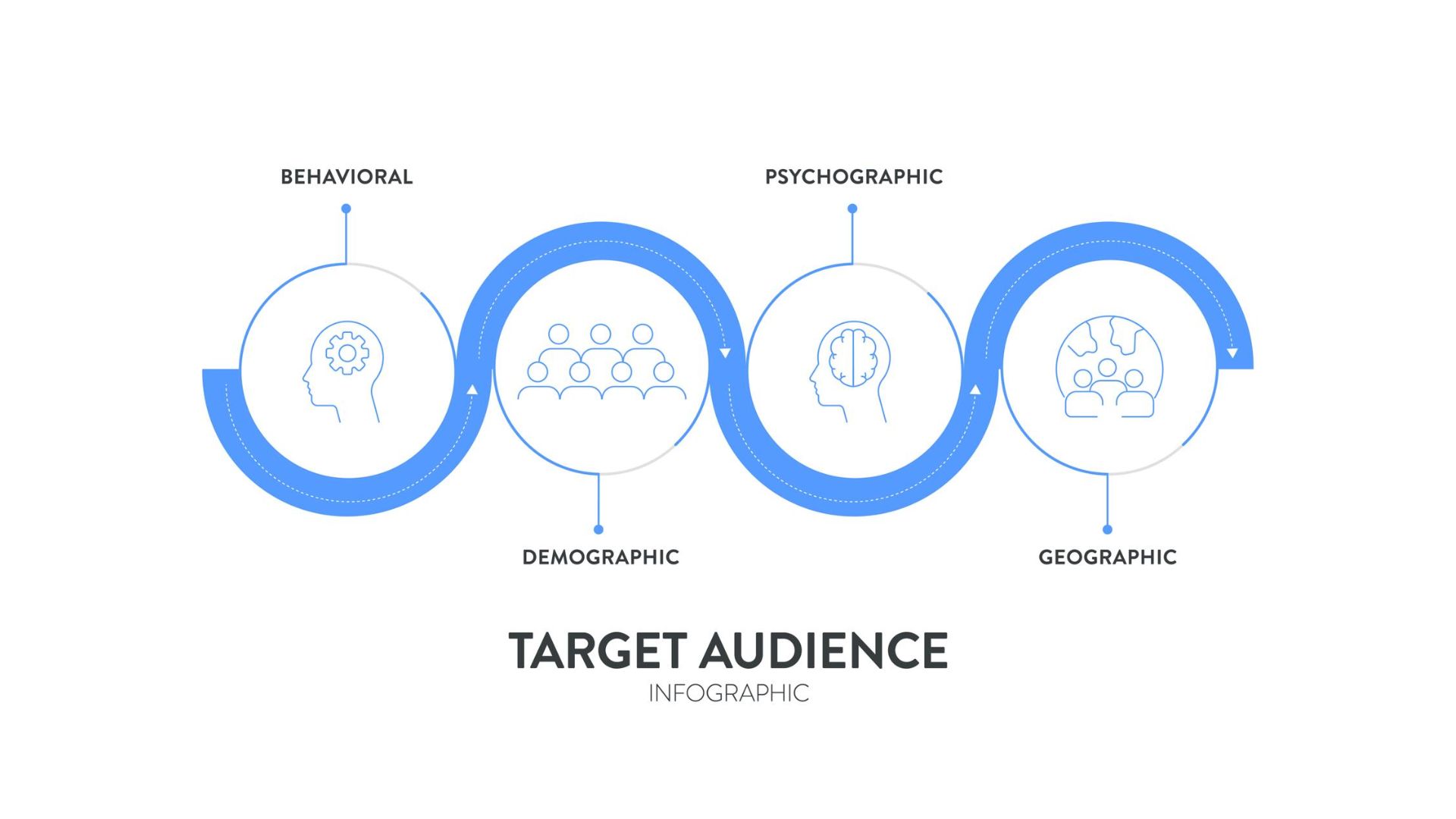
Performance Max allows you to provide audience signals — information that tells the system what your target customer looks like. These signals do not restrict targeting the way traditional audience targeting does. Instead, they give the machine learning system a starting point — a direction in which to look for conversions while it builds its own understanding from actual data.
Audience signals can include Customer Match lists — existing customers, leads, past enquirers. They can include custom intent audiences — people who have searched for specific terms related to your business. They can include interest and demographic signals. They can include website visitors via remarketing audiences.
The quality and specificity of your audience signals significantly influences how quickly PMax finds the right audience and how efficiently it optimises in the early weeks of a campaign. A campaign launched with rich, specific audience signals — a Customer Match list of your best five hundred customers, a custom intent audience built around your most purchase-intent keywords — will find its footing faster than one launched with no audience signals at all.
Think of audience signals as telling a new employee: here are our best customers, here are the kinds of searches they make, here is what they care about. The employee — the machine learning system — will learn from this starting point and develop their own understanding over time. But the starting point matters enormously for how quickly productive learning happens.
Budget and Learning Period — The Patience That PMax Requires
Performance Max has what Google calls a learning period — typically the first two to four weeks of a new campaign, during which the machine learning system is actively gathering data and making rapid adjustments. During this period, performance can be volatile. Cost per conversion may be higher than expected. Spend distribution across channels may be uneven. Results may not be representative of what the campaign will eventually deliver.
This learning period is one of the most frequent sources of premature campaign abandonment. A business launches PMax, sees volatile or disappointing results in the first two weeks, decides the campaign type does not work for them, and pauses it — just before the system would have accumulated enough data to optimise effectively.
The general guidance for navigating the learning period:
Set a budget sufficient to generate meaningful conversion data. If your average cost per conversion is ₹500, a daily budget of ₹500 to ₹1000 will generate one to two conversions per day — the minimum needed for learning. A daily budget of ₹200 with an average conversion cost of ₹500 will take far too long to generate the volume needed for optimisation.
Do not make significant changes during the learning period. Every major change — to budget, to bidding strategy, to asset groups, to audience signals — can trigger a new learning period. Frequent changes during learning produce fragmented, inconclusive data.
Evaluate performance after the learning period — typically four weeks — not during it. The results at Week Two are not predictive of the results at Week Six.
Patience during the learning period is not passive waiting. It is active monitoring without reactive changes — watching the data accumulate, noting patterns, planning optimisations to implement after learning is complete.
PMax Alongside Search — The Strategy That Works Best in 2026
The question most advertisers and agencies are navigating in 2026 is not whether to use Performance Max — it is how to use it alongside other campaign types, particularly Search, to get the best overall results.
The consensus that has emerged among experienced practitioners is a layered approach.
Standard Search campaigns with exact and phrase match keywords protect your highest-value, highest-intent traffic. These are the searches you know convert well, where you have historical data, where keyword-level control matters. You manage these campaigns carefully, with refined negative keyword lists, specific ad copy for specific intent categories, and granular bid strategies.
Performance Max runs alongside these Search campaigns, with clear priority rules ensuring that exact match keywords in Search take precedence. PMax is given a mandate to find incremental volume — new searches, new audiences, new placements that your manual campaigns would not have reached.
Customer Match lists of existing customers are added to PMax as negative audiences, preventing it from spending budget on people who were already going to convert without advertising.
Conversion tracking is comprehensive and accurate — tracking all meaningful conversion actions with correct values assigned, giving PMax’s optimisation system the richest possible signal of what success looks like.
Creative assets are refreshed quarterly — new images, new headlines, new video variations — preventing creative fatigue and giving the system new material to test.
This layered approach captures the best of both worlds: the precision and control of well-managed Search campaigns for your known, high-value traffic, and the scale and automation of Performance Max for discovery, reach, and incremental conversions.
What This Means for Small and Medium Businesses in India
For a small business owner in India who is not a digital marketing specialist — a boutique clothing brand in Jaipur, a dental clinic in Nagpur, a coaching centre in Lucknow — Performance Max represents both an opportunity and a risk.
The opportunity is genuine. PMax makes sophisticated, multi-channel advertising accessible without requiring deep technical expertise in managing separate campaigns across different networks. If you have good creative assets, clear conversion tracking, and a reasonable budget — Performance Max can find customers across Google’s entire ecosystem in ways that manual management would struggle to replicate.
The risk is also genuine. PMax without proper setup is a fast way to spend budget inefficiently. Without good conversion tracking, the system optimises toward the wrong signals. Without quality assets, it assembles mediocre ads. Without audience signals, it takes much longer to find the right customers. Without negative audience lists, it wastes spend on existing customers and brand searches. Without patience through the learning period, it is abandoned before it has had a chance to work.
The practical recommendation for small and medium businesses is this: do not start with Performance Max. Start with a well-structured Standard Search campaign, build conversion history, understand your keywords and your costs, and establish a solid foundation of data. Then — when you have at least thirty to fifty monthly conversions and a clear sense of what works — introduce Performance Max as a complementary campaign designed to find incremental growth beyond your established search base.
This sequencing is not cautious timidity. It is the approach that actually works, consistently, across different business types and different markets.
The Future of Automation — Where PMax Points

Performance Max is not just a campaign type. It is a signal of where Google Ads is heading over the next five to ten years.
The direction is clear: more automation, less manual control, more reliance on machine learning to make tactical decisions, more emphasis on human judgment at the strategic and creative level.
This does not mean that expertise becomes less valuable. It means that expertise shifts. The skills that mattered most in Google Ads five years ago — granular keyword management, manual bid optimisation, placement exclusion lists — are becoming less central. The skills that matter most now and in the future — conversion tracking accuracy, creative strategy, audience understanding, goal setting, performance interpretation — are becoming more central.
An advertiser who deeply understands their customer, sets meaningful conversion goals, provides excellent creative assets, and monitors results intelligently will consistently outperform an advertiser who focuses on tactical keyword management without strategic clarity — even as Google’s systems take over more of the tactical execution.
Performance Max, in this sense, is not replacing advertiser intelligence. It is changing where that intelligence needs to be applied.
The businesses that thrive as automation increases are not the ones that resist it or are overwhelmed by it. They are the ones that understand it clearly enough to set it up well, guide it effectively, and interpret its results intelligently.
That understanding — clear, honest, grounded in reality rather than either hype or dismissal — is what this post has tried to give you.
Closing Thought — The Tool Is Only as Good as the Person Wielding It
Performance Max is a genuinely remarkable piece of technology. The ability to access Google’s entire advertising ecosystem from a single campaign, guided by machine learning that processes signals at a scale and speed no human team can match, is not a small thing.
But technology does not replace judgment. Automation does not replace strategy. And a powerful tool wielded without understanding is not an asset — it is a risk.
The businesses winning with Performance Max in 2026 are not the ones who handed Google the wheel and hoped for the best. They are the ones who understood the system well enough to set it up correctly, feed it quality inputs — good conversion tracking, excellent creative assets, meaningful audience signals — and give it the time and data it needed to optimise effectively.
They are the ones who treated PMax not as a magic solution but as a sophisticated instrument that performs according to the quality of the inputs and the clarity of the goals you give it.
That is how every powerful tool works. And Performance Max, for all its complexity and for all its frustrations, is genuinely powerful.
Used well, it is changing the way ads work in 2026 in ways that benefit businesses of every size.
The question is whether you understand it well enough to be one of them.
Written by Digital Drolia — helping businesses navigate the evolving landscape of digital advertising with clarity, honesty, and practical strategy. Found this valuable? Share it with a business owner or marketer who is trying to make sense of Performance Max and needs a clear, honest perspective.