Which Platform Is Best to Promote Your Offline Business Online? | Digital Drolia

Let me ask you something personal.
You have been running your offline business for years. You know your product. You know your customers. You show up every single day, unlock that shutter, and give it everything you have got. But somewhere in the back of your mind, there is a nagging feeling that something is missing.
Your competitor — the one who just started six months ago — already has more walk-ins than you. His phone keeps ringing. He is always busy. And when you ask someone how they found him, the answer is almost always the same.
“I found him online.”
That one sentence hits differently, doesn’t it?
Here is the truth: Your business is good. Your service is solid. The problem is not what you are selling — the problem is that the right people simply do not know you exist yet. And in 2025, if you are not online, you are invisible to a massive chunk of your potential customers.
But here is where most offline business owners get stuck — they do not know where to start. There are so many platforms, so many options, so much noise. Instagram, Facebook, Google, YouTube, WhatsApp, JustDial, IndiaMART — the list feels endless.
So which one is actually best for your business?
That is exactly what this blog is going to answer. Not in a vague, “it depends” kind of way — but with real, practical clarity that you can act on today.
Let’s get into it.
First — Why Every Offline Business Needs an Online Presence
Before we talk platforms, let us take a moment to understand why this matters so much.
Think about how people make decisions today. Before visiting a restaurant, they check Google reviews. Before hiring a plumber, they search on JustDial. Before buying from a new boutique, they check Instagram. Before enrolling in coaching classes, they look at the website or YouTube channel.
The customer journey has fundamentally changed. People do their research online — even when they plan to buy or visit offline. If your business does not show up during that research phase, you simply do not make it to their consideration list.
And here is the scariest part — this is not just happening in metros. It is happening in Tier 2 and Tier 3 cities too. People in Nagpur, Jodhpur, Coimbatore, and Ranchi are searching online before making purchase decisions just as much as people in Mumbai or Bangalore.
Your customers are already looking for you online. The question is — can they find you?
Understanding Your Business Before Choosing a Platform
Here is something most digital marketing guides skip — not every platform works for every business.
Choosing the wrong platform is like setting up your stall in the wrong market. You could have the best product in the world, but if you are in the wrong place, the right customer will never find you.
Before picking a platform, ask yourself three questions.
Who is my customer? Are they young or older? Are they searching for something specific or just browsing? Are they in your city or across India?
What is my business type? Is it visual — like food, fashion, or beauty? Or is it service-based — like repairs, healthcare, or education? Or is it product-based — selling goods to retailers or directly to customers?
What is my goal right now? Do you want more foot traffic to your physical store? More phone calls? Online orders? Brand awareness?
Once you have clarity on these three things, choosing the right platform becomes much easier. Let’s now go through each major platform — what it does, who it works best for, and how to use it.
Platform 1 — Google My Business: The Non-Negotiable First Step
If there is one thing every offline business owner reading this should do before anything else — it is setting up Google My Business (now called Google Business Profile).
This is completely free. And it is the single most powerful tool for local offline businesses going online.
Here is how it works. When someone types “best bakery near me” or “mobile repair shop in Lajpat Nagar” into Google, a set of local businesses shows up at the top — complete with ratings, photos, opening hours, phone number, and directions. That section is called the Local Pack, and it is powered entirely by Google My Business listings.
If you are not listed there, you are simply not in the game.
Think about what this means practically. Someone is walking down the street, craving chai and snacks. They pull out their phone, type “tea stall near me.” Your shop is 200 meters away — but because you are not on Google My Business, a competitor two streets away shows up instead. You lost a customer who was practically at your doorstep.
Setting it up is straightforward. Go to business.google.com, sign in with your Google account, enter your business name exactly as it appears on your signboard, choose your business category, add your address and phone number, upload photos of your shop and products, and verify your listing. Verification usually happens via a postcard sent to your address or a phone call.
Once your listing is live, encourage every happy customer to leave a Google review. Reviews are the currency of Google My Business. More reviews, higher ratings, better positioning in search results — it is that direct.
Best for: Every type of offline business — shops, restaurants, clinics, salons, coaching centers, repair services, gyms, boutiques. No exceptions.
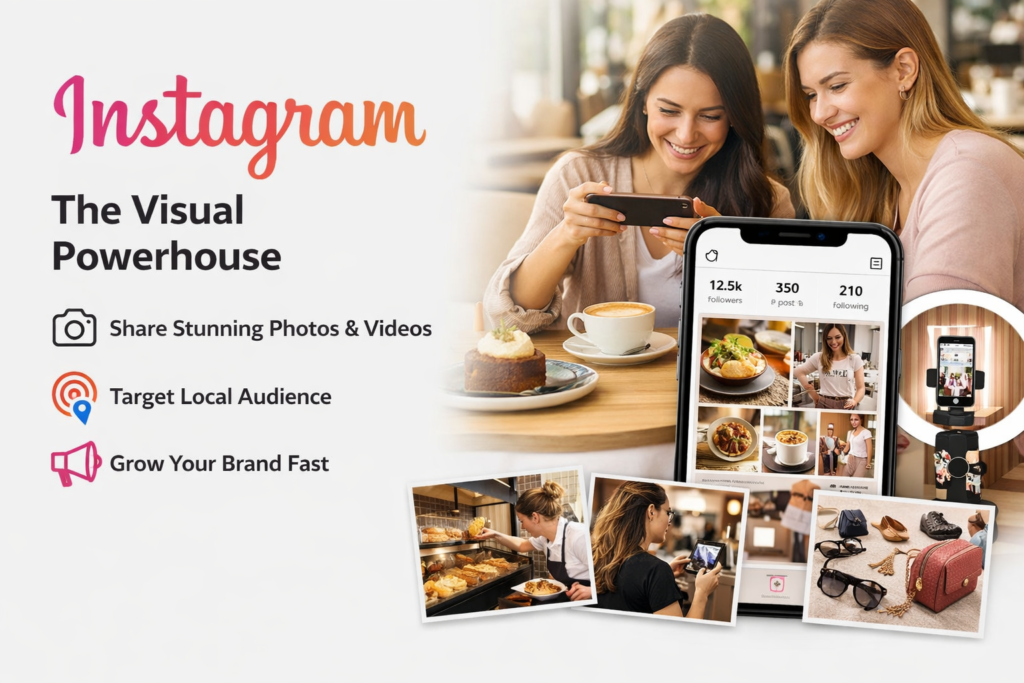
Platform 2 — Instagram: The Visual Powerhouse
Instagram has completely transformed how local and small businesses connect with customers. If your business has a visual element — and most do — Instagram is where you need to be.
Walk into any popular café, salon, or clothing store today. You will see people clicking photos. Not just for themselves — they are sharing it. They are tagging the place. Their followers see it. Curious friends ask “where is this?” And suddenly your business gets free word-of-mouth marketing at a scale that was impossible just ten years ago.
But beyond organic posts, Instagram’s advertising system is extraordinary. You can run ads that target people based on their age, location, interests, behaviors, and even life events. You can target people within a 5 km radius of your shop. You can reach only women aged 22-35 who are interested in skincare — if you run a beauty salon.
The level of targeting precision available even on a budget of ₹500-1000 per day is genuinely remarkable.
What to post on Instagram:
Behind the scenes content performs exceptionally well — people love seeing how things are made or how a business operates. Customer transformations (with permission) work brilliantly for salons, fitness centers, and tailors. Product showcases with good lighting and clean backgrounds drive engagement. Reels — short videos under 60 seconds — currently get significantly more reach than static posts. Tips and how-to content builds trust and authority. Festive offers and limited-time promotions create urgency.
The golden rule for Instagram is consistency and quality over quantity. Two well-shot, thoughtful posts per week will outperform seven rushed daily posts every single time.
Best for: Restaurants and cafés, salons and beauty businesses, boutiques and clothing stores, jewellery shops, bakeries and sweet shops, gyms and fitness studios, home décor and interior businesses, event planners, florists.
Platform 3 — Facebook: The Mature Audience Market
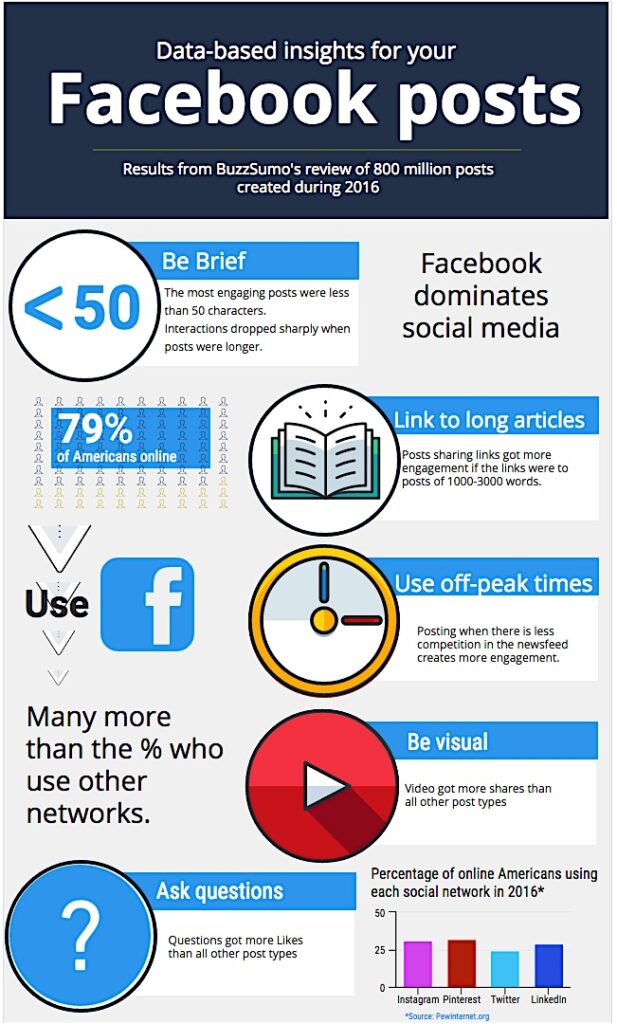
Many young marketers dismiss Facebook as outdated. That is a mistake — especially for businesses whose customers are in the 30 to 55 age group.
Facebook remains the largest social media platform in India in terms of total users. And it has something Instagram does not — Facebook Groups.
Local Facebook groups are goldmines for offline businesses. Almost every city, neighbourhood, and colony has active Facebook groups where residents share recommendations, ask for suggestions, and discuss local businesses. Getting your business name mentioned — or better yet, recommended — in these groups can drive real, high-intent customers to your door.
Beyond groups, Facebook Pages let you build a community around your business. Regular updates, offers, events, and customer interactions all happen on your page. And Facebook’s advertising platform (which is shared with Instagram, since Meta owns both) offers the same powerful targeting capabilities we discussed earlier.
Facebook also has a powerful local ads feature called Facebook Local Awareness Ads — specifically designed to show your ads to people who live near your business location. Perfect for driving foot traffic.
Best for: Hardware stores, home services businesses, medical and healthcare practices, educational institutions and coaching centers, real estate agents, legal and financial services, and any business targeting customers aged 30 and above.
Platform 4 — WhatsApp Business: India’s Most Underrated Marketing Tool
Let us talk about the platform that is already on every single one of your customer’s phones — WhatsApp.
India has over 500 million active WhatsApp users. Your customers, their families, their friends — they are all on WhatsApp, every single day, multiple times a day. And yet, most offline business owners are not using WhatsApp Business strategically.
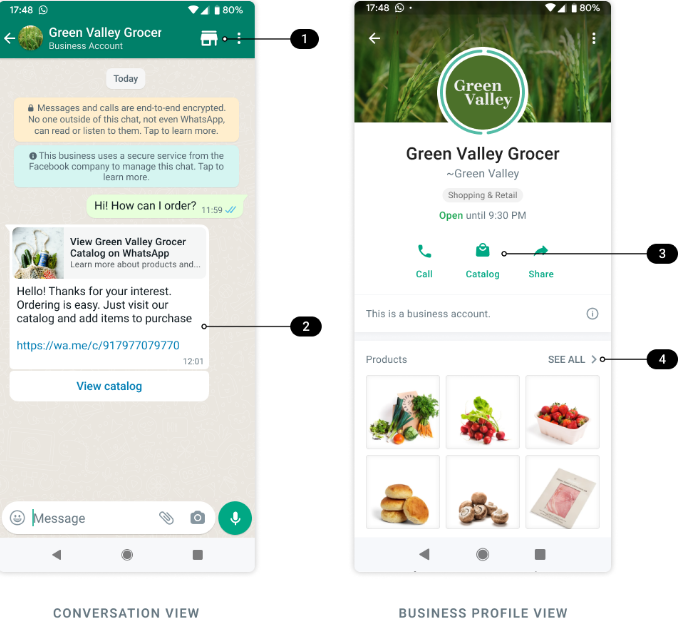
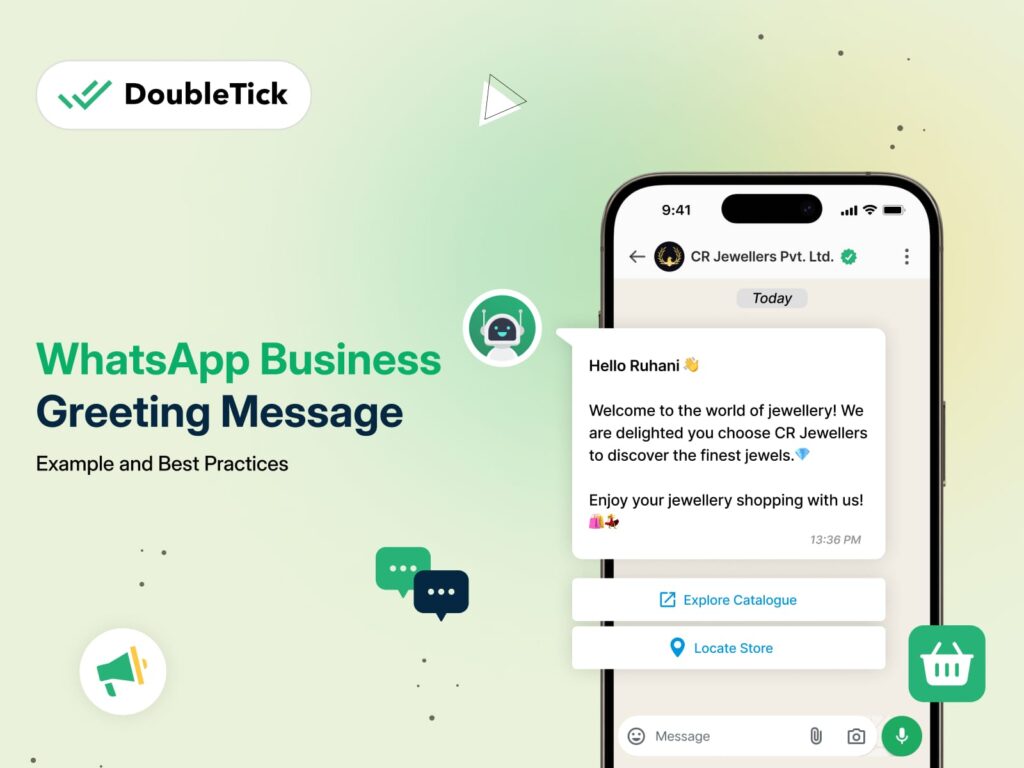
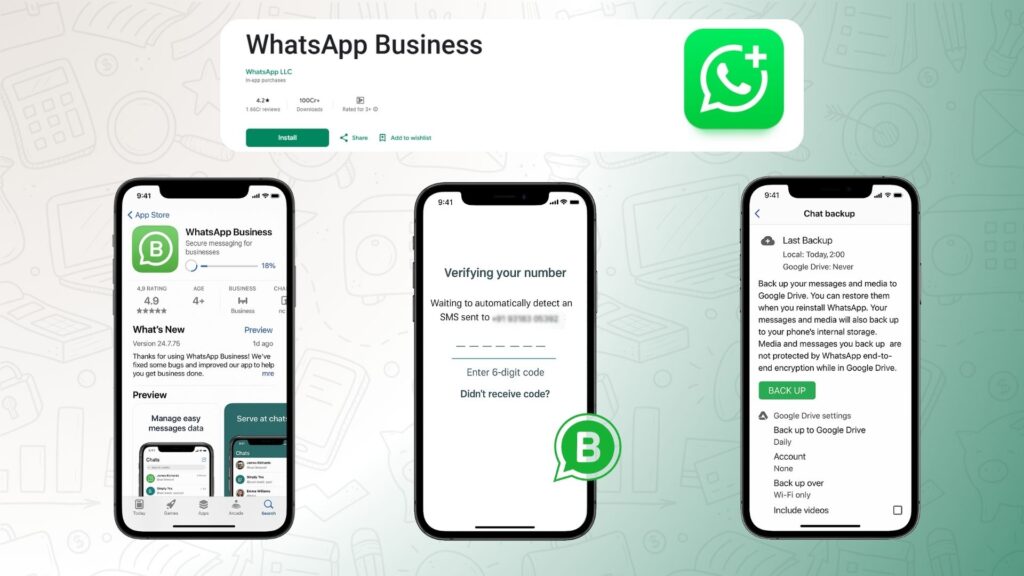
The WhatsApp Business app is free and available on Android and iOS. The difference between regular WhatsApp and WhatsApp Business is significant. With WhatsApp Business, you can set up a complete business profile with your address, website, business hours, and description. You can create a product catalogue where customers can browse your offerings with photos and prices. You can set up automated greeting messages and away messages. You can create quick replies for frequently asked questions. And most powerfully — you can create Broadcast Lists to send messages to up to 256 customers at once.
Imagine having a list of 500 customers who have bought from you before. Diwali is coming. You send one broadcast message — “Exclusive Diwali Collection now available. First 50 customers get 15% off. Reply to order.” Within minutes, orders start coming in.
That is the power of WhatsApp Business for offline businesses.
Build your customer database actively. Every time someone visits your shop, politely ask for their number and add them to your WhatsApp list. Over time, this list becomes one of your most valuable business assets — a direct line to people who already know and trust you.
Best for: Literally every type of offline business. WhatsApp Business is universally effective across all categories and all customer demographics in India.
Platform 5 — YouTube: The Long-Term Authority Builder
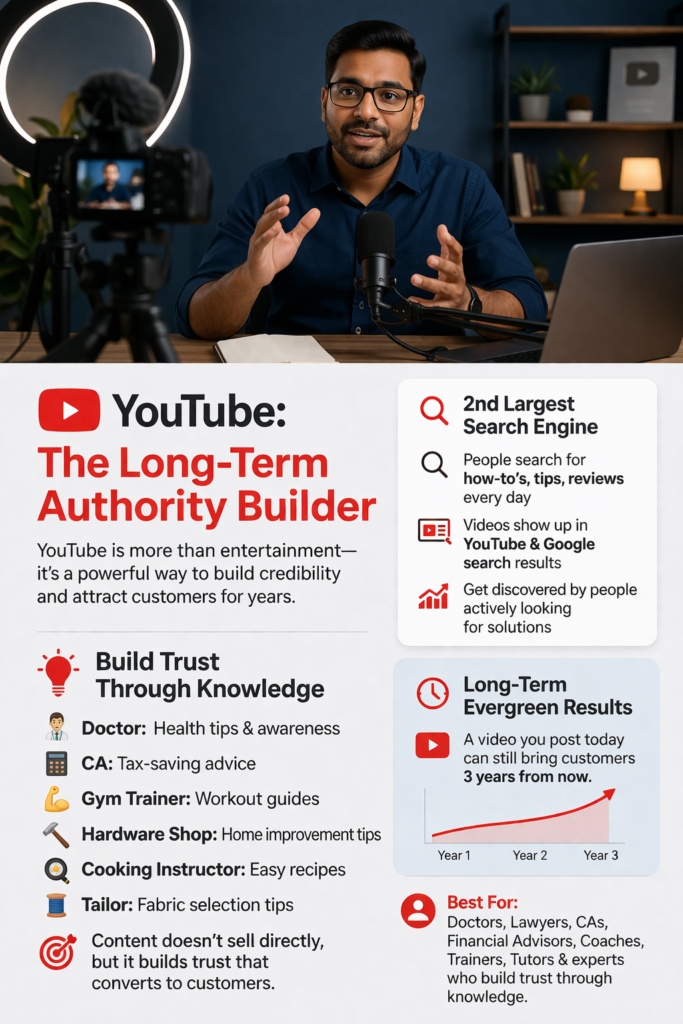
YouTube is not just for entertainers and vloggers. It is one of the most powerful tools for establishing credibility and authority for your business — and it drives traffic for years after you post a video.
Here is the thing about YouTube that most people do not realize — YouTube is the second largest search engine in the world. People search for how-to videos, tutorials, reviews, and guides on YouTube constantly. And YouTube videos also appear in Google search results.
If you are a doctor and you post a video called “5 Signs You Might Be Iron Deficient,” someone searching that topic on Google might find your video. They watch it. They find you helpful and knowledgeable. Now when they need a doctor, who do you think they call?
This applies across industries. A CA can make videos about tax-saving tips. A gym trainer can share workout guides. A hardware shop owner can post home improvement tutorials. A cooking class instructor can share easy recipes. A tailor can explain fabric selection.
The content does not sell directly. But it builds trust. And trust converts to customers.
YouTube requires more effort than Instagram or Facebook — filming, editing, uploading. But the returns are long-lasting. A video you post today can still be driving new customers to your business three years from now. No other platform offers that kind of evergreen reach.
Best for: Doctors, lawyers, CAs, financial advisors, coaches and trainers, tutors, any business where demonstrating expertise builds trust.
Platform 6 — Google Ads: Fast, Targeted, Intent-Driven
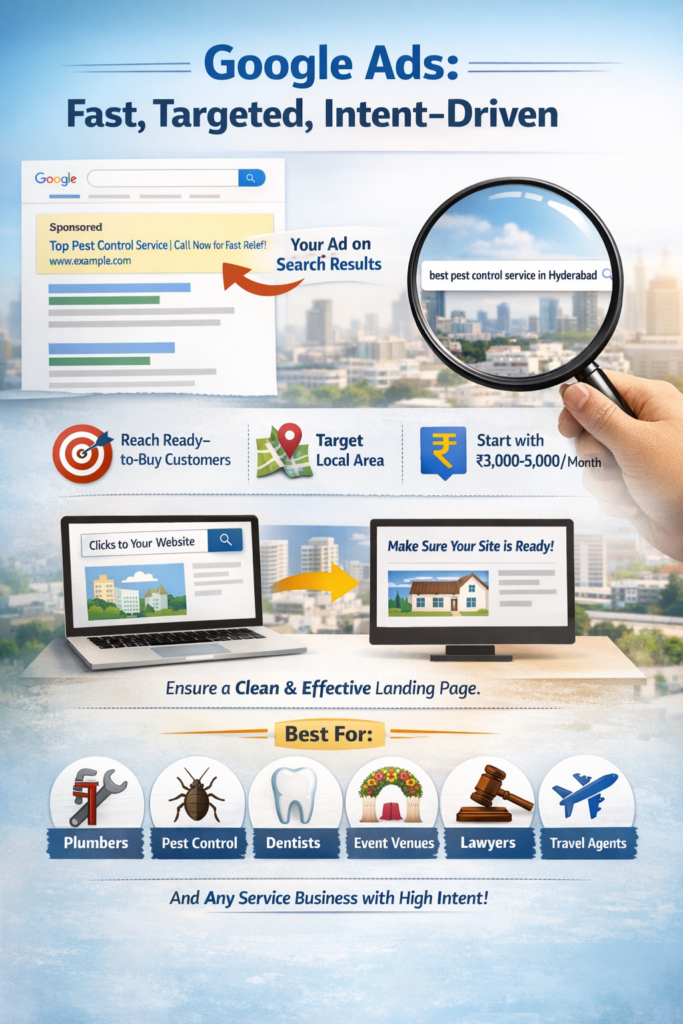
All the platforms we have discussed so far are about reaching people who may or may not be looking for you right now. Google Ads is different — it targets people who are actively searching for what you offer at this exact moment.
When someone types “best pest control service in Hyderabad” into Google, they are not casually browsing. They have a problem. They want a solution. Now.
Google Ads puts your business at the very top of those search results — above even the organic listings. And you only pay when someone actually clicks on your ad.
For offline businesses, Google Ads can be configured to show your ads only to people searching within a specific geographic area — your city, your district, or even within a few kilometers of your location. This makes it incredibly efficient for local businesses.
The minimum budget to start is reasonable — you can begin testing with ₹3,000-5,000 per month. As you learn what works, you scale up.
One important note — before running Google Ads, make sure you have a clean, professional landing page or website where people land after clicking. A great ad driving traffic to a poor website is money wasted.
Best for: Service businesses where intent is high — plumbers, electricians, pest control, event venues, travel agents, dentists, lawyers, coaches, and any business where customers actively search for the service online.
Platform 7 — JustDial, Sulekha, and Indian Business Directories
Do not underestimate the power of Indian local business directories. While Google My Business handles search engine visibility, platforms like JustDial, Sulekha, and Urban Company serve their own massive user bases who specifically go there to find local services.
JustDial is one of India’s most trusted local search platforms. Millions of users search for local businesses on JustDial daily — especially users in Tier 2 and Tier 3 cities who are more comfortable with JustDial than with Google. A free basic listing on JustDial is available for all businesses.
Sulekha is particularly strong for service-based businesses — electricians, plumbers, tutors, event planners, packers and movers, and similar categories. Customers post their requirements and businesses respond with quotes.
Urban Company (formerly UrbanClap) is ideal for home service professionals — beauticians, plumbers, AC repair technicians, interior decorators, and similar trades. The platform handles bookings and payments, making it easy to get started.
These platforms require minimal effort to set up and can generate a consistent stream of leads, especially in the early stages when you are still building your organic online presence.
Best for: Any service-based offline business — repairs, home services, beauty, tutoring, event management, logistics.
Platform 8 — Zomato and Swiggy: Non-Negotiable for Food Businesses
If you run any kind of food business — restaurant, cloud kitchen, tiffin service, bakery, sweet shop — you absolutely need to be on Zomato and Swiggy. This is not optional anymore.
The food delivery market in India has exploded. Millions of orders are placed daily across both platforms. People who would have visited your restaurant in person are now ordering from home. If you are not on these platforms, you are missing an enormous revenue stream.
Both platforms handle the marketing, the discovery, the payment processing, and the delivery logistics. Your job is simply to prepare great food. In exchange, they take a commission — typically 18-25% per order — but the volume of orders they bring makes it worthwhile for most food businesses.
For smaller food businesses like home kitchens or tiffin services, starting on Zomato or Swiggy can be genuinely life-changing — turning a small local operation into a business with city-wide reach overnight.
Best for: All food businesses — restaurants, cafes, cloud kitchens, bakeries, mithai shops, tiffin services, home cooks.
How to Prioritize — A Platform Roadmap for Offline Businesses
You have now seen eight powerful platforms. And you are probably thinking — “I cannot do all of this at once.”
You are absolutely right. You should not try to do everything at once.
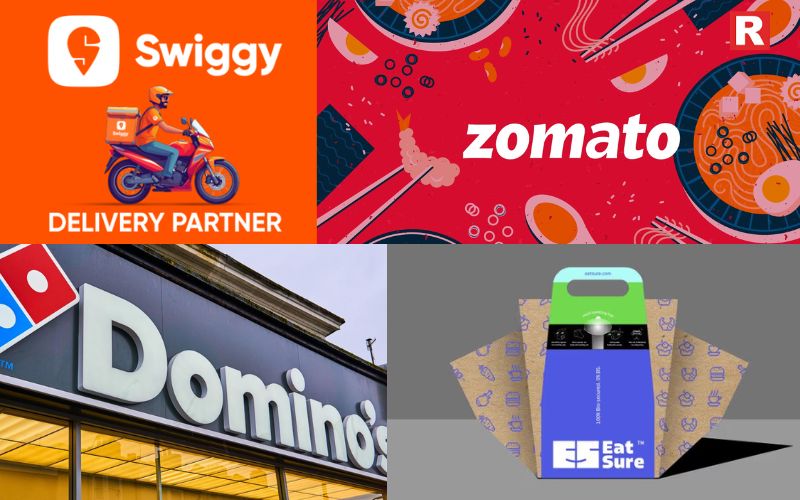
Here is a practical roadmap based on where you are in your online journey.
Month 1 — Foundation: Set up Google My Business. This is free and takes just a couple of hours. Set up WhatsApp Business and start building your customer contact list. These two alone will start generating results immediately.
Month 2 — Social Presence: Create your Instagram and/or Facebook business page. Post your first 6-9 pieces of content. Focus on quality photos and genuine storytelling about your business.
Month 3 — Listings: Register on JustDial, Sulekha, and any industry-specific platform relevant to your business. If you are in food, get on Zomato and Swiggy. These take a few days to set up and then work passively.
Month 4 and Beyond — Amplify: Once your foundation is strong, consider investing in a basic website. Start experimenting with paid ads — even small budgets of ₹500-1000 per day can show you what works. Begin planning your YouTube or long-form content strategy.
This phased approach means you are never overwhelmed, always making progress, and building one strong layer at a time.
The One Thing That Kills Online Efforts — Inconsistency
You can set everything up perfectly. Google My Business, Instagram, Facebook, WhatsApp — everything in place. And then… life happens. You get busy with the shop. Days become weeks. Weeks become months. Your last Instagram post is from four months ago. Your Google listing has not been updated since you added it.
This is the single biggest reason offline business owners fail online. Not lack of skill. Not lack of budget. Inconsistency.
Algorithms reward businesses that stay active. Customers trust businesses that look alive. A dormant online presence is almost worse than no presence at all — because it signals to a potential customer that you might not even be operational anymore.
The solution is not to do more — it is to commit to less and do it consistently. If you can only manage two Instagram posts a week, commit to two posts a week — every single week without fail. If you can only respond to WhatsApp messages twice a day, set that schedule and stick to it.
Slow and steady, done consistently, will always beat burst-and-vanish every single time.
Final Words — Your Business Deserves to Be Found
You have spent years building something real. Something that delivers genuine value to real people. The effort, the early mornings, the late nights, the risks — all of it has gone into creating a business that matters.
All that is missing is visibility.
The platforms we have discussed in this blog — Google My Business, Instagram, Facebook, WhatsApp Business, YouTube, Google Ads, JustDial, Zomato — they are not just marketing tools. They are bridges. Bridges between your business and the thousands of potential customers in your city who are actively looking for exactly what you offer — but simply do not know you exist yet.
You do not need a massive budget. You do not need a marketing degree. You do not need to do everything at once.
You just need to start.
Set up that Google My Business listing today. Take three good photos of your shop tomorrow. Post them on Instagram this week. Start asking your happy customers to leave a review.
That is it. That is how it begins.
And six months from now, when someone tells you they found your business online — you will understand exactly what that one small step was worth.
Written by Digital Drolia | Helping offline businesses find their place in the digital world — one platform at a time.