

Why the Music You Choose in Your Video Decides Whether People Feel Emotion or Nothing

Let me show you what I mean before I explain it.
Imagine a video. A young woman is sitting by a window on a rainy afternoon. She is holding a cup of tea, looking out at the street below. Nothing dramatic is happening. She is just sitting there, watching the rain.
Now play one piece of music under that image. Something spare and melancholic — a single piano, slow tempo, notes that seem to search for resolution and not quite find it. The woman by the window becomes heartbreaking. You do not know her story but you feel certain she has one. The rain outside suddenly seems like it has been raining for a long time. You feel something — a quiet ache, a tenderness, a sense of time passing.
Now play different music under the exact same image. Something bright and rhythmic — a ukulele, a bouncy beat, the kind of music that appears in advertisements for summer holidays and smoothie brands. The woman by the window becomes comedic, almost absurd. You wait for the punchline. The rain looks like a minor inconvenience rather than a mood. You feel amused, or perhaps mildly confused about where the video is going.
Same woman. Same window. Same rain. Same tea. Same ten seconds of footage.
Two completely different emotional experiences.
The only thing that changed was the music.
This simple demonstration reveals something profound about how human beings process audiovisual content — something that every filmmaker, every video editor, every content creator, and every business making marketing videos needs to understand deeply if they want their work to land the way they intend it to.
Music is not decoration added to a video. Music is not background. Music is not an afterthought applied after the “real” editing work is done.
Music is the emotional instruction that tells the viewer how to feel about what they are seeing. It is the layer of the video that reaches directly into the nervous system, bypassing rational processing entirely, and determines the emotional response before the conscious mind has had a chance to weigh in.
Get it right and your video makes people feel exactly what you intended. Get it wrong and you have a collection of images that produces either confusion, irritation, or — worst of all — nothing.
The Science Behind Why Music Affects Emotion So Directly
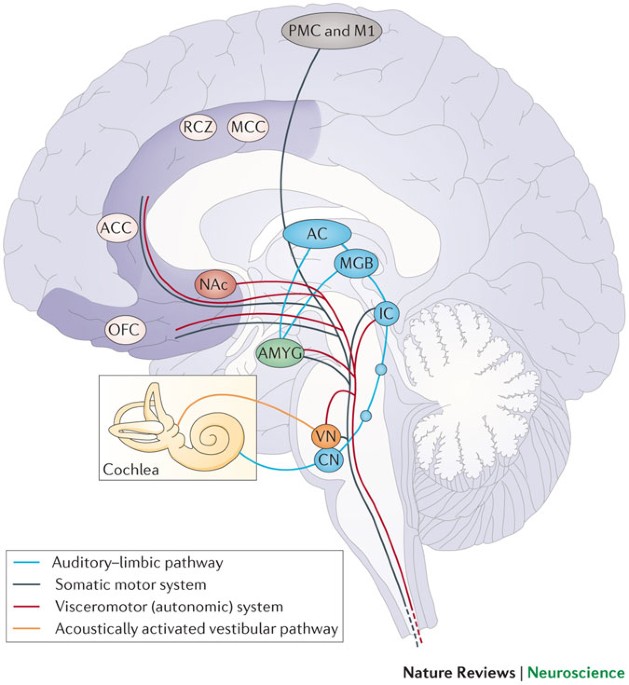
Before we go deeper into the practical implications for video creation, it is worth understanding why music has this extraordinary power over human emotion. Because it is not accidental. It is not cultural. It is not a matter of personal preference. It is biology — and it runs deeper than almost any other sensory experience.
Music activates the limbic system — the part of the brain most directly associated with emotion, memory, and the regulation of mood. When we hear music, the limbic system responds before the neocortex — the rational, analytical part of the brain — has had a chance to process what we are experiencing. This is why music can make you feel something before you have even consciously registered what you are listening to. The emotion arrives first. The recognition comes after.
This sequence — emotion before analysis — is the opposite of how we process most information. When we read text, when we listen to speech, when we look at a photograph, the analytical mind is involved from the very beginning — categorising, evaluating, comparing, judging. Music short-circuits this analytical process and delivers emotional content directly.
There is also the mirror neuron dimension. When we hear music that contains characteristics associated with specific emotional states — the slow tempo and falling melodic lines associated with sadness, the fast tempo and rising phrases associated with excitement and joy, the irregular rhythms and dissonances associated with tension and anxiety — our own nervous systems respond as if we were experiencing those states ourselves. We do not just recognise that sad music sounds sad. We feel sadness.
This neurological responsiveness to music is universal across human cultures. Certain emotional qualities of music — the qualities of a lullaby, the qualities of a march, the qualities of a lament — are recognised across cultures that have had no contact with each other, suggesting that the emotional language of music is wired into us at a level that precedes cultural learning.
And in video, where music is combined with images and narrative, these effects are amplified further. The audiovisual combination activates both the emotional and the narrative-processing systems simultaneously — creating an experience that is more immersive, more affecting, and more memorable than either the music or the images could produce alone.
The Three Layers of Music’s Function in Video

To understand how music works in video — and therefore how to choose it well — it helps to recognise that music is doing three different things simultaneously, each operating at a different level of the viewer’s experience.
Layer One: Emotional Tone
This is the most obvious function — music establishes the emotional atmosphere of a video. It tells the viewer, before any other element of the content has been processed, what emotional register they are entering.
Uplifting and energetic music signals: this is a positive, forward-moving experience. Melancholic and reflective music signals: this is a contemplative, possibly emotional experience. Tense and dissonant music signals: something uncertain or threatening is developing. Warm and gentle music signals: this is safe, intimate, and caring.
These signals are received and processed within the first few seconds of a video. They set the emotional context through which everything else in the video is interpreted — the narration, the visuals, the pacing, the colour grade. Everything the viewer sees and hears is coloured by the emotional atmosphere that the music has established.
This is why choosing music that contradicts the intended emotional tone of a video is so disorienting. The viewer’s emotional processing system is receiving two conflicting signals simultaneously — the emotional instruction from the music and the emotional instruction from the visuals and narration. The cognitive dissonance this produces does not read as irony or sophistication. It reads as confusion.
Layer Two: Narrative Pacing
Music does not just establish emotional tone. It creates a sense of movement — of time passing, of events unfolding, of a story going somewhere.
The tempo of a piece of music creates an expectation in the viewer about the pace at which things will happen. Fast music creates a forward pull — the viewer unconsciously expects cuts to come quickly, action to unfold rapidly, information to arrive at the pace of the beat. Slow music creates a different expectation — of space, of breath, of moments allowed to linger.
When editors cut to the beat — making visual cuts coincide with the rhythmic structure of the music — they are using the music’s temporal structure to organise the video’s pacing in a way that feels cohesive and satisfying. The cuts feel inevitable rather than arbitrary. The video has a rhythm that the viewer can feel even if they could not consciously identify it.
When the editing pace consistently fights the musical tempo — slow, contemplative footage cut to a driving, fast-tempo track, or quick action footage edited to slow, pastoral music — the viewer feels an unresolved tension that is exhausting rather than engaging.
Layer Three: Emotional Memory and Association
This third layer is the most subtle and perhaps the most powerful. Music carries within it associations from our individual and collective emotional memories — and these associations colour our experience of the video whether the creator intended them to or not.
Certain types of music carry genre associations. A melancholic string quartet carries associations of classical concert halls, of formality, of emotional depth and seriousness. A driving electronic beat carries associations of urban energy, modernity, and momentum. An acoustic guitar picked gently carries associations of intimacy, of campfires, of honest and unpretentious personal expression.
These genre associations can be used deliberately — choosing music whose genre associations reinforce the brand identity or narrative of the video. A video about heritage craftsmanship paired with classical music. A technology product launch video paired with electronic music. A personal story video paired with acoustic guitar.
But genre associations can also work against you when the choice is careless. Corporate background music that sounds like every other corporate background music instantly drains a video of personality. Music that has strong associations with a specific film or television series can make your video feel derivative. Music with cultural or political associations that are irrelevant to your video can introduce connotations you did not intend.
The Most Common Music Mistakes in Video Content
Most of the music choices that make videos fall flat come from a small set of predictable mistakes. Recognising them is the first step toward avoiding them.
The Generic Corporate Track
This is the single most common music mistake in business video content — and it is extraordinarily effective at draining a video of emotional impact.
You know this music. It is vaguely positive, vaguely inspiring, with a light electronic beat and some kind of gentle melodic hook. It sounds like every brand explainer video, every company culture video, every product launch video you have ever half-watched. It is not bad music exactly. It is deeply inoffensive, which is also its problem.
Because deeply inoffensive music carries no emotional instruction. It is the musical equivalent of beige wallpaper. The viewer’s emotional processing system receives it, finds nothing to respond to, and remains in a state of mild pleasant neutrality.
Mild pleasant neutrality is not the emotional state that makes people remember your brand, feel connected to your story, or take the action you are hoping they will take.
The generic corporate track exists because it feels safe. It will not offend anyone. It will not distract from the content. It will not create any problems.
What it will also not do is create any connection. And in a world where content competes for emotional engagement, the absence of connection is a problem more serious than most creators recognise.
The Tone-Deaf Choice
This is the opposite error — choosing music that contradicts the emotional intention of the video so dramatically that the result is confusing or unintentionally comic.
An upbeat, cheerful track under footage about a serious challenge someone overcame. A tense, anxious score under footage of a relaxed, joyful community event. A fast, driving beat under a video that is supposed to be intimate and contemplative.
These mismatches happen when creators choose music based on their personal preferences — the song they are listening to this week, the track that appeared first in the search results — rather than based on what the video actually needs emotionally.
The viewer’s experience of such a video is disorienting. The emotional instructions from the music and from the visuals are in conflict. The viewer’s nervous system is receiving contradictory signals. Rather than resolving this conflict in the direction the creator intended, most viewers simply disengage — not dramatically, not consciously, but in the subtle way that disengagement always happens when an experience stops making intuitive sense.
The Volume Problem
Music that is too loud competes with the narration, the dialogue, and the natural sound of the footage — making the video actively difficult to watch. The viewer’s attention is divided between trying to hear the spoken content and processing the music simultaneously. This cognitive competition is exhausting.
Music that is too quiet is effectively absent. It does not provide the emotional grounding it should and often feels like an afterthought rather than an intentional choice.
The correct balance — and finding it requires headphones and honest listening — is music that is present and felt without being consciously noticed. The viewer should not think “the music is quite loud here.” They should simply feel the emotion the music is producing, without the mechanism of its production being visible.
The Abrupt Ending
Music that is cut abruptly at the end of a video — particularly if the cut happens mid-phrase or mid-breath in the musical structure — creates a jarring discontinuity that undermines the emotional landing of the video’s conclusion.
Music should resolve emotionally at the same time the video resolves narratively. This means either finding a natural end point in the musical track that coincides with the video’s conclusion, or fading the music out in a way that feels intentional rather than abandoned.
Filmora and other editing tools allow audio fade-outs to be applied precisely and smoothly. The ten seconds before a video ends should always receive careful attention to how the music is completing its emotional role.
Using Popular Songs Without Understanding the Associations
Popular songs — recognisable tracks by known artists — carry an enormous weight of association that can overwhelm the specific intentions of a video. A familiar song immediately triggers memories and associations in the viewer’s mind — associations that have nothing to do with the video they are watching.
Beyond the association problem, using commercial music in monetised content creates copyright issues on platforms like YouTube — resulting in videos being muted, demonetised, or taken down entirely.
The solution is not to avoid powerful, emotionally effective music. It is to find royalty-free music that has the emotional qualities you need without the copyright complications. Platforms like Epidemic Sound, Artlist, and the built-in libraries of tools like Filmora contain vast catalogues of high-quality music specifically licensed for content creators — and within these catalogues, music of genuine emotional power is absolutely available.
Matching Music to Content — A Practical Framework
Understanding why music matters is necessary but not sufficient. The practical question — how do I choose the right music for this specific video? — requires a framework that can be applied to actual creative decisions.
Here is the approach that experienced video editors and filmmakers use, distilled into a process that any creator can follow.
Step One: Define the emotional destination
Before opening any music library, before listening to a single track, ask yourself one specific question: what do I want the viewer to feel at the end of this video?
Not what do I want them to think. Not what information do I want them to have retained. What do I want them to feel?
The answer to this question is the emotional destination — and every music decision should be evaluated against whether it moves the viewer toward that destination.
For a video about a small business owner who struggled and succeeded: I want the viewer to feel inspired and emotionally moved.
For a product launch video: I want the viewer to feel excited and slightly envious of whoever gets to use this product.
For a brand values film: I want the viewer to feel warmly reassured — like they are in safe, capable, genuinely caring hands.
For a travel video: I want the viewer to feel the desire to go — a mixture of wanderlust, adventure, and the specific sensory appeal of this particular place.
Each of these destinations requires different music. Defining the destination before choosing the music ensures you are choosing with intention rather than intuition alone.
Step Two: Identify the pacing needs
Look at your footage and your edit structure. What is the predominant pacing of the video? Is it fast-cut and energetic? Is it slow and contemplative? Does it build from slow to fast? Does it oscillate between action and reflection?
The music needs to support this pacing — not necessarily by mirroring it exactly, but by being compatible with it. A slow-paced video can work beautifully with slow music. It can also work with slightly faster music if the musical energy adds a sense of forward momentum that the slow visuals benefit from. What will not work is music so fast that every cut feels like it is happening in slow motion compared to the beat.
Step Three: Search with emotional language, not genre labels
When searching music libraries, most people search by genre — “cinematic,” “electronic,” “acoustic.” This is useful but insufficient, because the emotional range within any genre is enormous.
Search with emotional language instead. “Hopeful.” “Melancholic.” “Triumphant.” “Intimate.” “Urgent.” “Peaceful.” “Bittersweet.” Most music libraries have mood and emotion tags that make this kind of searching possible — and the results are dramatically more aligned with your actual needs than genre-based searching alone.
Step Four: Listen on headphones with eyes closed first
When you find a track that seems promising, listen to it fully before applying it to your footage. Listen with headphones, not laptop speakers — many of the qualities that make music emotionally powerful live in frequencies that cheap speakers do not reproduce faithfully.
And listen with your eyes closed, if only for the first thirty seconds. Without visuals to distract your attention, you can feel what the music is doing emotionally far more accurately. Does it produce the feeling you defined in Step One? Does it have a quality of movement compatible with your pacing needs? Does it feel authentic — like music a real person would listen to — or does it feel manufactured and generic?
Step Five: Apply to the footage and evaluate the combination
Import the track into your timeline and watch the footage with the music playing. Do not cut to the music yet — just watch the combination and pay attention to how it changes your experience of the footage.
Does the footage feel more emotionally potent? Does the music’s pacing feel compatible with the cuts you have made? Does anything feel incongruent — moments where the music is working against what the visuals are doing?
This initial combination test often reveals immediately whether a track is right or wrong for the video. If the combination feels wrong, trust that feeling and find a different track. If it feels right — even if the music is not yet edited to the cuts — you have your track.
The Architecture of a Music Track — What to Listen For
Most creators search for music by listening for tracks they find generally pleasant — and this is a legitimate starting point. But experienced editors listen for specific structural qualities that make a track work well in an editing context, and developing an ear for these qualities dramatically improves music selection.
The emotional arc
Good music for video typically has an emotional arc — it builds from a quieter, more understated beginning toward a fuller, more emotionally heightened middle or climax, and then resolves. This arc provides a natural structure that can be aligned with the narrative arc of the video — the quiet opening building toward the key moments of highest emotional impact.
A track that is uniform throughout — the same energy and emotional intensity from beginning to end — provides less editorial flexibility and makes it harder to create the sense of emotional journey that the best videos produce.
The natural edit points
Music has rhythmic and structural markers — the beat, the phrase endings, the moments where new instruments enter or exit, the transition between verse and chorus in structured music. These are the natural edit points — the places where visual cuts feel musically justified.
When you are listening to a track you are considering, count how many natural edit points it has and where they are. A track with frequent, evenly spaced edit points gives you maximum flexibility. A track with very few edit points gives you less flexibility but might produce a specific, powerful effect if used with longer takes.
The breathable moments
The best video music has moments that breathe — passages where the musical activity is lower, where the arrangement is sparse, where space exists in the sound. These breathable moments are where narration sits most comfortably, where dialogue can be heard without music competing with it, where a powerful visual can be given silence enough to land fully.
Music that has no breathable moments — that is dense and active throughout — is difficult to use under narration and often produces a sense of sonic overwhelm that fatigues the viewer.
The emotional keystone moment
Identify the single most emotionally important moment in your video — the moment you most want the viewer to feel the full intended emotion. Then choose music that has its own emotional peak — its most stirring, most fully realised moment — that can be aligned with this keystone moment.
This alignment of musical and visual emotional peaks is one of the techniques that separates professional editing from competent editing. When the music’s most powerful moment coincides with the video’s most powerful moment — when both the image and the sound are simultaneously at their most emotionally potent — the combined effect is genuinely moving in a way that neither could achieve alone.
Sound Design — The Often Forgotten Partner of Music

No discussion of music in video is complete without acknowledging its relationship with sound design — the natural sounds, ambient audio, and effects that exist alongside the music in a video’s audio landscape.
Music and sound design are not in competition. They are partners. And the most emotionally effective videos use both deliberately, understanding how they interact.
Natural sound — the ambient noise of a location, the specific sounds of an activity, the environmental audio that tells the viewer where they are — provides grounding and authenticity. It connects the viewer to the physical reality of what they are watching in a way that music alone cannot.
The most powerful use of sound design in edited video is often the selective removal of music — the moment where the music drops out and only natural sound remains. This technique, used at moments of particular intensity, creates a sudden intimacy and presence that is far more affecting than sustained music could produce.
A travel video about a remote mountain village that has been running with atmospheric music throughout — if the music drops at the moment a child laughs and runs past the camera, leaving only the sound of wind and distant cowbells, the viewer is suddenly, unexpectedly there. Present. The artifice of the constructed video momentarily dissolves. The emotional impact of that moment is intensified by the contrast with everything that preceded it.
This is the music silence that Aryan — the creator we discussed in the previous post — had instinctively understood when he made the Ellora video that transformed his channel. The moment he allowed the ambient sound of the cave to breathe, unscored, created an emotional impact that no music choice could have equalled.
Music for Different Video Types — Specific Guidance
Different categories of video content have specific music requirements shaped by their purpose, their audience, and their platform context.
Brand and corporate videos
The goal is credibility and connection — making the viewer trust the brand and feel positively about its identity. Music should be warm, confident, and human — suggesting real people and genuine care rather than corporate polish. The mistake is defaulting to the generic inspiring track that sounds like every other brand video. The opportunity is choosing music specific enough to differentiate — music that says something specific about this brand’s character.
Product launch and advertisement videos
The goal is desire — making the viewer want the product. Music should create excitement and aspiration — a sense that something genuinely new and worth wanting has arrived. Tempo is typically higher here than in other brand content. Energy is forward-moving. The music should make the product seem exciting to encounter.
Tutorial and educational videos
The goal is focused attention without distraction. Music should be present but unobtrusive — providing a sense of productive energy and forward momentum without competing with the information being conveyed. The most common choice is something with a steady, moderate tempo, minimal lyrics or vocal content, and a quality that suggests engaged concentration rather than either relaxation or excitement.
Personal story and testimonial videos
The goal is emotional truth — making the viewer genuinely feel the experience being described. Music should be honest and human — acoustic instruments, real timbres, emotional qualities that correspond to the specific emotional content of the story. Nothing generic or manufactured. The viewer’s emotional response to a person’s genuine story should be enhanced by music that feels as honest as the story itself.
Travel and lifestyle videos
The goal is desire for experience — making the viewer want to be there, do that, feel what the person on screen is feeling. Music should evoke place, atmosphere, and the specific emotional quality of the experience — whether that is adventure, peace, discovery, or nostalgia. The tempo and energy should match the predominant energy of the content.
Social media short-form content
The goal is immediate emotional hook — capturing attention in the first one to two seconds and holding it for fifteen to sixty seconds. Music must hook immediately, must have high energy relative to longer-form content, and must feel contemporary and platform-appropriate. The trending audio cultures of specific platforms — Instagram Reels, YouTube Shorts — have developed their own music aesthetics that creators who want platform traction need to understand.
The Practical Workflow — How to Integrate Music Into Your Editing Process
One of the most impactful changes any video creator can make to their editing process is to move music selection earlier in the workflow — ideally before fine editing begins rather than after.
Most beginners edit visually first and add music last. This approach consistently produces videos where the music feels added rather than integral — because it was added rather than integral. The editing was done to a visual rhythm that emerged from the footage, and the music is then asked to fit into a structure it played no role in creating.
Experienced editors — and this is what Aryan discovered in the process we described — often work the opposite way. They select the music early. They listen to it repeatedly before beginning the fine cut. They allow the music’s tempo, its emotional arc, and its structural features to inform the pacing decisions they make in the edit.
This music-first approach produces a different kind of video — one where the pacing feels musically justified, where the emotional arc of the edit aligns with the emotional arc of the music, where cuts land on beat not by accident but by design.
The practical workflow within an editing tool like Filmora:
Import the rough assembly of footage. Select two or three candidate music tracks and import them. Apply each candidate to the rough cut and watch the combination — not to make final decisions but to feel which track is most naturally compatible with the footage. Select the best candidate. Begin the fine cut with the music playing — making cuts with awareness of the beat, the phrase structure, and the emotional arc of the music. Adjust music timing as needed using Filmora’s audio timeline — trimming sections, moving edit points, extending or compressing passages to align musical and visual structure. Complete the visual edit. Return to audio refinement — levels, fade-ins, fade-outs, audio ducking under narration, the final listening pass on headphones.
This workflow produces music integration that feels organic rather than applied — because it is organic rather than applied.
The Emotional Responsibility of Music Choice
There is one final dimension of music in video that is rarely discussed but that I think deserves explicit attention.
When you choose music for a video, you are making a decision about the emotional experience of every person who watches it. You are, in a real sense, taking responsibility for how they feel. Not completely — viewers bring their own histories, associations, and emotional states to every viewing experience. But substantially. Substantially enough that the music choice is a genuine act of care or carelessness toward the viewer.
This is particularly true for content that deals with subjects of genuine human weight — stories about people who have suffered and overcome, content about social issues, testimonials from people who were vulnerable enough to share real experiences on camera.
The person who shared their story of recovering from addiction, or losing a parent, or rebuilding their business after failure — they entrusted their story to the video. The music you place underneath that story is your statement about how seriously you take that trust. Cheap, generic music underneath a genuine human story is disrespectful — not intentionally, but in effect. It signals that the story was content to be packaged rather than a human experience to be honoured.
The music that honours such stories is music chosen with the same care and thought that the person showed in sharing. Music that takes the emotional weight of what they said seriously and responds to it at the same level of human depth.
This is the highest application of the principle that music decides whether people feel emotion or nothing. When the music is chosen with genuine care for the viewer’s emotional experience and genuine respect for the subject of the video — people feel deeply. When it is chosen carelessly, as background filling silence — people feel nothing.
The difference between those two outcomes is entirely within your control as the person making the video.
Closing Thought — Every Video Is an Emotional Experience. Music Decides What Kind.
Go back to the woman by the window. The rain. The tea. Ten seconds of footage that becomes heartbreaking with one music choice and comedic with another.
That is not an unusual or extreme example. That is the ordinary reality of how music works in video — present in every video ever made, determining the emotional experience of every viewer who watches, operating below the threshold of conscious attention but above the threshold of emotional impact.
Every video you make is an emotional experience for the people who watch it. The question is not whether it will produce an emotional response — it will, always, because the human nervous system cannot help responding to audiovisual content emotionally. The question is whether the emotional response it produces is the one you intended.
Music is your primary instrument for answering that question. Used with intention, with knowledge, and with genuine care for the viewer’s experience — it transforms images into stories and stories into feelings.
Used carelessly — generically, thoughtlessly, as background filling silence — it wastes the single most powerful emotional tool available to any video creator.
The woman by the window deserves the music that makes her heartbreaking. Your content deserves music that makes it feel exactly what you intended it to feel.
Choose deliberately. Listen carefully. Feel what the music is doing before you decide it is right.
Because in the end, the viewer will feel whatever the music tells them to feel.
Make sure that is what you want them to feel.
Written by Digital Drolia — helping creators understand the craft behind content that genuinely moves people. Found this valuable? Share it with a video creator who is still choosing music by searching “background music” and clicking the first result.