
How Google My Business Became the Most Powerful Free Marketing Tool for Local Businesses

Let me take you back to a time that was not even that long ago.
A small business owner in any city in India — a tailor in Kanpur, a sweet shop owner in Indore, a physiotherapist in Pune — had very limited ways to tell the world they existed. You put up a signboard. You printed visiting cards and handed them out at every opportunity. If you had a little more money, you took out a small ad in the local newspaper or had your name listed in the yellow pages directory that got delivered to homes once a year.
And then you waited. You hoped that enough people would walk past your shop, see your sign, remember your name, and think of you when they needed what you offered.
That was it. That was local marketing.
The reach was small. The targeting was nonexistent. You were advertising to everyone who happened to pass by, regardless of whether they needed your service or not. And the businesses with the most money for the biggest signs and the most prominent locations had the most customers — not necessarily the businesses with the best products or the most skilled people.
It was not a fair system. It was a system built on visibility through spending.
Then the internet arrived. Then smartphones arrived. Then Google arrived in everyone’s pocket. And everything changed.
But here is the thing — the change did not happen all at once in a dramatic moment. It happened gradually, through a series of small shifts, until one day a free tool from Google quietly became the single most powerful marketing instrument available to any local business on earth.
That tool is Google My Business — now officially known as Google Business Profile — and in this post, I want to tell you the full story of how it got here, why it works the way it does, and why understanding it deeply could be the most important thing you do for your business this year.
The Problem Google Was Trying to Solve
To understand why Google My Business became so powerful, you first need to understand the problem it was built to solve.
By the mid-2000s, Google had become extraordinarily good at helping people find information online. You could search for anything — news articles, research papers, product reviews, how-to guides — and Google would surface the most relevant results within seconds.
But there was one category of search that Google kept struggling with, and it was a huge one: local searches.
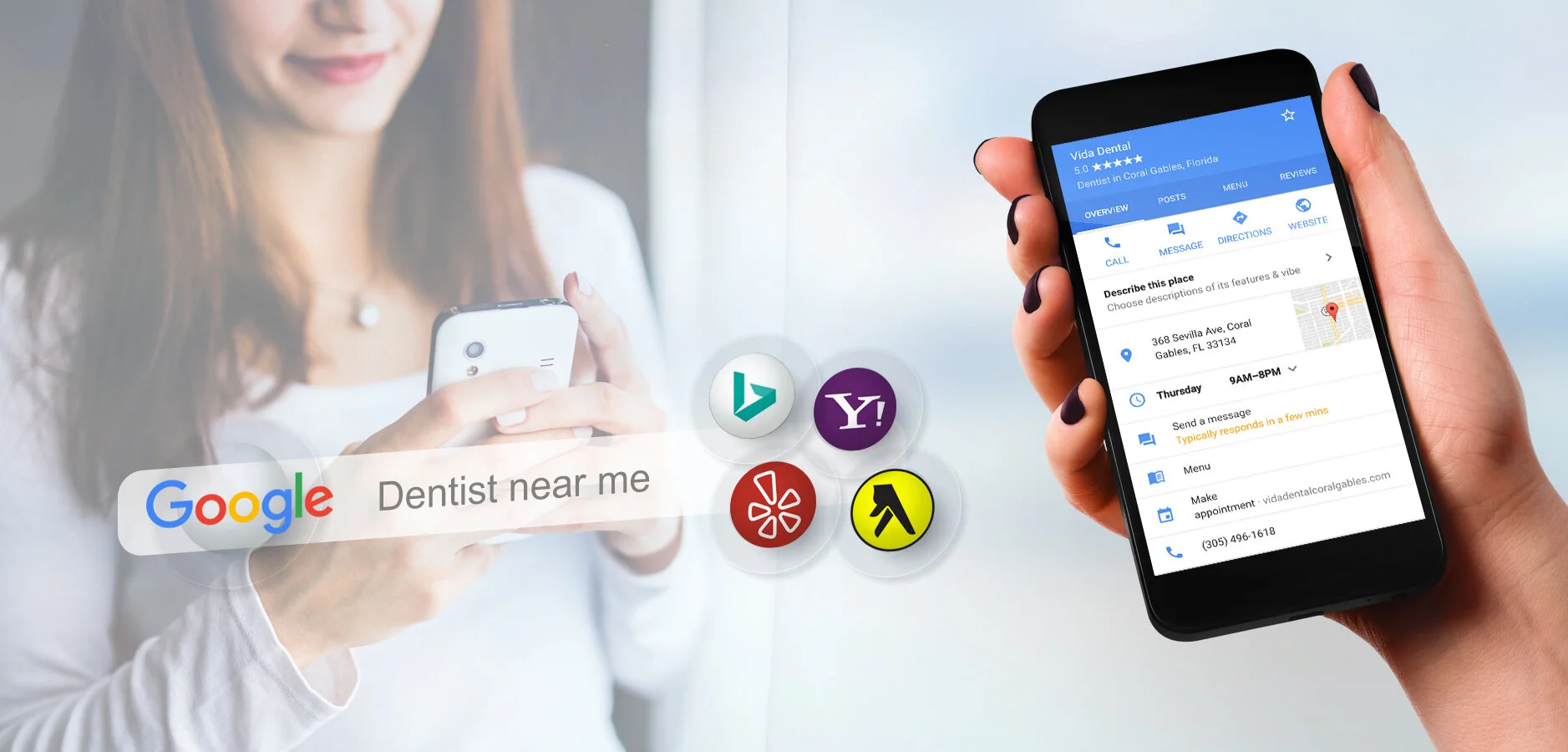
When someone in Delhi typed “dentist in Lajpat Nagar” or “hardware store near Karol Bagh” — they were not looking for a website with articles about dentists. They were not looking for a Wikipedia entry. They were looking for a real place, with a real address, that was actually open and accepting patients or customers right now.
And the standard blue-link search results were not built for that. They were built for content, not for businesses with physical locations.
Google realized that millions of searches every single day were local in nature — people looking for businesses and services in their immediate area. And if Google could not answer those searches well, it was failing a huge portion of its users.
So they started building something different. A system that could map the real world. A database of businesses with locations, hours, phone numbers, and categories. A way to show searchers not just information, but places.
This was the seed that eventually grew into what we now call Google My Business.
From Google Local to Google My Business — The Evolution
The journey to the product we know today was not linear. It went through several iterations over nearly two decades.
Google Local (2004) was one of the first attempts. It was a basic directory — you could search for businesses and see them on a map. Revolutionary at the time, but clunky and incomplete.
Google Maps (2005) changed things dramatically. Suddenly you could see businesses visually, plotted on an interactive map that you could zoom and navigate. This was a genuine leap forward, and it quickly became one of the most used products Google had ever built.
Google Places (2010) took the next step by allowing business owners to actually claim their listings and add information — photos, hours, descriptions. For the first time, the business itself could shape how it appeared on Google.
Google+ Local (2012) was an attempt to integrate Google’s social network into the local search experience. It was largely considered a misstep — Google+ never achieved the adoption Google hoped for, and the integration confused more than it helped.
Google My Business (2014) was the version that finally got it right. Google consolidated the business dashboard, simplified the management tools, and created a unified product that business owners could actually navigate without a technical background. This was the product that would eventually become what hundreds of millions of businesses around the world use today.
Google Business Profile (2022) was the most recent rename — Google retired the “My Business” app and moved management directly into Google Search and Maps. The name changed, but the power of the platform only grew.
Each evolution made the tool more useful, more accessible, and more central to how people find local businesses. And with each step, Google was quietly building the world’s most comprehensive database of local business information — powered, for free, by the businesses themselves.
The Moment It Became Truly Mainstream in India
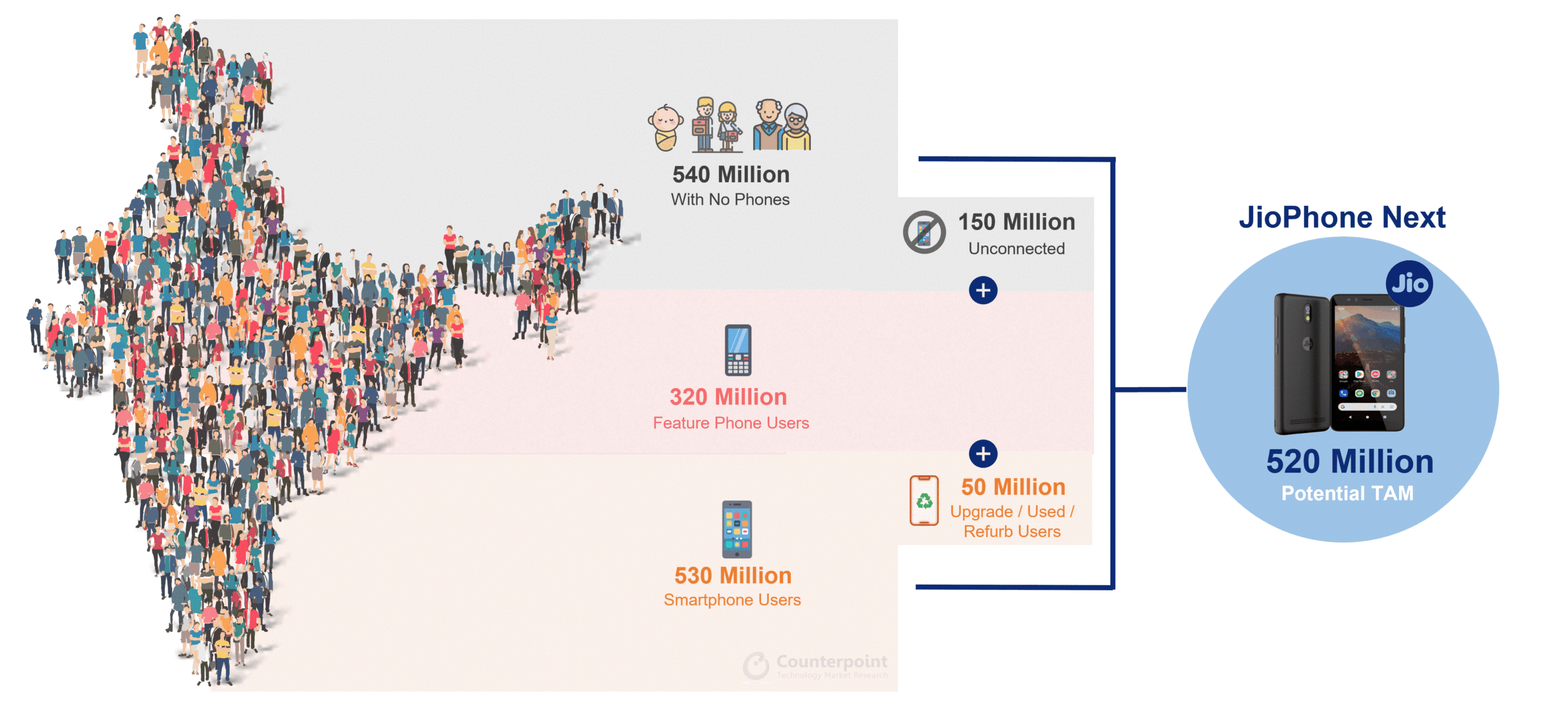
While Google My Business was growing globally through the late 2010s, something specific happened in India that supercharged its adoption and relevance in a way that few other countries experienced quite as dramatically.
Two things collided: the Jio revolution and the smartphone explosion.
When Reliance Jio launched in 2016 with essentially free mobile data, it did not just give Indians cheap internet. It gave hundreds of millions of people — many of whom had never meaningfully used the internet before — a reason to be online all the time, on their phones.
Suddenly, a vegetable vendor in Varanasi had a smartphone. A tailor in Coimbatore had WhatsApp. A small hotel owner in Rishikesh had access to the same internet as anyone in Mumbai or Bangalore.
And when these people — both business owners and customers — started using their smartphones to navigate daily life, they gravitated naturally toward Google Maps. It was intuitive. It was visual. It answered the most practical questions: Where is this place? How do I get there? Is it open right now? What do other people think of it?
Searches like “plumber near me,” “tiffin service near me,” “coaching classes near me” exploded in volume. The behavior of searching Google for local businesses became deeply embedded in everyday Indian life — across age groups, income levels, and cities.
For local business owners who had a well-managed Google Business Profile, this wave of new search behavior was pure, free, qualified traffic arriving at their digital doorstep every single day.
Why “Free” Is Not the Most Important Part of the Story
When people talk about Google My Business, the first thing they mention is that it is free. And yes, that is remarkable. A marketing tool of this power being available at zero cost is genuinely extraordinary.
But I want to push back a little on making “free” the headline. Because the most important thing about Google My Business is not that it costs nothing — it is that it delivers something that no amount of money could reliably buy through traditional advertising channels.
It delivers intent.
Traditional advertising — whether it is a TV commercial, a newspaper ad, a hoarding on a highway, or even a Facebook ad — is about interruption. You put your message in front of people and hope that some of them happen to need what you are offering at that moment. The vast majority of people who see your ad are not in the market for your product right now. You are playing a numbers game, spending money to reach thousands of people so that a small percentage will eventually act.
Google My Business flips this completely.
When someone finds your business through Google Search or Google Maps, they are not being interrupted. They went looking for you — or more precisely, they went looking for what you offer, and you showed up. The need already exists. The decision to look for a solution has already been made. You are not creating demand; you are capturing it.
This is the difference between fishing with a net that catches everything and a hook that catches exactly what you are looking for. One is wasteful and expensive. The other is precise and efficient.
And for local businesses — especially small and medium ones with limited budgets — precision and efficiency are everything.
The Three Pillars That Make It Work
Google My Business became the most powerful free marketing tool for local businesses because it rests on three pillars that work together in a way no other platform has replicated.
Pillar One: Discovery
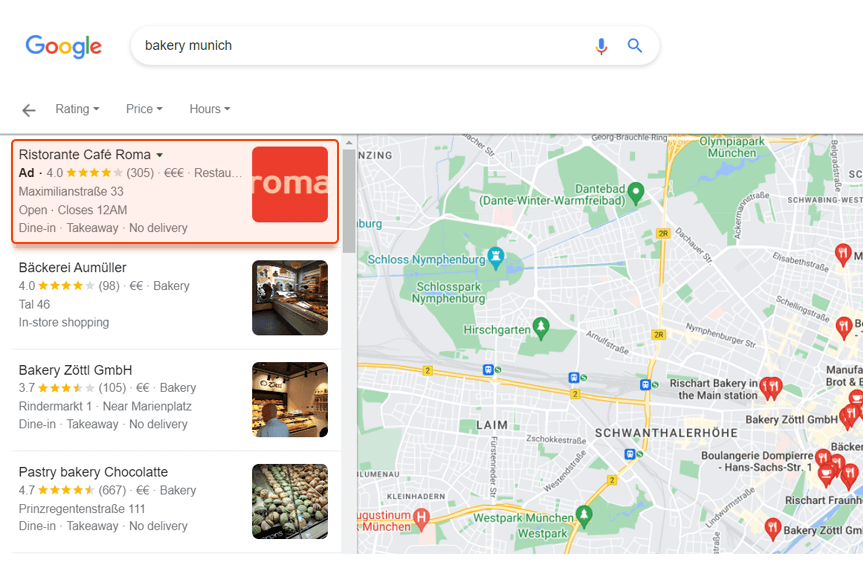
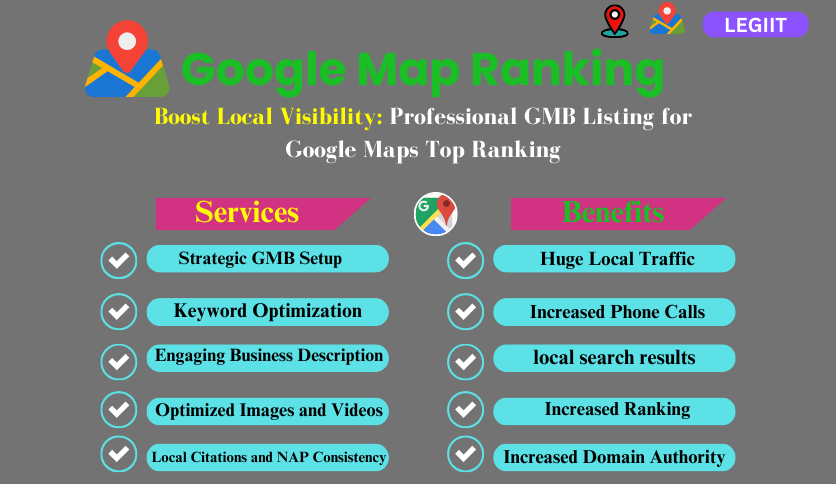
When your profile is properly optimized, you appear in front of people who are actively searching for what you offer, in the area you serve, at the exact moment they are ready to make a decision. This is search engine power applied specifically to local intent — and it is arguably the highest-quality discovery mechanism available to any business at any price point.
The Local Pack — the map and three business listings that appear at the top of local search results — is prime digital real estate. Businesses that consistently appear there dominate their local market. And appearing there is determined not by how much you spend but by how well you manage your profile.
Pillar Two: Trust
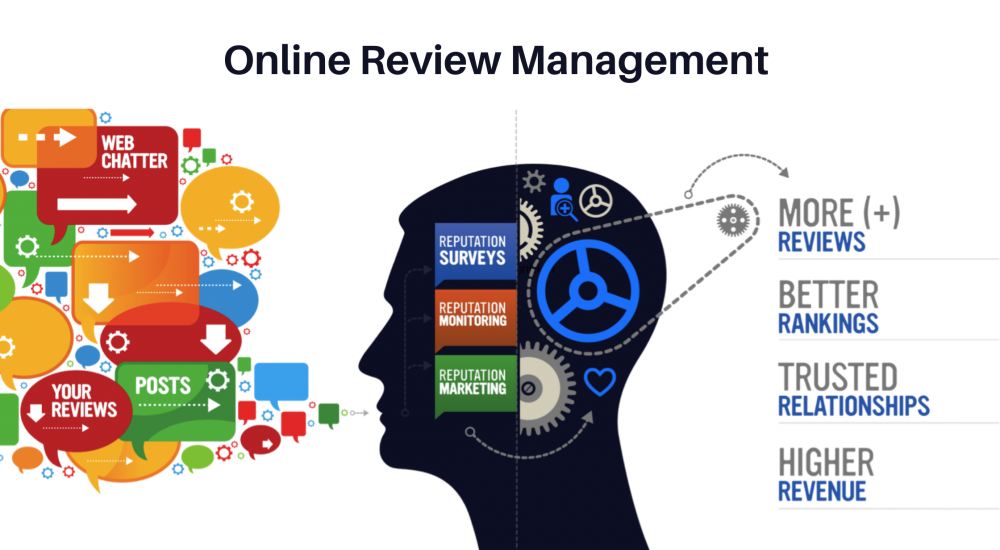
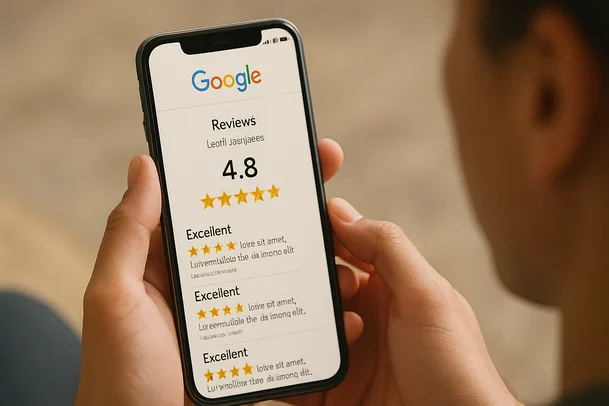
Google My Business is also the world’s most powerful local trust-building platform, because it hosts the review system that most consumers in India now default to when evaluating a local business.
Before visiting a new restaurant, getting a haircut at an unfamiliar salon, or calling a plumber they have never used before, most people check the Google rating. The star rating and the content of recent reviews are often the final deciding factor in whether a customer chooses you or your competitor.
A business with 4.7 stars and 200 thoughtful reviews has built an extraordinary asset — one that is working for them around the clock, answering the question “can I trust this business?” for every single potential customer who visits their profile.
No advertisement does that. No brochure does that. No word-of-mouth referral scales like that.
Pillar Three: Conversion
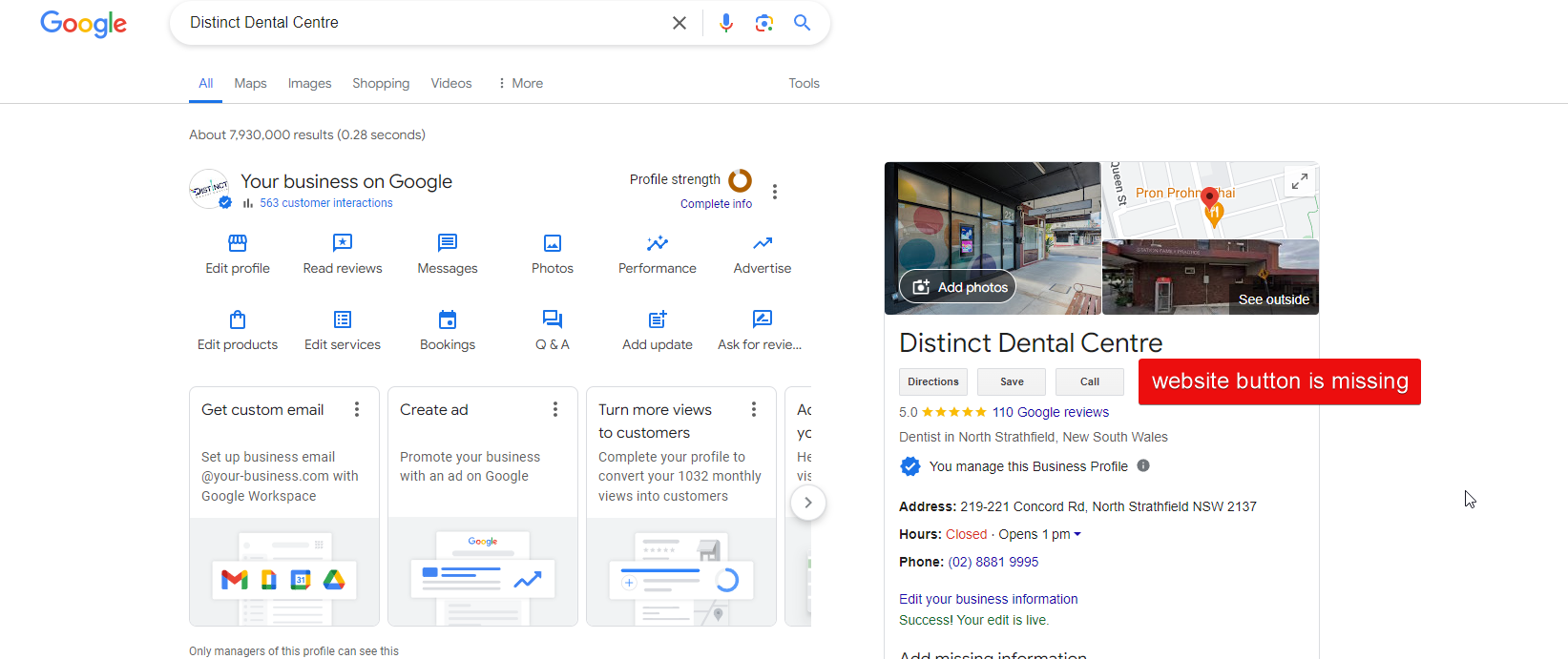
The third pillar is how seamlessly Google My Business converts interest into action.
When a potential customer is looking at your listing, every tool they need to become an actual customer is right there. One tap to call you. One tap to get directions. One tap to visit your website. One tap to send a message. The distance between “I found this business” and “I am contacting this business” is literally a single touch on a phone screen.
No other marketing channel collapses the customer journey that completely. There are zero extra steps, zero friction, zero moments for the customer to change their mind or get distracted.
Discovery, trust, and conversion — three things every marketing strategy needs to achieve — handled in one place, for free.
What Separates Businesses That Thrive on Google My Business From Those That Do Not
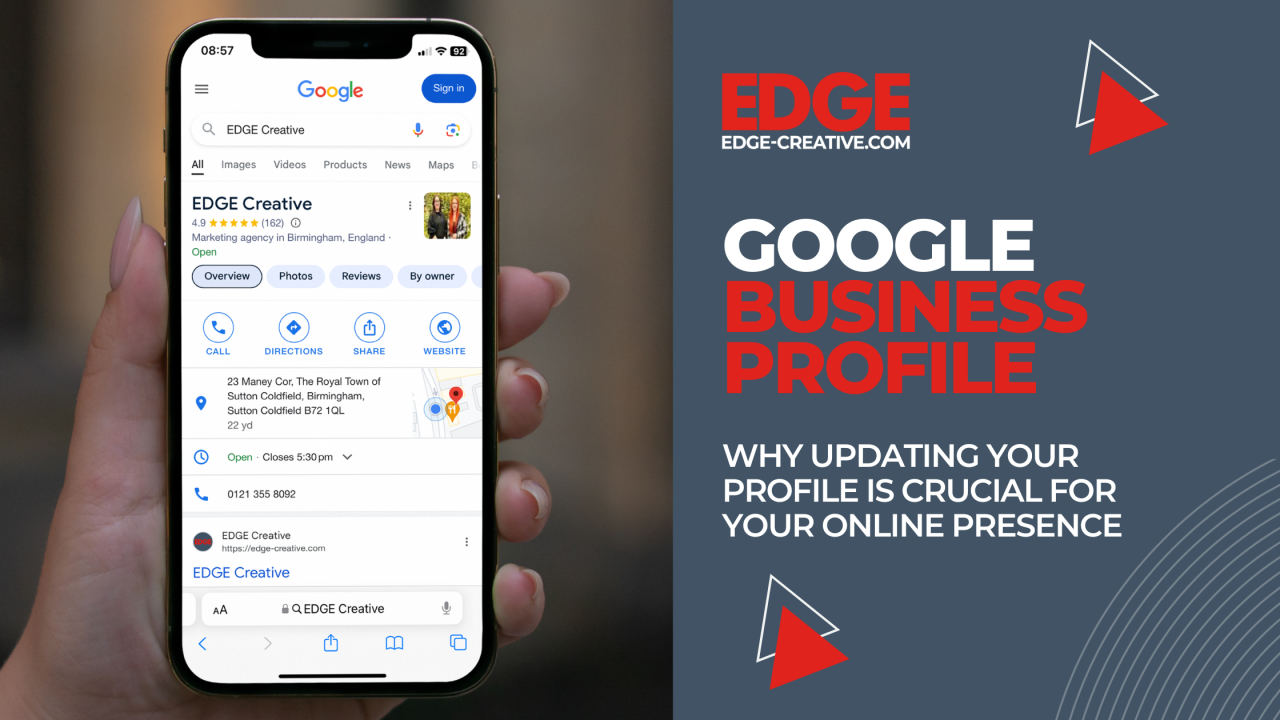
Here is the uncomfortable truth. Google My Business is available to every local business in the world. The playing field is theoretically equal. Yet some businesses are crushing it — getting dozens of calls and visits every week — while others with comparable quality and prices are barely visible.
What is the difference?
It comes down to one word: attention.
The businesses that thrive on Google My Business treat their profile as a living, breathing marketing asset that requires regular care. The businesses that struggle treat it as a set-and-forget listing that they filled in once and moved on from.
Specifically, the businesses that dominate local search do these things consistently:
They keep every detail on their profile accurate and complete — name, address, phone number, hours, services, categories. Not just when they first set it up, but ongoing. When hours change for a holiday, they update it. When they add a new service, they add it to the profile. When they move locations, they update the address immediately.
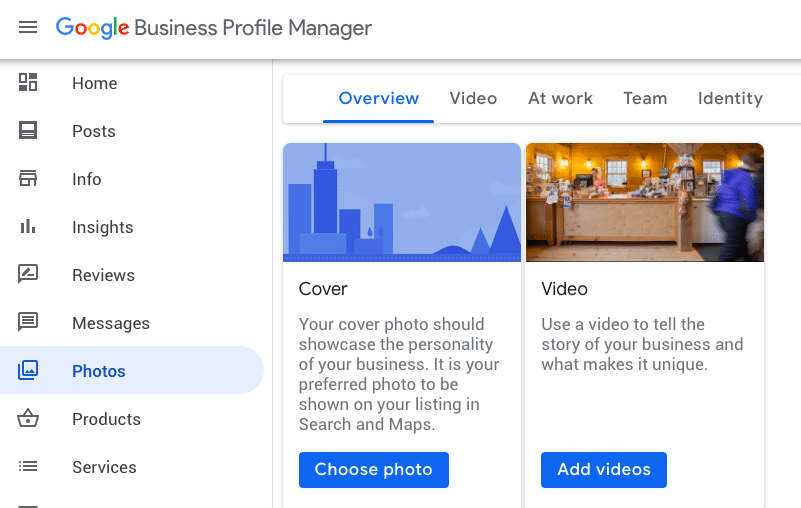
They upload fresh photos regularly. Not a one-time batch but ongoing updates — weekly if possible. New products, finished work, seasonal decorations, team members, happy customers. Each new photo is a signal of activity that Google rewards with better visibility.
They collect reviews actively and ethically. They make it easy for satisfied customers to leave reviews by sharing the direct link. They do not buy fake reviews or try to game the system — those tactics can get a profile penalized or removed. They earn real reviews from real customers, consistently over time.
They respond to every review — positive and negative. Responding to reviews is not just good customer service. It is a signal to Google that this business is engaged and active. And it is a signal to potential customers that this business cares about the people it serves.
They use Google Posts to share updates, offers, and announcements. These posts appear directly on the listing and give returning visitors fresh reasons to engage. They also contribute to the freshness signals that affect ranking.
They answer questions in the Q&A section. Google My Business has a feature where anyone can ask a question about your business — and anyone can answer. Savvy business owners pre-populate this section with common questions and answers, and they monitor it to ensure accurate information is being shared.
None of these things require technical expertise. None require a marketing budget. They require time, consistency, and the understanding that your Google Business Profile is not a form you fill out once — it is a platform you actively manage.
The Competitive Landscape Has Changed — But Most Businesses Have Not Caught Up
Here is something that should motivate every local business owner reading this.
Despite everything that has been written about Google My Business, despite its proven impact, despite being free and available to everyone — the majority of local businesses in India still have incomplete, unoptimized, or actively neglected Google Business Profiles.
Walk through Google Maps in any mid-sized Indian city and look at the local business listings. You will see profiles with no photos. Listings with outdated phone numbers. Businesses with zero reviews. Profiles where the owner has never responded to a single customer question or review.
This is not because these businesses are bad. Most of them are run by hardworking people who are simply too busy with day-to-day operations to think about their digital presence — and who may not fully understand what is at stake.
But what it means for you is this: the bar is genuinely not that high.
You do not need to be perfect. You do not need to outmaneuver sophisticated competitors with large marketing teams. You just need to be more complete, more active, and more responsive than most of the businesses around you — which is a realistic goal for any business owner who commits even an hour or two each week.
The businesses that recognize this opportunity right now and act on it are the ones who will own the top positions in their local market for years to come. Because once you establish ranking authority and review volume on Google, it becomes progressively harder for late arrivals to displace you.
The window is open. But it will not stay open forever. Every month, more business owners wake up to this reality. The competition for Local Pack positions will only intensify over time.
Beyond the Basics — Features Most Business Owners Are Not Using
Most of the conversation about Google My Business focuses on the basics — photos, reviews, accurate information. And the basics matter enormously. But there is a second tier of features that most business owners never explore, and they are leaving real value on the table.
Google Posts allow you to publish updates, announcements, and offers directly on your listing. These appear when people find your business in search. An upcoming sale, a new menu item, a seasonal promotion, a new service launch — all of these can be communicated to high-intent customers at exactly the moment they are evaluating your business. Most businesses never use this feature.
Products and Services sections allow you to list specific offerings with descriptions and prices. This does two things: it helps Google understand more precisely what you offer, improving how you match with relevant searches; and it gives customers detailed information that helps them self-qualify before they even contact you. A customer who has already seen your services and prices before calling is much closer to a purchase decision than one who is calling just to gather basic information.
Messaging allows customers to send you direct messages from your Google listing. For many customers — particularly younger ones — sending a message is more comfortable than making a phone call. Enabling and actively monitoring this feature captures inquiries that might otherwise be lost.
Booking Integration is available for certain business types — salons, clinics, fitness studios, and others can integrate booking platforms directly into their Google listing. Imagine a potential customer going from finding your listing to booking an appointment without ever leaving Google. That is a conversion machine.
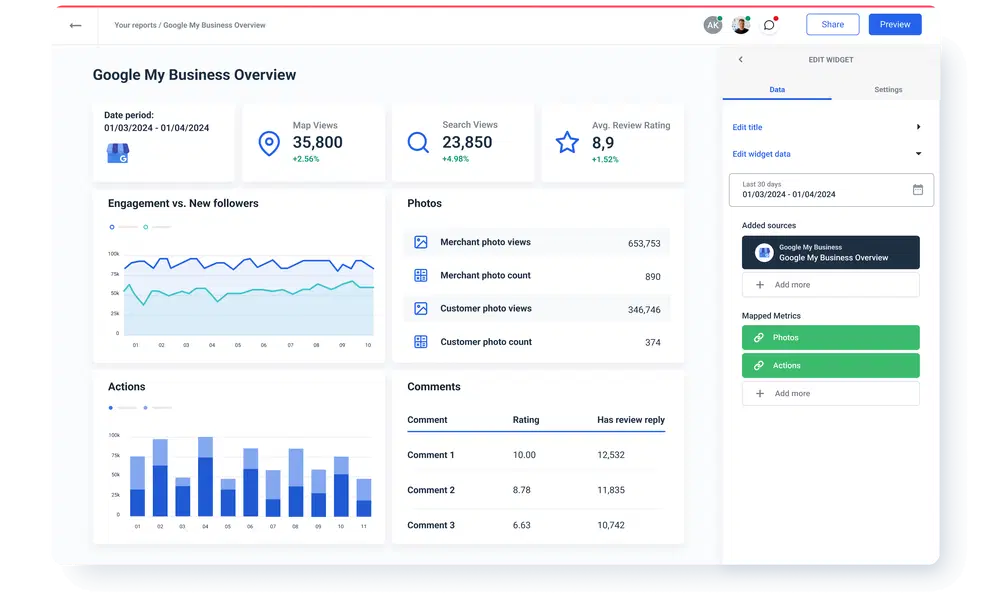
Insights and Analytics give you detailed data on how customers are finding and interacting with your profile — how many searches, how many photo views, how many direction requests, how many calls. This data is free, detailed, and available right in your dashboard. Most business owners never look at it, which means they are managing their most powerful marketing asset blind.
The Bigger Picture — What Google My Business Represents
Pull back far enough and you can see what Google My Business really represents in the context of business history.
For most of human commercial history, visibility was expensive. Location, signage, advertising — all of it cost money. The businesses with the most capital had the most visibility. Small businesses competed at a structural disadvantage.
Google My Business changed the equation. For the first time in history, a one-person operation in a small town can appear alongside — and outrank — well-funded competitors simply by managing their digital presence better.
The currency is not money. It is attention, consistency, and customer relationships.
A street food vendor with 500 authentic five-star reviews and a well-maintained Google profile outranks a restaurant chain that set up their listing carelessly. A freelance home-tutor who updates their profile weekly and responds thoughtfully to every review outranks a big coaching institute with a neglected listing.
This is a genuine democratization of business visibility. It is not complete or perfect — bigger businesses with dedicated marketing teams can still outcompete small ones if both are operating at full effort. But the gap has narrowed dramatically, and the tools to compete are available to everyone for free.
That is a remarkable shift. And local business owners who understand and embrace it have an advantage that previous generations of entrepreneurs could only dream of.
Where This Goes From Here
Google My Business is not standing still. The platform continues to evolve rapidly, and the direction of that evolution is consistently toward giving businesses more ways to connect with customers directly within the Google ecosystem.
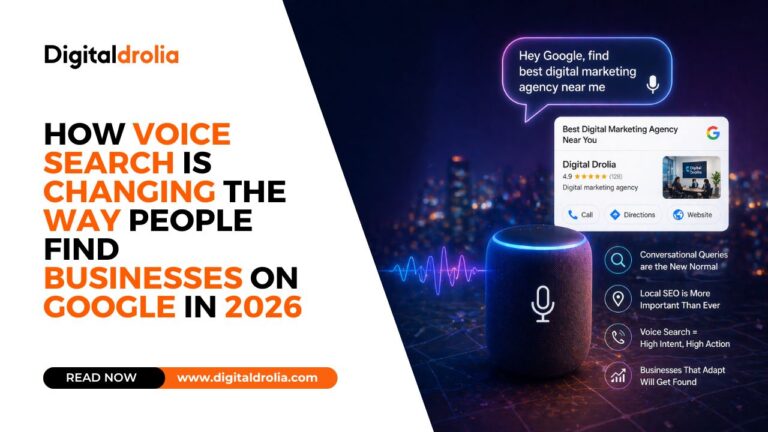
AI is already playing a larger role in how Google summarizes and presents business information to searchers. Voice search — “Hey Google, find me a tailor near me” — is growing fast and is heavily dependent on Google Business Profile data. The integration between Search, Maps, and other Google products like Shopping and Travel is deepening.
What this means practically is that a well-managed Google Business Profile will only become more valuable over time — not less. The businesses that build strong profiles now, accumulate reviews, and establish ranking authority are building assets that will compound in value as these technologies evolve.
It is not just about where customers find you today. It is about positioning yourself for how they will find you tomorrow.
Final Thoughts — The Most Important Marketing Decision You Can Make Right Now
If you own a local business and you have read this far, here is what I want you to take away.
You do not need a large marketing budget. You do not need to understand complex digital advertising. You do not need to hire an agency or a consultant or a social media manager.
What you need is to treat your Google Business Profile with the seriousness it deserves. Fill it in completely. Keep it accurate. Upload photos regularly. Ask satisfied customers for reviews. Respond to every piece of feedback. Post updates. Explore the features you have not used yet.
Do these things consistently for three to six months and measure what happens to your calls, your visits, your revenue.
The results will speak for themselves — because across thousands of businesses, in hundreds of cities, in every kind of industry, the pattern is always the same. Businesses that actively manage their Google presence grow. Businesses that ignore it stay stuck, wondering why the phone is not ringing while their less skilled but more digitally savvy competitors are turning away work.
Google My Business did not become the most powerful free marketing tool for local businesses by accident. It became that because it solved a real problem — connecting people who need something with the local businesses that can provide it — better than anything that came before it.
The only question is whether your business shows up when that connection is being made.
Make sure it does.
Written by Digital Drolia — helping local businesses across India grow smarter, rank higher, and compete confidently in the digital age. Found this valuable? Share it with a business owner who is ready to take their Google presence seriously