

Why You See the Same Brand’s Ad Everywhere After Visiting Their Website Just Once

Let me describe something that has happened to every single person reading this post.
You are browsing online. Maybe you are looking at a new pair of running shoes. You spend three minutes on a website — looking at a few models, checking prices, maybe reading one product description. You do not buy anything. You close the tab and move on with your life.
Then something strange starts happening.
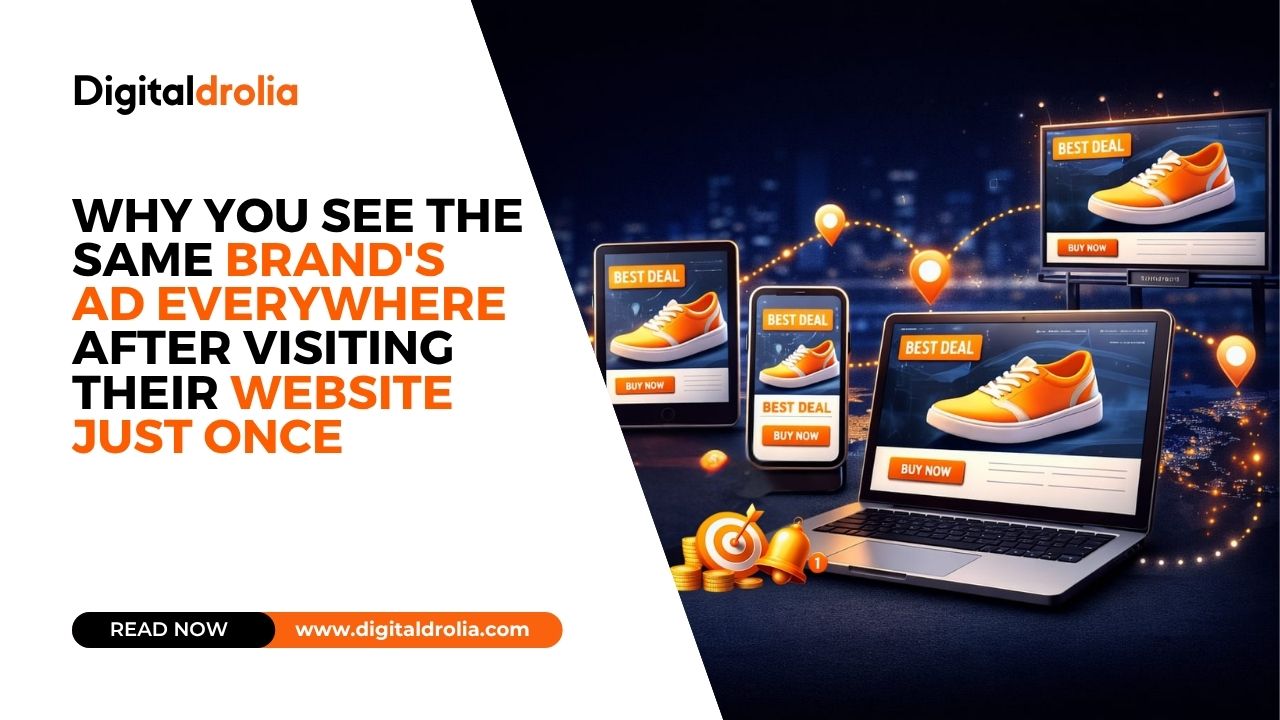
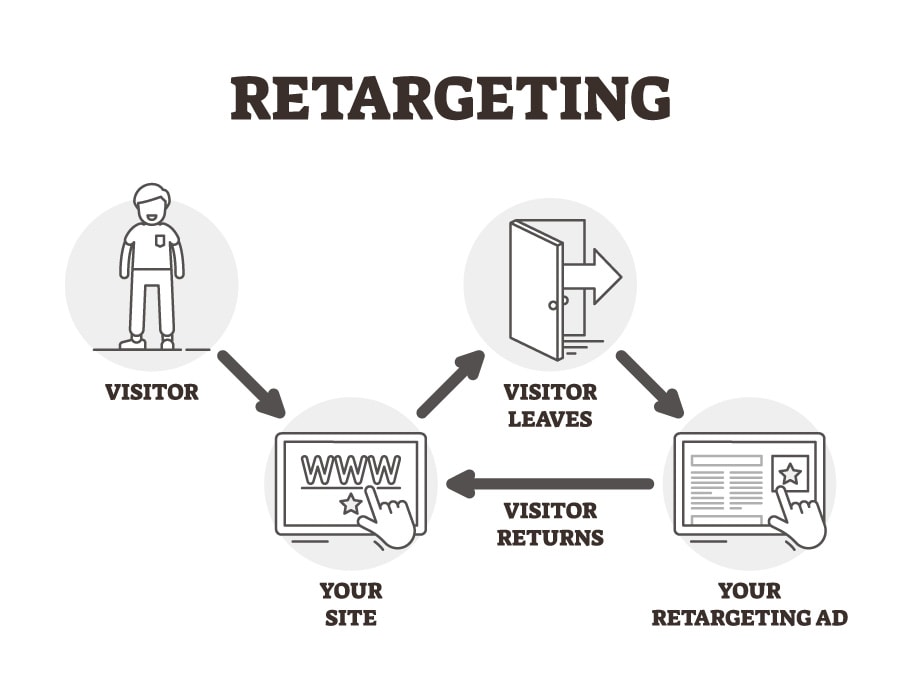
That exact brand — the one whose website you visited for three minutes — starts appearing everywhere. You open Instagram and there is an ad for their shoes. You go to check the cricket score on a news website and there is a banner ad for the same brand. You open YouTube to watch a recipe video and there is a pre-roll ad from that shoe company. You open a random blog about travel and there they are again.
It feels, in a slightly unsettling way, like the brand is following you.
And the truth is — it is.
Not in a sinister way. Not because someone is watching you specifically or because your phone is listening to your conversations. But because of a technology that is so deeply embedded in modern digital marketing that most people interact with it dozens of times every single day without ever knowing its name.
That technology is called retargeting — sometimes also called remarketing — and understanding how it works is one of those moments where the digital world suddenly makes a lot more sense.
In this post, I am going to explain exactly how this works, why brands use it so aggressively, what it means for you as a consumer, and — most importantly for business owners reading this — why it is one of the most powerful and cost-effective advertising tools available today.
The Cookie — Where It All Begins
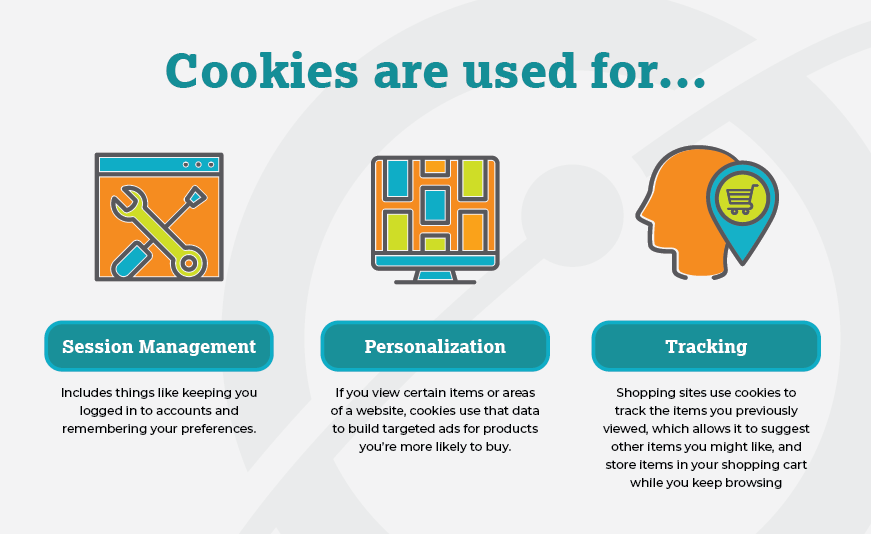
To understand retargeting, you first need to understand what a cookie is. Not the kind you eat — the kind your browser stores.
When you visit a website, that website can place a small piece of code on your browser called a cookie. Think of it as a tiny invisible sticky note that gets attached to your browser when you visit a site. It does not contain your name, your email address, or your personal information. It simply contains a tag — a kind of anonymous identifier — that says: this browser visited this website, on this date, and looked at these pages.
The cookie sits in your browser quietly, doing nothing, until you visit another website that is part of the same advertising network. At that point, the advertising system reads the cookie, recognises that your browser has previously visited the original website, and uses that information to decide which ad to show you.
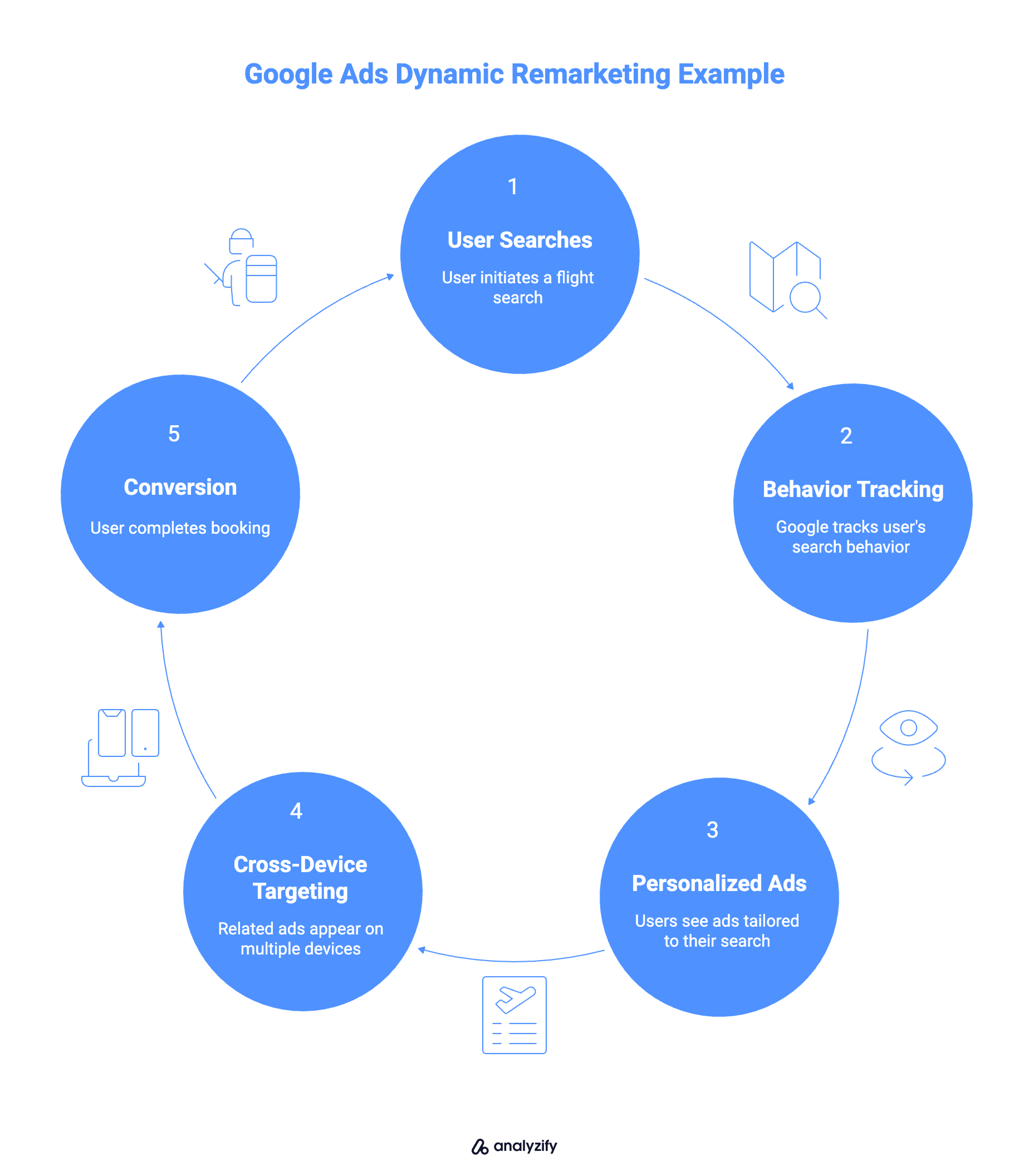
This is the fundamental mechanism behind why the shoe brand follows you around the internet. When you visited their website, they placed a cookie on your browser. Now, whenever you visit any website that uses the same advertising network — which could be millions of websites globally — the system sees the cookie and says: show this browser the shoe ad.
From your perspective, it feels like the brand is everywhere. From a technical perspective, you are simply carrying a small flag that says “interested in shoes” and the advertising network is responding to that flag every time you appear somewhere in its ecosystem.
The Pixel — How the Brand Plants the Flag
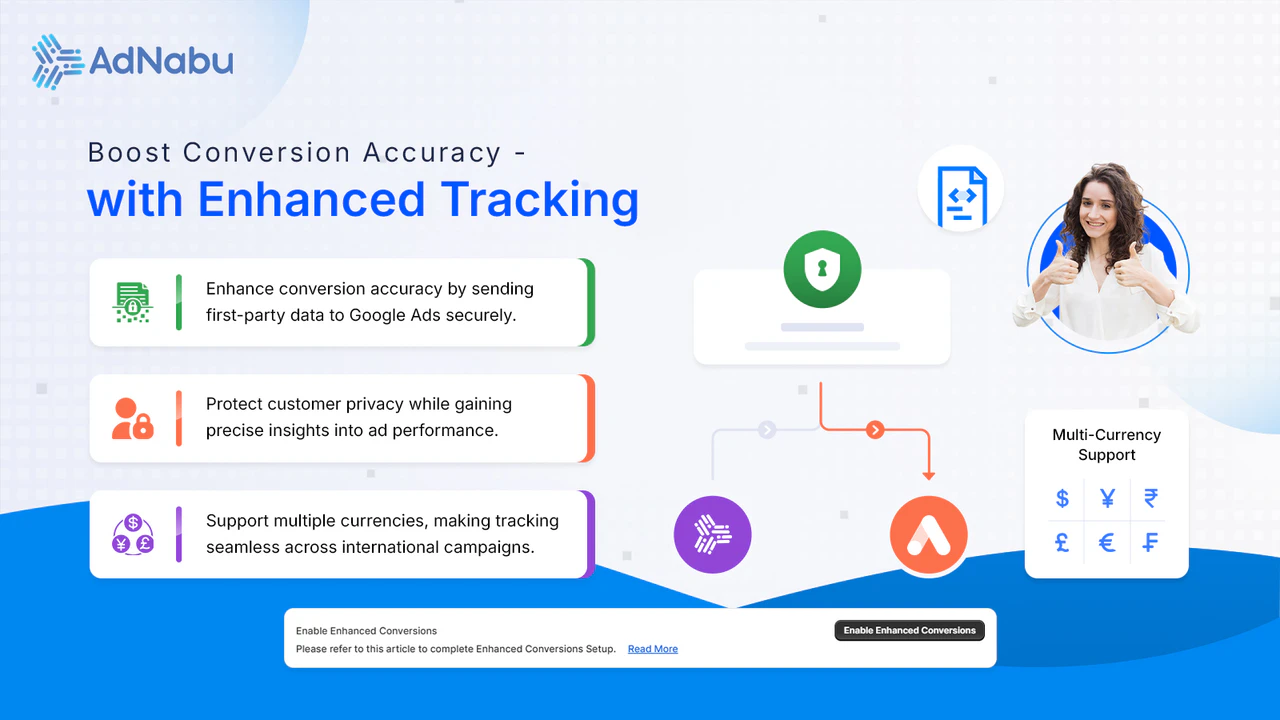
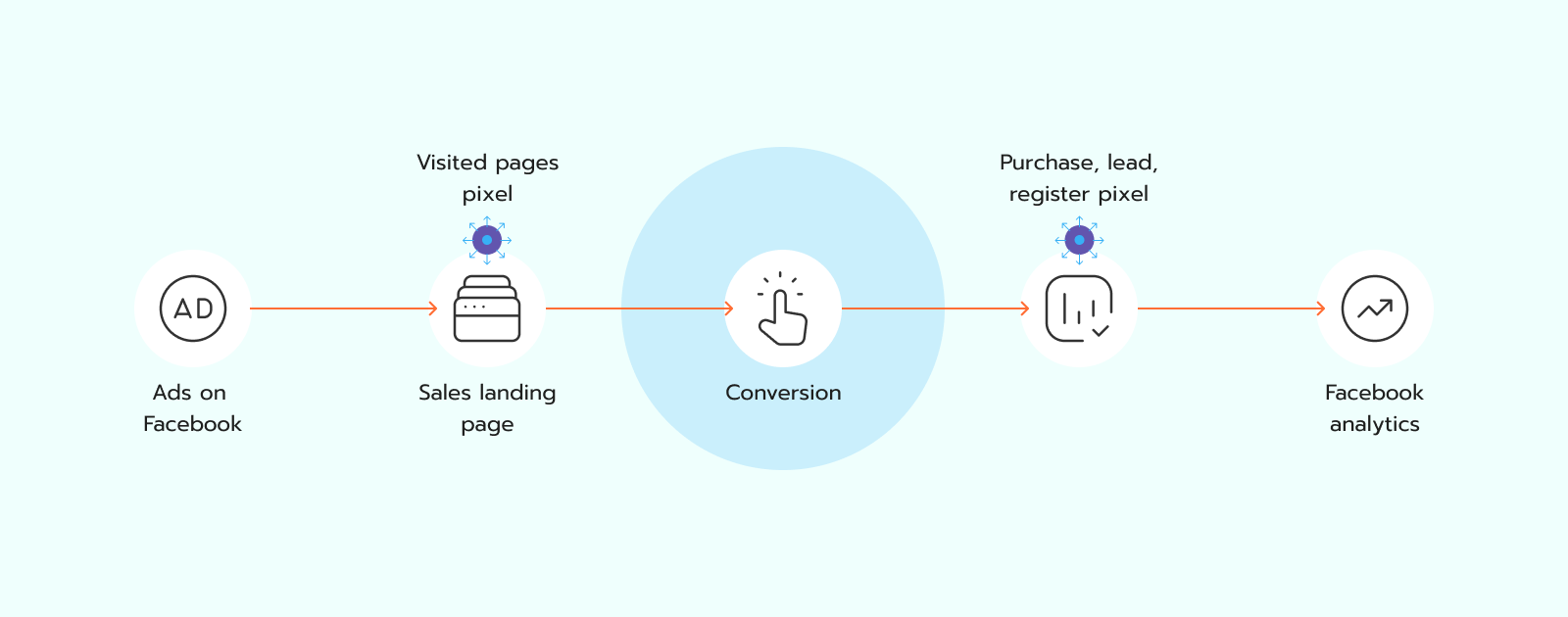
You might be wondering: how does the brand place the cookie on your browser in the first place? The mechanism for this is called a tracking pixel — sometimes called a retargeting pixel or an ad pixel.
A tracking pixel is an incredibly small piece of JavaScript code — usually just a few lines — that a brand embeds invisibly into their website. When you visit that website and the page loads, the pixel fires silently in the background. You never see it. You never feel it. You have no indication it has happened.
But in that instant, the pixel has communicated with an advertising platform — Google Ads, Meta Ads, or others — and told it: this specific browser just visited this page on our website. Log it.
The advertising platform makes a note in its system. Your browser is now in that brand’s retargeting audience. And from that moment forward, whenever you appear anywhere within that advertising platform’s reach, you are eligible to see that brand’s ads.
The pixel can be configured to track all kinds of specific behaviors. Not just website visits, but which specific pages you visited. Whether you added something to a cart but did not purchase. Whether you started filling out a form but abandoned it. Whether you watched a product video. Whether you visited the pricing page specifically — which is a strong signal of purchase intent.
Each of these behavioral signals allows the brand to show you a more specific and relevant ad. If you added shoes to your cart but did not buy, they can show you an ad with those exact shoes and perhaps a discount code to nudge you toward completing the purchase. If you only visited the homepage, they might show you a more general brand awareness ad.
This level of behavioral specificity is what makes retargeting so much more powerful than regular display advertising.
Why This Works So Incredibly Well — The Psychology Behind It
Retargeting is not just technically clever. It is psychologically brilliant. And to understand why, you need to think about how purchase decisions actually happen.
The majority of people who visit a website for the first time do not buy anything. Across most industries and product categories, the conversion rate for first-time website visitors is somewhere between one and three percent. That means for every hundred people who visit your website, ninety-seven to ninety-nine of them leave without making a purchase.
Most of those people are not leaving because they are not interested. They are leaving because they are not ready — yet. Maybe they are comparing options. Maybe they need to think about the budget. Maybe they got distracted. Maybe the timing was not right. Maybe they liked what they saw but wanted to sleep on it.
These people are not lost. They are warm. They have already expressed interest. They just need more time and more exposure before they are ready to commit.
This is where retargeting does its work. By keeping the brand in front of these warm prospects — reminding them of the product they were looking at, maintaining brand awareness during the consideration phase, creating a sense of familiarity that builds trust — retargeting keeps the brand alive in the prospect’s mind until they are ready to buy.
There is a well-known principle in marketing called the Rule of Seven — the idea that a potential customer needs to see or hear a brand’s message approximately seven times before they take action. The specific number varies by product, price point, and audience, but the underlying truth holds: repeated exposure builds familiarity, and familiarity builds trust, and trust enables purchase.
Retargeting is the most efficient mechanism ever invented for delivering those repeated exposures — because it delivers them only to people who have already shown interest, rather than broadcasting them to everyone and hoping some percentage of the audience happens to be relevant.
The Custom Audience — How Platforms Make This Possible at Scale
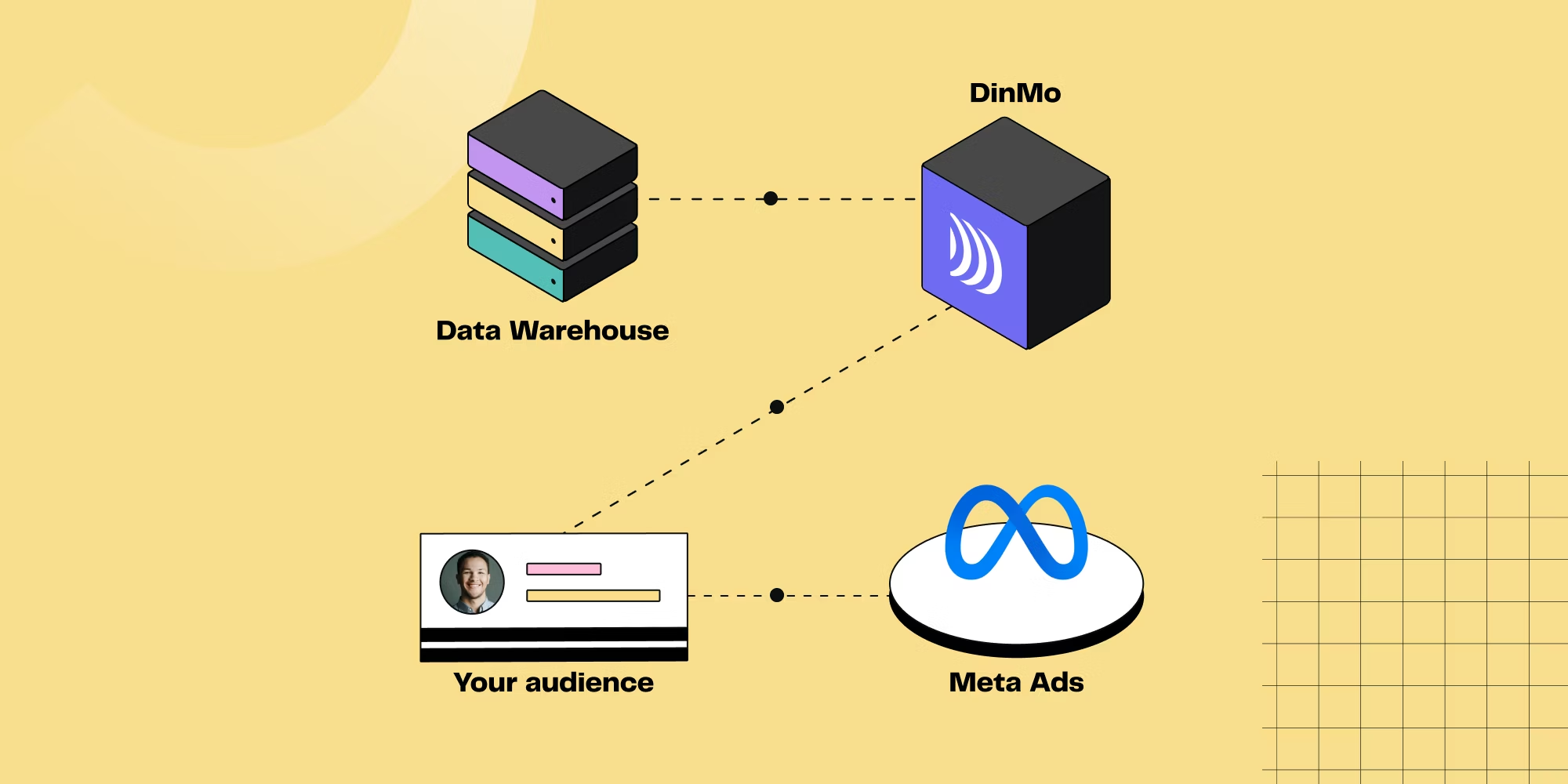
The technology that makes retargeting possible at scale is something called a Custom Audience — a feature available on advertising platforms like Google, Meta (Facebook and Instagram), and others.
Here is how it works in practice.
A brand installs the Meta Pixel on their website. Every time someone visits their website, the pixel fires and that browser’s identifier is added to a list within Meta’s advertising system. This list is the brand’s Custom Audience — it is a pool of people who have visited the website and can now be specifically targeted with ads across Facebook and Instagram.
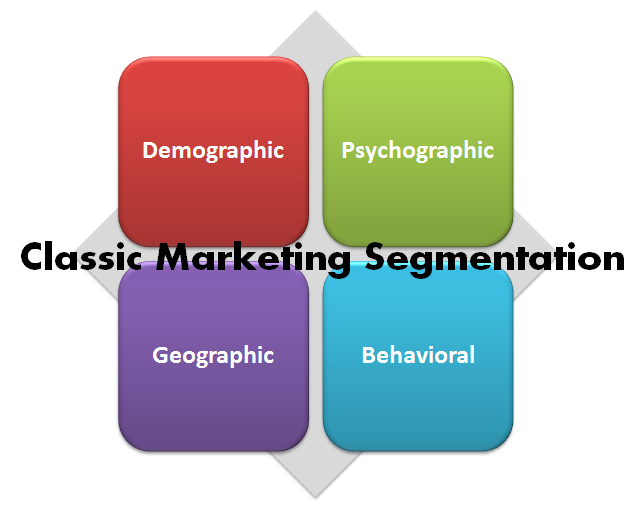
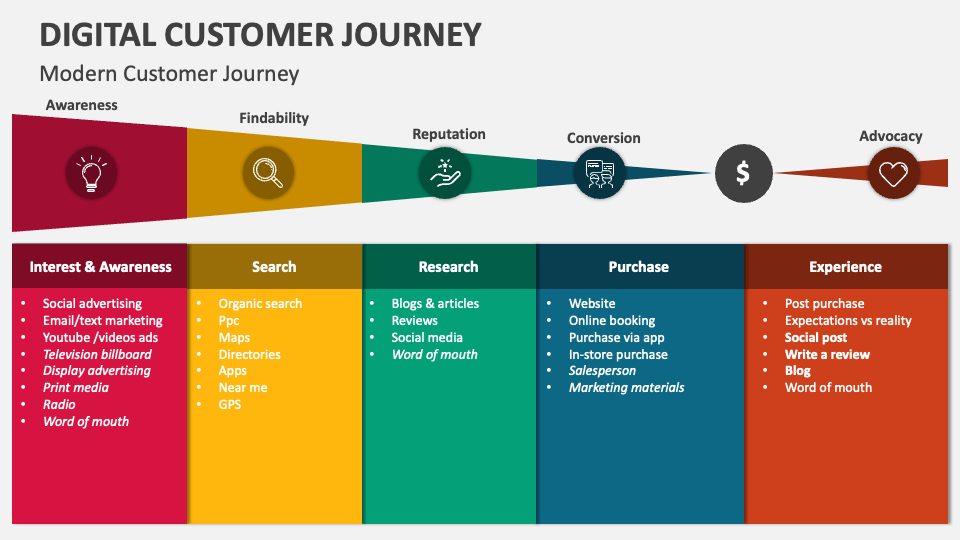
The brand can create multiple variations of this audience. People who visited the website in the last seven days. People who visited the pricing page. People who added something to the cart but did not check out. People who visited the website more than three times. Each of these segments represents a different level of interest and intent, and each can be shown different ads calibrated to where they are in the consideration journey.
On Google, the same principle applies. The Google Ads remarketing tag fires when someone visits a website, adds them to a remarketing list, and then serves them ads across the Google Display Network — which includes millions of websites, apps, and YouTube — as well as in Google Search results when they search for relevant terms.
The scale of this is staggering. The Google Display Network alone reaches over ninety percent of internet users globally. When a brand retargets you through Google, there is almost no corner of the internet where you will not potentially encounter their ads.
This is why it feels like the brand is everywhere. Because within the ecosystem of the advertising platforms they are using, they genuinely are.
Lookalike Audiences — The Technology That Takes Retargeting Even Further
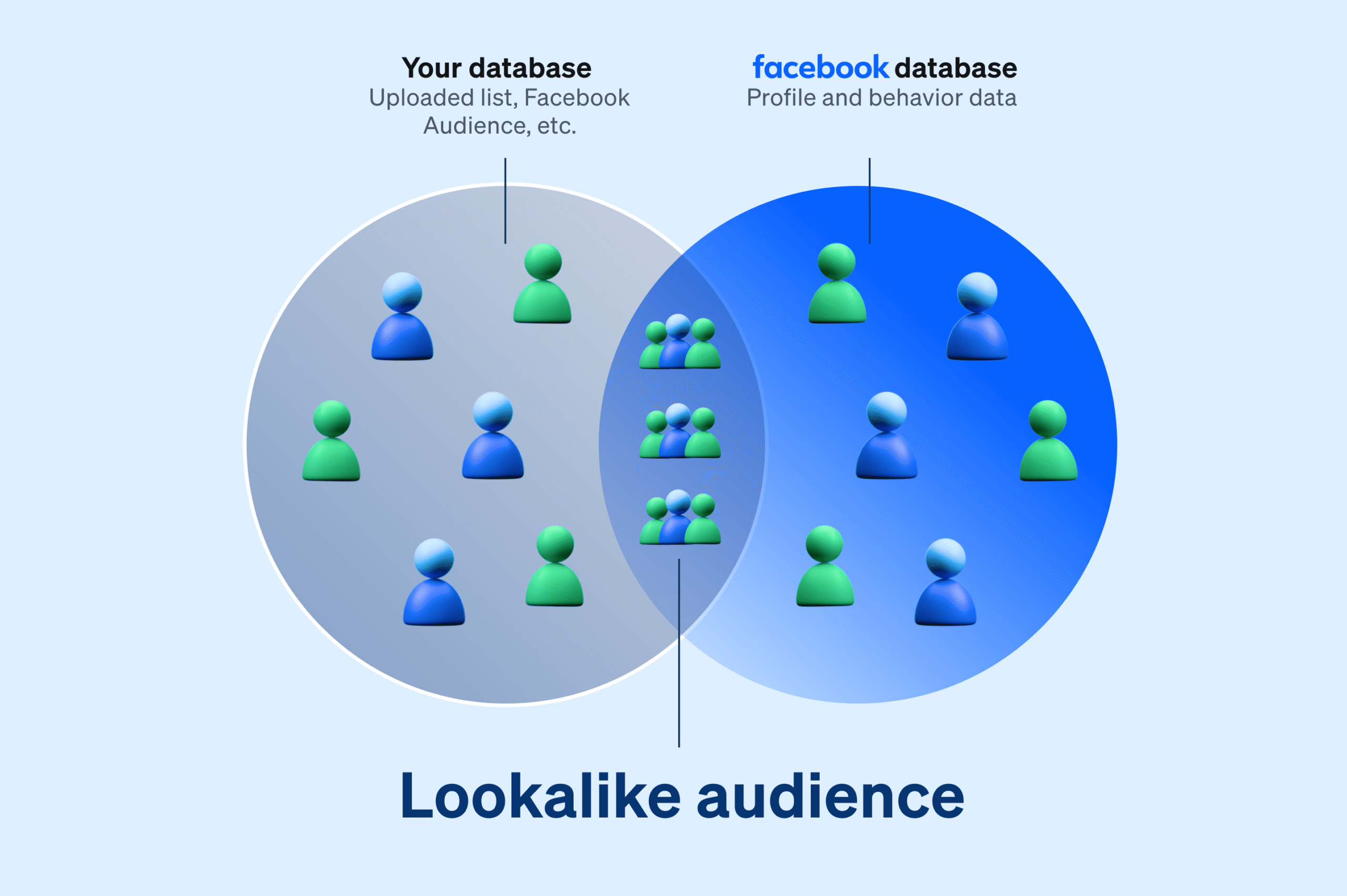
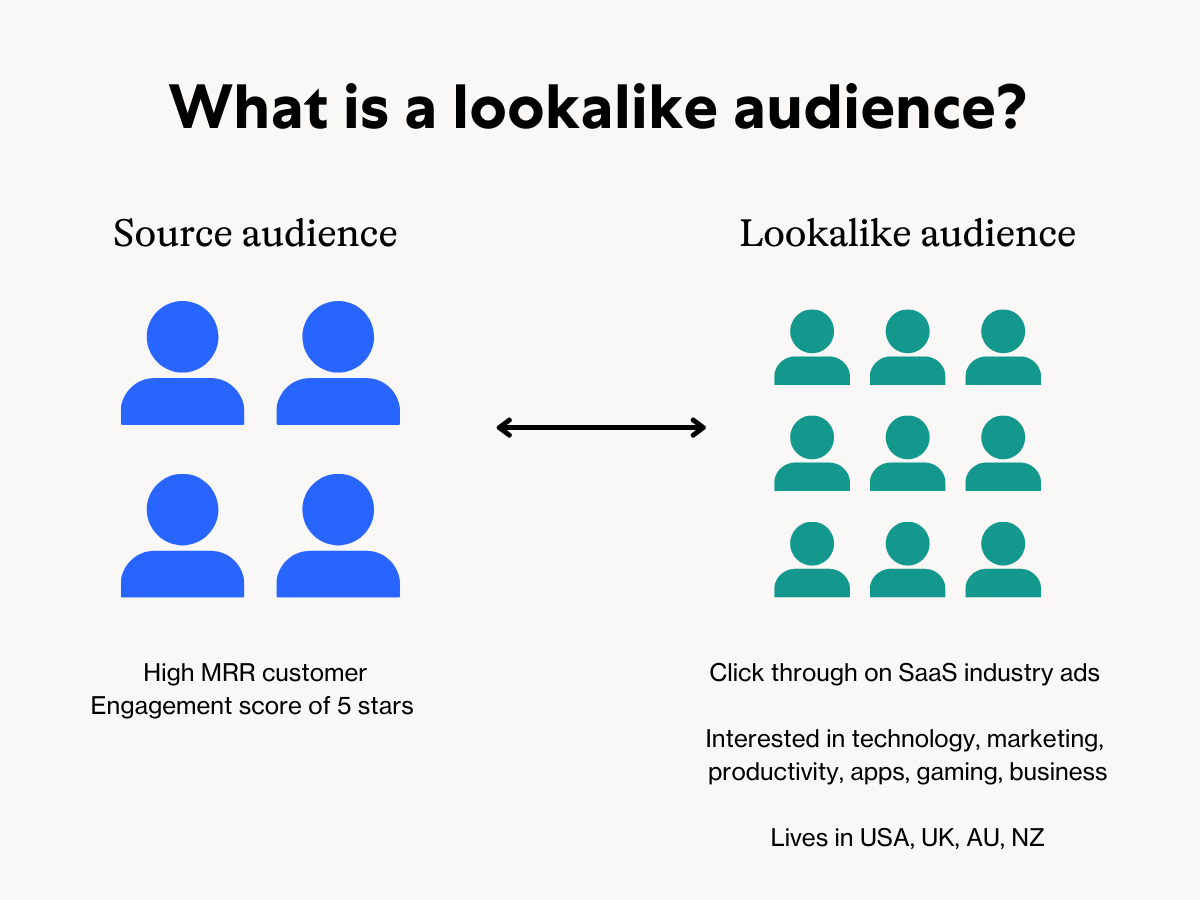
Once you understand Custom Audiences, you can understand a powerful extension of the same idea called Lookalike Audiences.
Here is the concept. Once a brand has a Custom Audience of people who have visited their website, they can ask the advertising platform to find new people — people who have never visited the website — who share similar characteristics with those who already have.
The platform analyses the Custom Audience. It looks at demographic data, behavioral patterns, interest signals, and hundreds of other data points that it has collected about those users. It builds a statistical model of what the brand’s most engaged visitors look like. And then it finds other users across the platform who closely match that model.
This becomes the Lookalike Audience — a pool of potential new customers who resemble your existing interested visitors but have not yet discovered your brand.
The result is advertising that is dramatically more targeted than traditional demographic or interest-based targeting. Instead of saying “show this ad to women aged 25 to 35 who are interested in fitness,” you are saying “show this ad to people who are statistically similar to the real humans who have already shown interest in my brand.” That is a much richer and more accurate targeting signal.
For businesses, Lookalike Audiences are a scalable acquisition engine. They take the intelligence generated by your existing audience and use it to find new audiences with similar purchase potential — at much lower cost and higher relevance than cold advertising.
The Frequency Question — When Retargeting Becomes Too Much

There is a version of retargeting that works brilliantly and a version that backfires. Understanding the difference is important — both for marketers designing campaigns and for consumers trying to make sense of their experience.
When retargeting is done well, it feels relevant. You looked at running shoes. You see an ad for those running shoes. That feels almost helpful — like a reminder that you had been thinking about buying something.
When retargeting is done poorly, it feels like harassment. You looked at running shoes three weeks ago. You have since bought different shoes from a different brand. But the retargeting campaign has not been set up with a frequency cap or an exclusion list for people who have already purchased — so you are still being served the same shoe ad forty times across every website you visit.
At that point, the ad is not reinforcing consideration. It is generating irritation. And a consumer who is irritated by your advertising is not just unlikely to buy from you — they may actively develop a negative association with your brand that they would not otherwise have had.
Good retargeting has guardrails. It excludes people who have already purchased. It caps the number of times a single user sees the same ad. It adjusts the messaging as time passes — showing a different ad to someone who visited a week ago versus someone who visited a day ago. It sets a time window — perhaps thirty days — after which a user is removed from the retargeting audience if they have not taken action.
These are not just ethical considerations. They are practical ones. A well-managed retargeting campaign is more cost-effective than a poorly managed one because it is not spending money repeatedly reaching people who have moved on or who are becoming annoyed.
What Data Is Actually Being Used — And What Is Not
At this point, you might be wondering how much these platforms actually know about you. And it is worth being honest and precise about this, because the reality is both less and more concerning than popular imagination suggests.
What retargeting uses: behavioral signals collected through browser cookies, app tracking, and platform activity. What websites you visited. What you searched for. What content you engaged with. Which ads you clicked. What you purchased. These are behavioral signals — they tell platforms what you do, which is used to infer what you might be interested in.
What retargeting does not use — at least in the conventional sense: your name, your phone conversations, your text messages. The widespread belief that phones listen to conversations and serve ads based on what people say out loud is not supported by evidence and would be technically very difficult to do at scale without detection. The reason ads sometimes seem to reflect conversations is that the platforms are extraordinarily good at predicting intent from behavioral data — and humans are not always aware of how much their online behavior reveals about their thoughts and interests.
Privacy regulations around the world — including India’s Digital Personal Data Protection Act and Europe’s GDPR — are increasingly regulating how this data can be collected and used. Cookie consent banners, app tracking transparency settings on iPhones, and the gradual phase-out of third-party cookies in browsers like Chrome are all shifting the landscape. The retargeting technology of five years from now will look different from what exists today.
But for the foreseeable present, behavioral retargeting based on website visits, app interactions, and platform activity remains the dominant mechanism — and it is extraordinarily powerful.
What This Means for Business Owners — The Opportunity You Cannot Afford to Ignore
If you are a business owner reading this, here is the most important takeaway: retargeting is not just for large brands with enormous marketing budgets.
It is available to businesses of any size. And for local businesses, service providers, and e-commerce operators, it is one of the highest-return advertising investments available.
Here is why. The people in your retargeting audience are not cold leads. They are warm leads — people who have already visited your website, already shown interest in what you offer, and are already somewhere in their consideration journey. Advertising to them is fundamentally different from advertising to a cold audience that has never heard of you.
Warm audiences convert at dramatically higher rates than cold ones. The cost to acquire a customer from a retargeting campaign is typically much lower than from a cold prospecting campaign. And the minimum budget required to run an effective retargeting campaign is surprisingly accessible — you do not need lakhs of rupees. You need a correctly installed pixel, a website with reasonable traffic, and a modest daily budget managed carefully.
For a local coaching centre that wants to re-engage parents who visited their website but did not enquire. For an online clothing brand that wants to recover abandoned carts. For a software company that wants to stay visible to decision-makers who visited the pricing page. For a real estate developer who wants to maintain top-of-mind awareness among people who browsed their project details.
In all of these cases and hundreds more, retargeting delivers something no other advertising format can match: sustained visibility with people who already know you, at a fraction of the cost of reaching cold audiences.
The Ethical Dimension — A Note Worth Including
Any honest discussion of retargeting needs to acknowledge the ethical questions it raises.
The primary one is consent. When a website places a cookie on your browser and adds you to a retargeting audience, you may or may not have meaningfully consented to that. Cookie consent banners exist precisely to address this — but the reality is that most people click “accept all” without reading what they are agreeing to, which raises genuine questions about whether that constitutes informed consent.
There is also the question of how the technology intersects with vulnerability. Retargeting someone who has been browsing alcohol brands. Or gambling sites. Or high-interest loan products. In these cases, the persistent follow-up nature of retargeting can tip from helpful reminder to harmful nudge.
And there is the power asymmetry — brands have access to detailed behavioral data about consumers that consumers themselves are largely unaware of. This creates an information imbalance in the advertiser-consumer relationship that is not always comfortable.
These concerns are real. They are why privacy regulation is evolving. They are why tech platforms are building more privacy-protective features into their products. And they are worth keeping in mind — both as a consumer understanding what is happening to your data, and as a business owner using these tools responsibly.
Retargeting is powerful. Like any powerful tool, it can be used well or poorly. Using it with transparency, frequency limits, and genuine respect for the consumer experience on the other end is both the ethical choice and, in the long run, the strategically smart one.
The Bigger Picture — Understanding the Digital World You Live In
Zoom out from retargeting specifically, and here is what you are really seeing: a fundamental shift in how advertising works.
Traditional advertising was broadcast. You put a message out into the world — on television, in a newspaper, on a billboard — and you hoped it reached the right people at the right time. You could not know who saw it. You could not know if it influenced behavior. You could not follow up with the people who responded and ignore the ones who did not.
Digital advertising — of which retargeting is one of the most sophisticated expressions — is targeted, measurable, and responsive. You know who saw your ad. You know who clicked. You know who visited your website. You know who bought. You can adjust your spending in real time based on what is working. You can show different messages to different people based on where they are in the decision journey.
This is a genuinely different kind of advertising. It is more efficient. It is more measurable. And in the hands of someone who understands it, it is more powerful per rupee spent than almost anything that came before it.
The brand that follows you around the internet after you visit their website once is not being creepy for its own sake. It is being rational. It has identified you as a warm prospect and it is investing specifically in staying visible to you — because staying visible to warm prospects is one of the smartest things any brand can do.
Now you know exactly how it works.
And whether you are a consumer trying to understand your digital life, or a business owner thinking about how to grow — that knowledge is genuinely useful.
Closing Thought — The Follow Is Not Personal. But the Opportunity Is.
The next time you see a brand following you around the internet after you visited their website, you will know exactly what is happening. A pixel fired. A cookie was placed. A retargeting audience added your browser. An advertising system connected the dots.
It is not magic. It is not surveillance in the sinister sense. It is technology doing what technology does — identifying patterns and responding to them at scale.
For consumers, understanding this is empowering. You know why it happens. You know how to manage it — through browser privacy settings, ad preference tools, and cookie management. You are not a passive recipient of a mysterious process. You are an informed participant in a digital ecosystem you now understand.
For business owners, this is an invitation. The technology that makes those large brands feel omnipresent is available to you too. The same pixel, the same custom audiences, the same retargeting mechanisms — scaled appropriately for your audience and budget — can keep your business present in the minds of the people who have already shown interest in it.
Warm leads go cold when you ignore them. Retargeting keeps them warm.
That is the whole story. And now you know it.
Written by Digital Drolia — making digital marketing understandable, practical, and actionable for businesses and curious minds alike. Found this useful? Share it with someone who has always wondered why the internet seems to read their mind.