
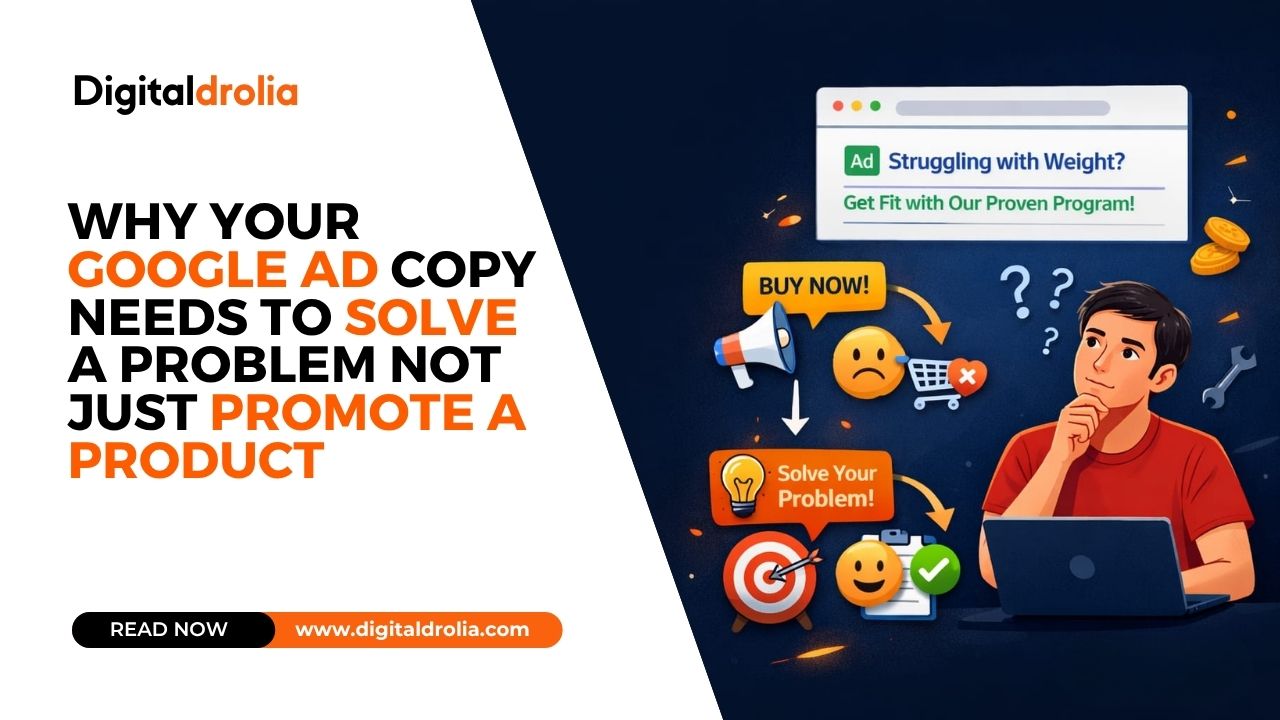
Why Your Google Ad Copy Needs to Solve a Problem Not Just Promote a Product

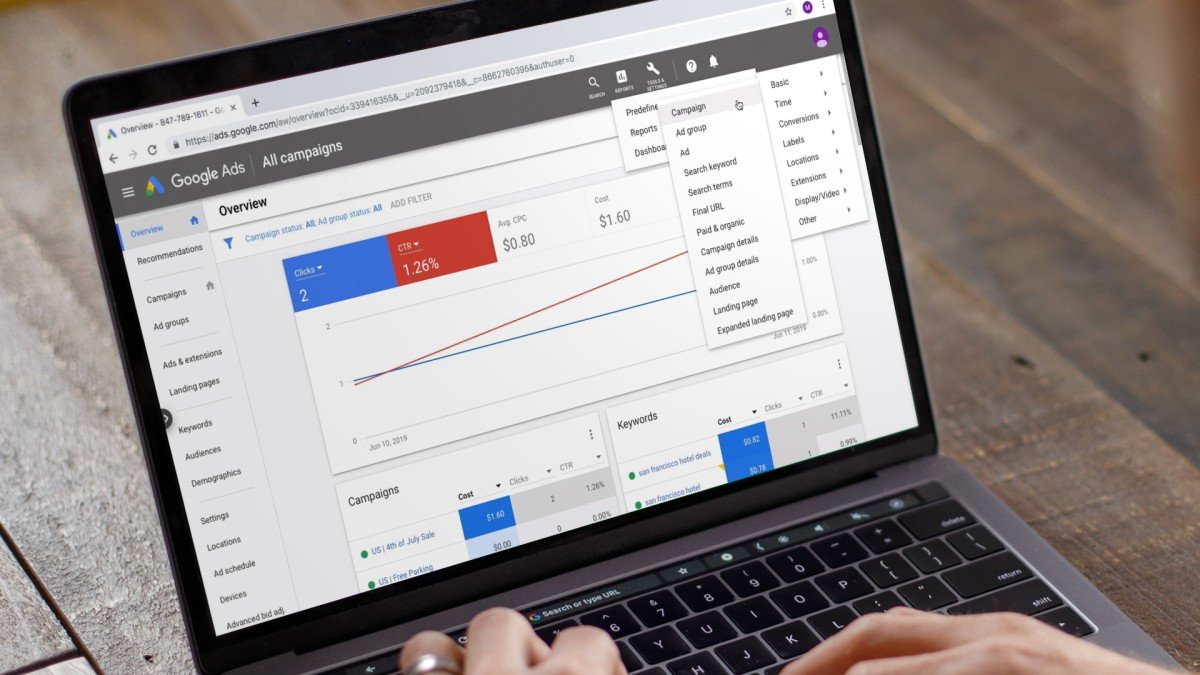
Let me show you two Google ads for the same business.
Both are for a pest control company in Hyderabad. Both are targeting the same keyword — “pest control near me.” Both are paying roughly the same cost per click. Both appear in the same search results.
Ad One:
Headline: Sri Sai Pest Control Services Hyderabad Description: Professional pest control services. Trained staff. Affordable rates. Call us today for a free quote. Serving Hyderabad since 2010.
Ad Two:
Headline: Cockroaches at Home? We Come Today Description: Same-day pest control in Hyderabad. Guaranteed results or free re-treatment. Safe for kids and pets. Book in 2 minutes — WhatsApp us now.
Same service. Same city. Same keyword. Same budget.
Which one makes you want to call?
If you answered the second one — and almost everyone does — I want you to think carefully about why. Because the answer to that question is the entire foundation of effective Google ad copywriting, and most businesses never figure it out.
Ad One is promoting a product. It is telling you about the company — who they are, how long they have been around, that they are professional, that they have trained staff, that they are affordable.
Ad Two is solving a problem. It is speaking directly to the person searching — a person who has cockroaches in their home right now, who is stressed, who wants someone to come quickly, who is worried about chemicals around their children, who does not want to wait three days for an appointment.
One ad is about the business. The other ad is about the customer.
And that difference — that fundamental orientation toward the customer’s problem rather than the business’s credentials — is what separates Google ad copy that generates a steady stream of qualified calls from ad copy that burns through budget while delivering mediocre results.
Why Most Business Owners Write Ads About Themselves
Before we go deeper into how to write problem-solving ad copy, we need to understand honestly why most businesses default to writing ads about themselves.
It is not laziness. It is not ignorance. It is a very natural psychological tendency that almost every business owner falls into.
You have built something you are proud of. You have years of experience, qualifications, a good team, competitive pricing, happy customers. When someone asks you to describe your business in a few sentences, your natural instinct is to share those things — because they are true, because they matter, and because you want potential customers to know about them.
The problem is that this instinct, while entirely understandable, misunderstands the mental state of the person reading your ad.
That person did not wake up this morning thinking about pest control companies. They are not sitting down to evaluate providers in a calm, comparative, rational state of mind. They have cockroaches — or whatever their problem is — and they are in a state of mild urgency or genuine distress. They typed their search query not out of intellectual curiosity but out of a felt need. They want the problem solved. They are looking for someone who understands that problem and can fix it.
When they see an ad that talks about the company’s experience since 2010 and their trained staff and affordable rates — it does not land in the way the business owner imagines. The person scanning search results in a hurry does not pause to appreciate your credentials. They scan for signals that tell them: this is what I need, these people get my problem, here is why I should call them rather than the next result.
An ad about your credentials does not send those signals. An ad about their problem does.
The Mental State of the Person Who Just Typed a Search Query
To write Google ad copy that works, you must develop a very clear, very specific understanding of the mental state of the person reading it.
This is not a general audience. It is not everyone who might someday be interested in what you offer. It is a specific person who, in the last thirty seconds, typed a specific set of words into a search box because they have a specific need they want addressed right now.
Think about the person searching “roof leaking repair Hyderabad.”
They are almost certainly sitting in a home where water is coming through the ceiling. They are probably anxious — water damage spreads quickly, they might have furniture or electronics at risk, and they have no idea how serious the underlying problem is. They want someone who can come quickly, diagnose accurately, and fix it properly without charging them a fortune. They do not want to wait three days for an appointment. They do not want a lengthy sales process. They want the leak to stop.
Now think about the ad copy that speaks to that person. It is not “Premium Roofing Services Hyderabad | Quality Workmanship | 20 Years Experience.” It is “Roof Leaking? Emergency Repairs Today | Fixed Right First Time | 2-Hour Response | Call Now.”
Same business. Same service. But one ad is designed for an abstract audience that might someday want roofing services. The other is designed for the specific, anxious person who is watching water drip through their ceiling right now.
The mental state of that person shapes everything about what makes an ad effective. Their urgency, their fear, their specific worries, their desire for reassurance, their wish for simplicity and speed — all of these are the raw material of compelling ad copy. And none of them have anything to do with your company’s credentials or history.
The Four Elements of Problem-Solving Ad Copy
Problem-solving ad copy is not a vague concept. It has a specific structure that can be learned, applied, and refined. Here are the four core elements.
Element One: Name the Problem Explicitly
The single most powerful thing you can do in a Google ad headline is name the problem the searcher is experiencing — out loud, in plain language, in a way they immediately recognise as describing their own situation.
“Roof Leaking?” “Back Pain Not Going Away?” “Ants Taking Over Your Kitchen?” “Cannot Sleep Because of Snoring?” “Running Out of Space at Home?”
Each of these headlines does something specific and powerful. It mirrors the searcher’s internal experience back to them. It creates an immediate recognition — yes, that is exactly my situation. And that recognition creates a psychological bond between the ad and the reader that a promotional headline cannot create.
When someone sees an ad that names their exact problem, they feel understood. And feeling understood by a business before you have even made contact with them is one of the most powerful emotional triggers for trust and engagement.
There is a concept in copywriting called the conversation in the prospect’s head. Before a potential customer has read a single word of your ad, there is already a conversation happening in their mind — driven by their need, their worry, their uncertainty, their desire for a solution. Effective ad copy enters that conversation rather than starting a new one.
Naming the problem is how you enter that conversation.
Element Two: Offer the Specific Solution
Once you have named the problem, you need to offer the solution — not in vague, general terms, but specifically enough that the person immediately understands what they will get if they click.
“Same-Day Repairs” is better than “Fast Service.” “Fixed Price — No Hidden Charges” is better than “Affordable.” “Guaranteed for 12 Months” is better than “Quality Guaranteed.” “Results in 4 Weeks or Money Back” is better than “Proven Results.”
Specificity is trust. When you say “same-day repairs,” you are making a specific, testable, accountable claim. When you say “fast service,” you are saying nothing verifiable. The mind of the reader is not engaged by vague promises — it is engaged by specific commitments that feel real and holdable.
The specific solution also does a second important job: it filters the audience. “Same-day repairs” will not appeal to someone who is planning a renovation six months from now. It will appeal strongly to someone with an urgent problem right now. By being specific, you attract the right customers and pre-filter out the wrong ones — which improves your conversion rate and the quality of the leads you receive.
Element Three: Address the Fear or Objection
Every potential customer, at the moment they are about to click on an ad or call a business, has a fear or objection sitting in the back of their mind. Something that is making them hesitate. Something that could cause them to choose a competitor or do nothing.
For a pest control customer: “Will the chemicals be safe for my children and my dog?” For a roof repair customer: “Will they assess the damage and then give me an outrageous quote?” For a physiotherapy customer: “I have been to other places and the problem keeps coming back. What if this does not work either?” For a home tutoring customer: “My child is shy and anxious. Will they be gentle and patient?”
These fears are real. They are active in the customer’s mind. And most ads completely ignore them.
The ad that acknowledges the fear directly — and addresses it with a specific reassurance — is the ad that wins the trust of the hesitant customer.
“Safe for Kids and Pets” addresses the chemical safety fear directly. “No Obligation Assessment — We Tell You the Cost Before We Start” addresses the hidden cost fear. “If Your Pain Returns Within 90 Days, Treatment is Free” addresses the recurring problem fear. “Patient, Encouraging Approach — Especially for Shy Students” addresses the anxious child fear.
When a customer sees their fear named and addressed in your ad — before they have even clicked — you have done something remarkable. You have shown that you understand them, that you have encountered this concern before, and that you have thought about it enough to address it proactively. That is a trust signal more powerful than any credential or testimonial.
Element Four: Create a Specific, Frictionless Call to Action
The call to action in most ads is an afterthought. “Call us today.” “Visit our website.” “Get a free quote.”
These calls to action are fine but they do not create urgency, they do not reduce friction, and they do not help the customer understand exactly what the next step involves.
A specific, frictionless call to action tells the customer exactly what will happen when they click or call — and makes that next step feel easy, low-risk, and worth taking right now.
Compare:
“Call us today for more information.”
versus
“WhatsApp us — reply in 5 minutes, booked today.”
The second version tells the customer three things: how to contact you, how quickly you will respond, and what outcome they can expect (booked today). It is specific, it is reassuring, and it creates a sense of accessible immediacy that “call us today” simply cannot match.
Other examples of specific, frictionless calls to action:
“Book your free 20-minute consultation — no commitment required.” “WhatsApp your photo — we give you a quote in under an hour.” “Call now — we can come today if spaces are available.” “Fill in our 30-second form — we call you back within 2 hours.”
Each of these reduces the psychological barrier to taking action. They tell the customer exactly what to expect, how long it will take, and what happens next. They make the first step feel small and safe rather than large and committal.
The Headline Is Everything — Why You Must Win in Three Seconds


In Google Search Ads, you have multiple headlines and two description lines to work with. But the truth that every experienced digital advertiser knows is this: the headline is almost everything.
When someone scans a page of search results, their eyes move quickly. They are not reading. They are scanning for signals of relevance. They spend perhaps two to three seconds on each result before their eye moves on. In those two to three seconds, the headline is what they see and process. The description lines are almost secondary — most people only read them after the headline has made them want to know more.
This means that your headline carries an enormous weight of responsibility. It needs to qualify the audience, communicate the core value proposition, and create enough desire or urgency to make the person want to read further — all in thirty characters or fewer.
Here is a practical test to apply to every headline you write. Ask yourself: if someone saw only this headline and nothing else, would they know that this ad is relevant to their specific problem? Would they feel a pull toward clicking?
“Hyderabad Pest Control Services” — fails the test. No immediate relevance to a person in distress. No problem named. No pull.
“Cockroaches? Gone by Tonight” — passes the test. Problem named. Solution implied. Timeframe specified. Desire created.
The best Google ad headlines share certain characteristics. They are specific. They speak to a real, felt problem. They imply or state a concrete outcome. They often contain a time element — “today,” “in 24 hours,” “by tonight” — that creates urgency without being manufactured or manipulative.
And they almost never mention the company name. The company name in the headline is one of the most common and most costly mistakes in Google ad writing — because it takes up precious character space to say something the customer does not care about yet. They do not care about your company name. They care about whether you can solve their problem. Earn the right to introduce your name by demonstrating you understand their need first.
Emotional Language versus Clinical Language
There is a spectrum in ad copywriting between emotional language and clinical language. Most business owners default to clinical. Problem-solving ad copy uses emotional language — not in a manipulative way, but in a way that reflects the emotional reality of the customer’s experience.
Clinical language describes. Emotional language resonates.
Clinical: “We provide comprehensive pest eradication services for residential properties.” Emotional: “Get your home back. No more insects, no more worry.”
Clinical: “Physiotherapy treatment for musculoskeletal conditions.” Emotional: “Back to doing the things you love — without pain.”
Clinical: “Professional home tutoring for Class 10 board examination preparation.” Emotional: “Help your child walk into the exam room feeling ready, not terrified.”
Notice what the emotional language is doing. It is not being hyperbolic or manipulative. It is simply speaking to the felt experience — the desire for a home free of insects, the longing to live without pain, the parental wish for a child to feel confident rather than anxious.
The clinical version is accurate but cold. It describes the service in the language of the service provider. The emotional version is also accurate but warm. It describes the outcome in the language of the customer’s desire.
This shift from service-provider language to customer-desire language is one of the most impactful changes you can make to your Google ad copy. It does not require clever wordplay or expensive copywriting talent. It requires genuine empathy with your customer — the willingness to imagine what they are feeling when they search and to speak to that feeling directly.
The Power of Numbers in Ad Copy

Numbers do something specific and powerful in ad copy that words alone cannot do. They create credibility through specificity.
“Affordable prices” is vague. “Prices starting from ₹999” is specific. “Quick response” is vague. “We arrive within 90 minutes” is specific. “Many satisfied customers” is vague. “4,800+ happy customers in Hyderabad” is specific. “Guaranteed results” is vague. “90-day money-back guarantee” is specific.
Our brains process specific numbers differently from vague claims. A vague claim triggers skepticism — everyone says they are affordable, everyone claims quick response. A specific number triggers evaluation — is ₹999 a good price? Is 90 minutes fast enough for my situation?
The shift from skepticism to evaluation is enormously valuable. A customer who is evaluating your specific claim is already more engaged than one who has dismissed your vague claim along with every other vague claim on the page.
More importantly, specific numbers communicate confidence. When a business says “over 4,800 customers served” rather than “thousands of happy customers,” it signals that they are comfortable being held to a specific claim. That confidence is itself a trust signal.
In Google ad copy, wherever you can replace a vague claim with a specific number, you should. Count your customers. Time your response. Price your service. Quantify your guarantee. Specify your experience. The numbers you use should be real and accurate — manufactured specificity will unravel quickly when customers arrive and find the reality does not match. But real, accurate specific numbers are one of the most underused tools in ad copywriting.
Matching Ad Copy to Keyword Intent — The Segmentation Principle
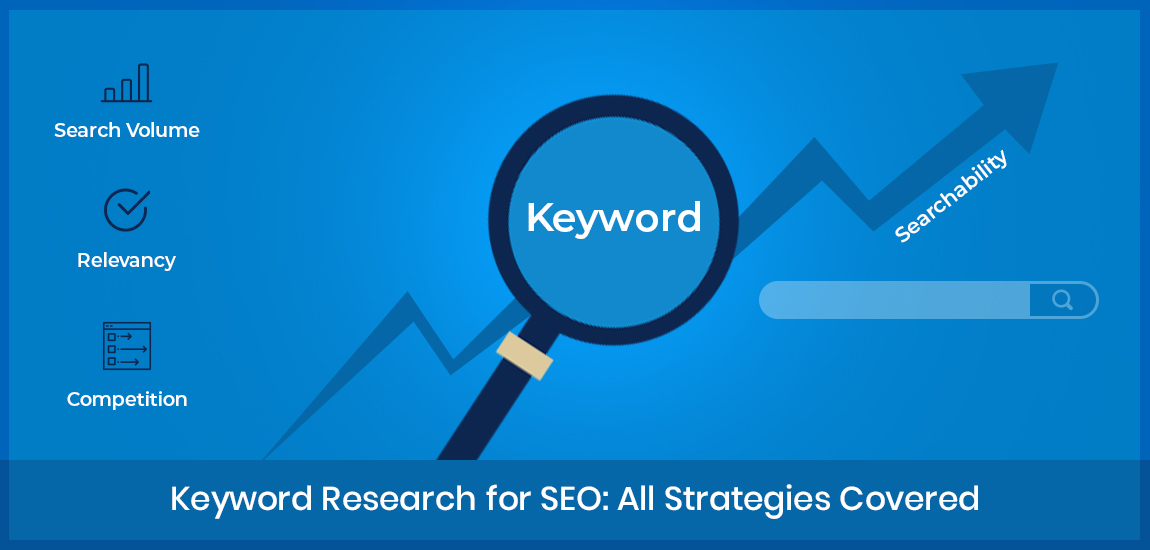
One of the most important structural principles of problem-solving ad copy is that different keywords represent different problems and different emotional states — and your ad copy should reflect that.
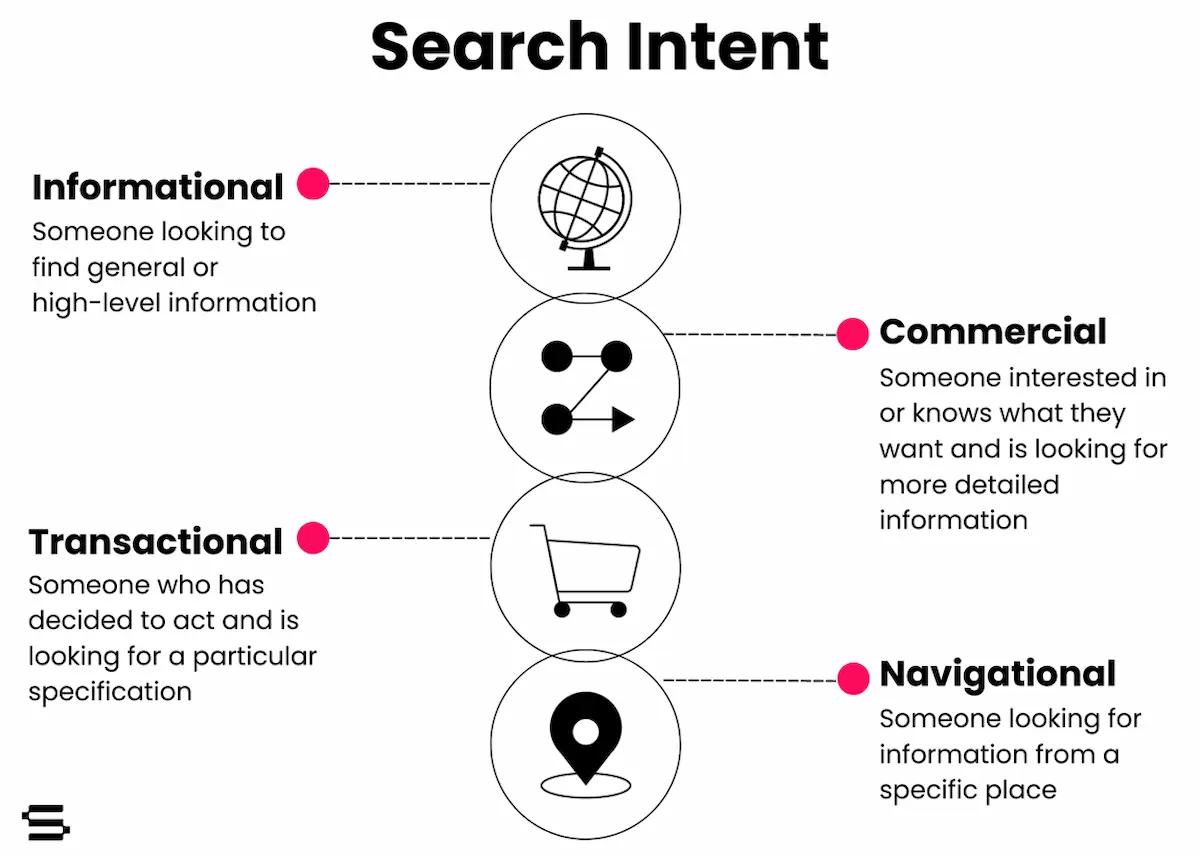
A person searching “back pain treatment” is in a different mental state from a person searching “emergency back pain relief.” The first is researching options. The second is in acute distress and needs help now.
A person searching “jewellery cleaning service” has a specific maintenance task in mind. A person searching “old jewellery restoration” has a precious object they want preserved. These are different emotional contexts requiring different ad copy to resonate.
This is why running one generic ad for all keywords in a campaign consistently underperforms compared to having specific ads tailored to specific keyword groups.
The principle is called ad-to-keyword relevance — the degree to which your ad copy directly reflects the specific intent and emotional context of the search query that triggered it. High relevance means the customer sees your ad and immediately thinks: this is exactly what I was looking for. Low relevance means they see your ad and think: this is sort of related but I am not sure it is what I need.
High relevance drives clicks. Low relevance drives scrolling past.
Achieving high relevance requires segmenting your keywords into groups based on intent and emotional context, and writing specific ad copy for each group. It is more work than writing one set of ads for everything. But the improvement in click-through rate, Quality Score, and ultimately conversion rate more than justifies the additional effort.
Real Industry Examples — What Problem-Solving Copy Looks Like in Practice
Let me walk through several common business types and show you the transformation from product-promoting copy to problem-solving copy.
Dental Clinic
Product-promoting: “Best Dental Clinic in Pune | Experienced Dentists | Modern Equipment | Book Appointment”
Problem-solving: “Toothache Won’t Wait | Same-Day Emergency Appointments | Pain Relief Today | Call Now”
Home Loan Advisor
Product-promoting: “Home Loan Services | Best Rates | Expert Guidance | Apply Now”
Problem-solving: “Confused by Home Loan Options? We Compare 30 Banks | Free Advice | No Paperwork Hassle”
Online Cake Delivery
Product-promoting: “Fresh Cakes Delivered | Wide Variety | Order Online | Same-Day Available”
Problem-solving: “Last-Minute Birthday Cake? Delivered in 2 Hours | Custom Messages | Fresh Baked Today”
Chartered Accountant
Product-promoting: “CA Services Hyderabad | GST Filing | Income Tax | Experienced CA | Affordable”
Problem-solving: “ITR Filing Deadline Approaching? File Online in 30 Minutes | No Penalties Guaranteed | Start Now”
Air Conditioning Repair
Product-promoting: “AC Repair Services | All Brands | Trained Technicians | Call for Service”
Problem-solving: “AC Stopped Working? Technician at Your Home Today | Fixed or No Charge | Same-Day Service”
In each case, the transformation follows the same pattern. The product-promoting version describes what the business offers. The problem-solving version speaks to the specific frustration, urgency, or desire of the person searching — and then offers a specific, reassuring response to that state.
The Quality Score Connection — Why Problem-Solving Copy Is Also Better for Your Budget
Here is something that many advertisers do not fully appreciate: writing better ad copy is not just good for click-through rates and conversions. It directly reduces how much you pay per click.
Google uses a metric called Quality Score to evaluate the relevance and quality of your ads. Quality Score is influenced by several factors, but click-through rate — the percentage of people who see your ad and click on it — is one of the most significant.
Higher click-through rate signals to Google that your ad is relevant and useful to the searchers who see it. Google rewards this with a higher Quality Score. And a higher Quality Score means Google charges you less per click to achieve the same ad position compared to a lower Quality Score competitor.
In other words: better ad copy that generates more clicks does not just bring in more customers. It brings in more customers at a lower cost per click. The improvement compounds — more relevant ads get higher Quality Scores, lower costs per click, better ad positions, more visibility, more clicks, more data to optimise, further improvement.
Problem-solving ad copy — because it speaks directly to the need of the searcher and generates a higher click-through rate than generic promotional copy — starts this virtuous cycle. Generic promotional copy that generates low click-through rates starts the opposite cycle: lower Quality Scores, higher costs per click, worse ad positions, less visibility, fewer clicks, less data.
The businesses that write better ads pay less to appear more prominently and attract more customers. The businesses that write generic ads pay more to appear less prominently and attract fewer customers. The copy quality difference creates an economic advantage that grows over time.
Testing Ad Copy — The Discipline That Separates Good From Great
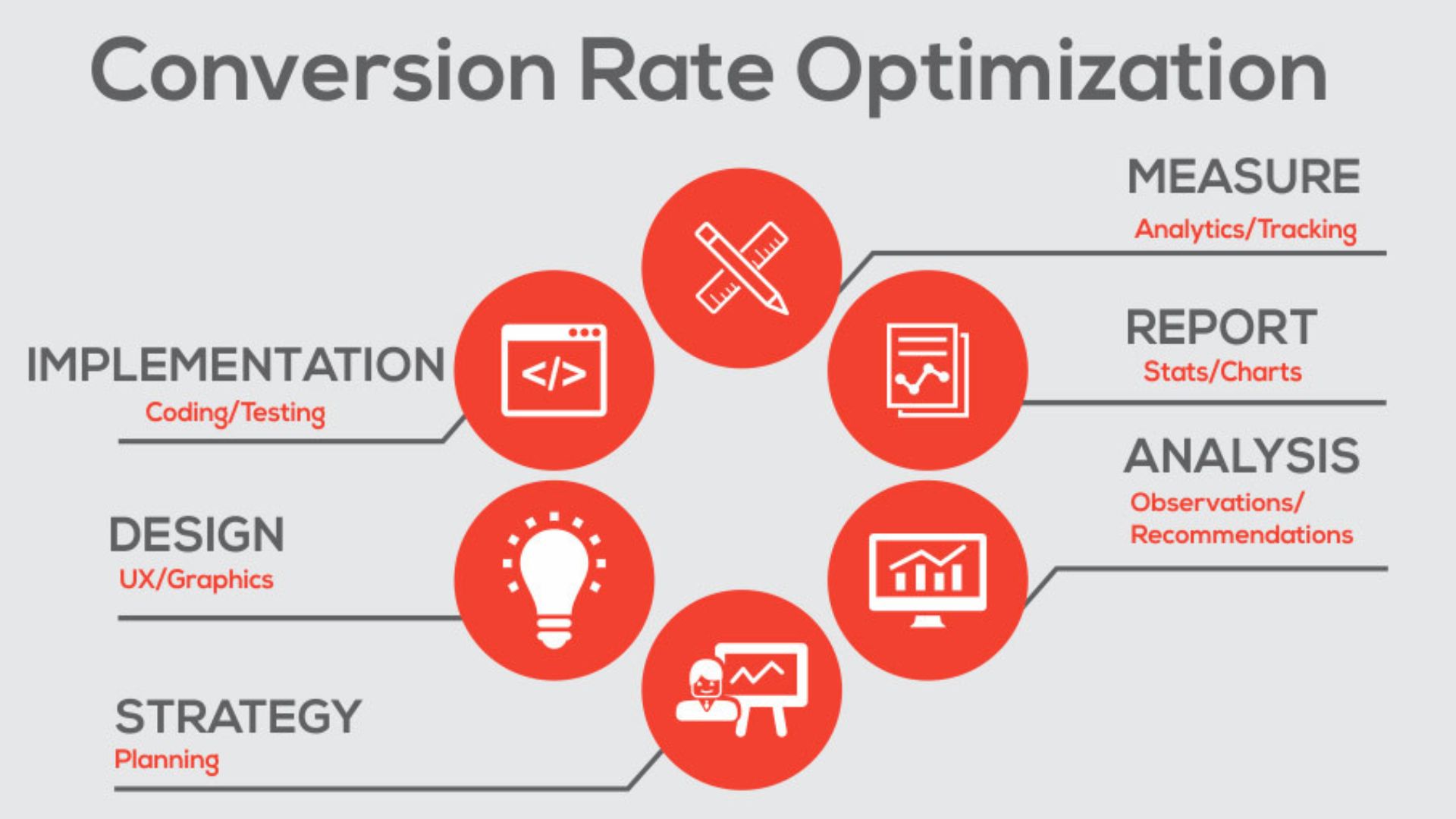
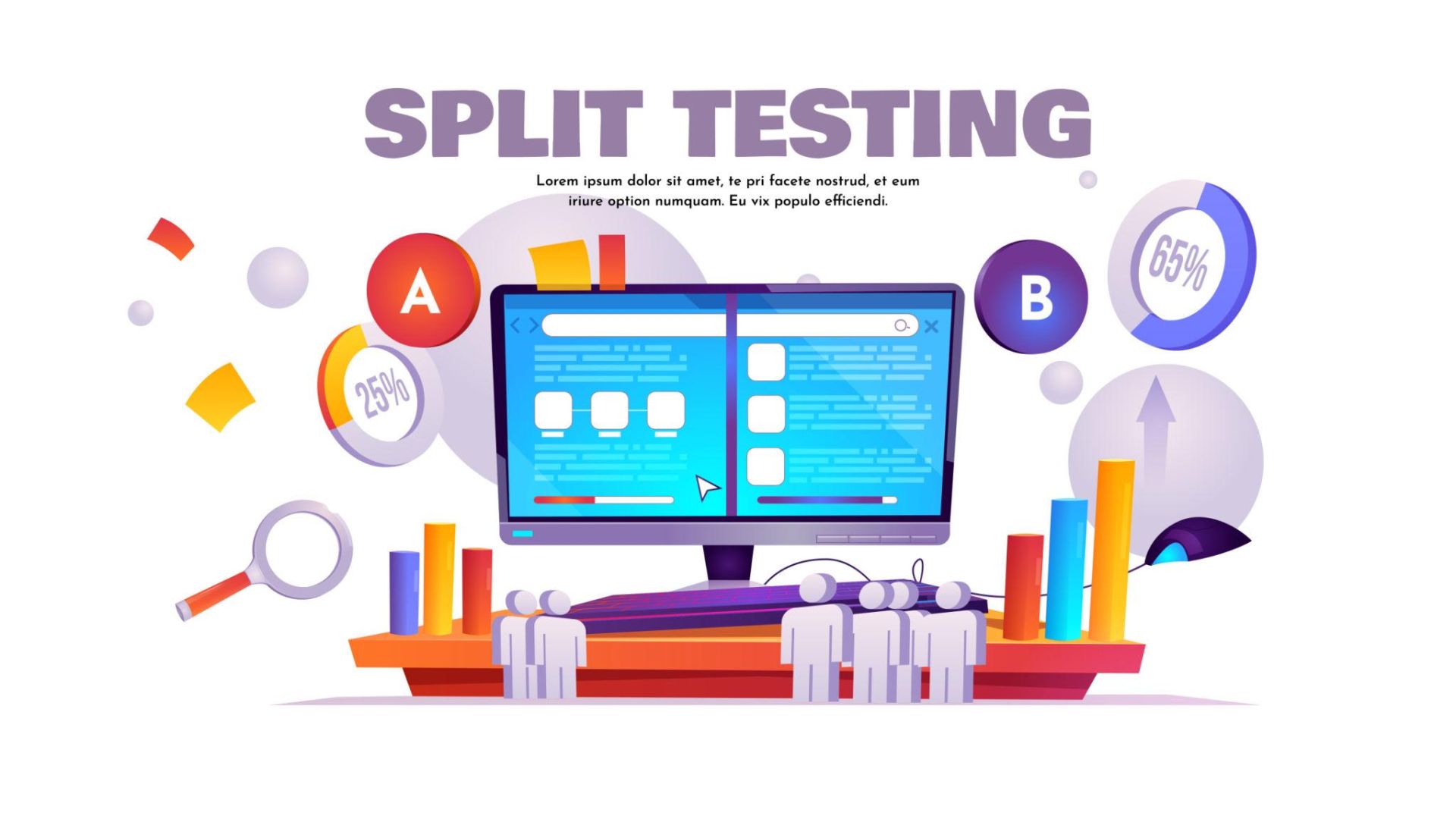
No matter how well you understand problem-solving copy principles, you cannot know with certainty which specific headline, which specific problem framing, which specific call to action will resonate most powerfully with your specific audience in your specific market.
The only way to know is to test.
Google Ads allows you to run multiple ad variations simultaneously and automatically tracks the performance of each. Over time, you can see which headlines generate higher click-through rates, which descriptions drive more conversions, which calls to action produce more calls.
This testing should be systematic and ongoing. The most successful Google Ads practitioners are not the ones who write one great ad and leave it running forever. They are the ones who are always testing — always running at least two or three variations, always learning what works, always refining.
A simple ongoing testing discipline might look like this: at any given time, have three headline variations running. After a month, pause the lowest-performing one. Write a new variation that either builds on what the best-performing headline is doing or tests a completely different approach. Continue indefinitely.
Over months of consistent testing, you develop an increasingly accurate understanding of exactly what language, framing, and emotional register resonates with your specific audience. This understanding is a competitive asset — a body of knowledge about your customers’ needs and desires that is difficult for a competitor to replicate quickly.
The Copywriter’s Empathy Exercise
I want to leave you with a practical exercise that will immediately improve your ad copy — not a technical framework but a mental practice.
Before you write a single word of a Google ad, sit quietly for a few minutes and do this.
Imagine the specific person who will type the keyword you are targeting. Not a demographic category — a specific person. Give them a name. Give them a situation. What has happened in their life that has brought them to this search? What are they feeling right now — are they stressed, frustrated, anxious, embarrassed, in pain, under time pressure? What do they most want to happen in the next few hours? What are they afraid of? What would make them feel relieved?
Write down the answers. In as much detail as you can.
Then look at what you have written and ask: does my ad copy speak to this person? Does it name their situation? Does it address their fear? Does it promise the outcome they most want?
If the answer to any of those questions is no — rewrite until it is yes.
This empathy exercise is not soft or abstract. It is the most practical thing you can do before writing ad copy, because it forces you to shift your perspective from what you want to say about your business to what your customer needs to hear in their moment of need.
Every great piece of ad copy begins with this shift. Every mediocre piece of ad copy fails because it never made it.
The Closing Truth — People Do Not Buy Products. They Buy Solutions to Problems.
This is one of the oldest and most foundational insights in all of marketing — and yet it is violated by the majority of Google ads running at this very moment.
People do not search for pest control companies. They search because they have pests and they want them gone.
People do not search for dentists. They search because they have pain or a problem or anxiety about their teeth that they want resolved.
People do not search for home tutors. They search because their child is struggling and they want to see them succeed.
The product is the vehicle. The solution to the problem is what they are actually buying. And the ad copy that speaks directly to the problem — that meets the customer in the middle of their experience, that names what they are going through and promises a specific way out — will always outperform the ad copy that speaks about the vehicle.
Go back to those two pest control ads at the beginning of this post.
Ad One tells you about the company. Ad Two tells you about the problem and the solution. Ad Two wins every time — not because it is cleverer, not because it has better design, not because the business behind it is superior. But because it understands something fundamental about the person reading it.
That person does not care about the company yet. They care about their cockroach problem. They will care about the company the moment the company demonstrates it understands and can solve their problem.
Write ads that make that demonstration. Write ads that enter the conversation already happening in the customer’s head. Write ads that say: we see your problem, we understand it, we have the solution, and here is exactly what happens next.
Write problem-solving ads.
Everything else is just noise.
Written by Digital Drolia — helping businesses write smarter ads, spend less, and attract better customers through the power of genuine customer understanding. Found this valuable? Share it with a business owner whose Google ads are talking about their company when they should be talking about their customer.