


How YouTube Chapters Are Helping Viewers and Helping Videos Rank Higher in Search

Let me describe a behaviour that happens millions of times every day on YouTube — a behaviour so common that most people do not notice they are doing it, but that carries significant implications for how creators structure their content and how the platform distributes it.
Someone finds a YouTube video through a search. The video is twenty-two minutes long and covers a topic the viewer is genuinely interested in. But they are not starting from the beginning of their understanding — they already know the basics, and what they specifically need is the answer to a more advanced question that the video presumably covers somewhere in its twenty-two minutes.
Without chapters, the viewer has two options. They can watch from the beginning and wade through material they already know until they reach the section they need. Or they can drag the progress bar through the video blindly, pausing occasionally to check whether they have reached the relevant section, in a process that is tedious and imprecise.
Many viewers — particularly those who came to the video with a specific and urgent question — will simply leave and search for something that answers their specific question more directly. The creator has lost a viewer not because the content was not there but because the content was not navigable.
With chapters, the viewer sees a table of contents directly on the video’s progress bar. They scan the chapter titles. They find “Section 5: How to Handle Pre-Existing Conditions” — which is exactly their question. They click on it and jump directly there. They get their answer in three minutes. They stay. They watch adjacent chapters. They discover the creator is knowledgeable and engaging. They subscribe.
The chapter did not change the video. It made the video useful in a way it was not before — useful specifically to the viewer who arrived with a specific question and a limited tolerance for searching through unstructured content.
This is what YouTube chapters do at the level of viewer experience. But the implications go considerably further — into how YouTube’s algorithm treats the video, how the video appears in Google search results, and how it captures types of traffic that un-chaptered videos are simply not eligible for.
What YouTube Chapters Are — The Complete Technical Picture
YouTube chapters are timestamp-based divisions of a video that appear as segments on the video’s progress bar and as a navigable table of contents below the video player. They allow viewers to see the structure of the video at a glance, jump to any section with a single click, and share links that begin at specific moments within the video.
To add chapters to a video, the creator includes timestamps in the video’s description, formatted in a specific way. The first timestamp must be 0:00 and must correspond to the video’s opening — this is a technical requirement. Subsequent timestamps must be in ascending chronological order. Each timestamp is followed by a space and a chapter title. YouTube requires a minimum of three timestamps to activate the chapter feature.
A description with chapters looks like this:
0:00 Introduction 1:45 What is deferred tax and why does it exist 6:30 The difference between timing differences and permanent differences 11:20 How to calculate deferred tax liability with a real example 16:45 Deferred tax assets — when do they appear 20:10 Common mistakes students make in exams 24:00 Summary and key takeaways
When a video has this structure in its description, YouTube generates a visual segmentation of the progress bar — each chapter appears as a distinct segment separated by small gaps. Hovering over any segment shows the chapter title and a preview thumbnail of that section. Clicking on a segment jumps directly to that point in the video.
This chapter navigation also appears prominently in the video description below the player, formatted as a table of contents with clickable links. The viewer can see the entire structure of the video before watching — effectively a preview of the content that helps them decide whether to watch and where to start.
Chapters can also be added automatically by YouTube through its machine learning systems, without any action from the creator. YouTube analyses the audio and visual content of the video and attempts to identify natural section breaks, then generates chapter titles based on what the content appears to cover. These auto-generated chapters are less accurate and less specific than creator-defined chapters — they reflect what the algorithm detected rather than what the creator intended — and they cannot be controlled by the creator in the same way.
For this reason, creators who understand the value of chapters should always define their own rather than relying on YouTube’s automatic generation.
What Chapters Do for the Viewer — The Experience Layer

The most immediately visible benefit of chapters is the one we described at the opening — navigability. But the experience benefit goes deeper than simple navigation.
Chapters set expectations before the video begins
When a viewer sees a chaptered video’s description, they see the entire intellectual architecture of the content before they commit to watching. They know what topics are covered, in what order, and approximately how much time each receives. This preview allows the viewer to make an informed decision about whether the video genuinely covers what they need — rather than discovering thirty minutes in that the specific question they had is not addressed.
This transparency builds trust. The creator who shows their work upfront — who is confident enough in their content to reveal its structure before asking for the viewer’s time — communicates competence and respect for the viewer.
Chapters reduce the anxiety of long-form content
Longer videos carry a psychological barrier that shorter ones do not. A twenty-five-minute video, presented as an undifferentiated block, requires the viewer to make a significant time commitment upfront with limited information about what they are committing to. Many viewers — particularly those with limited time or a specific question — will choose a shorter video that seems more tractable, even if the longer video would actually serve them better.
Chapters change this calculus by breaking the twenty-five minutes into comprehensible, navigable segments. The viewer is no longer committing to twenty-five minutes of unknown content. They are committing to whichever chapters are relevant to them — which might be five minutes, or ten, or the whole thing depending on what they find. The barrier to beginning has been dramatically lowered.
Chapters enable purposeful rewatching
A viewer who watched a video three weeks ago and wants to revisit a specific section does not want to rewatch the entire video. Without chapters, finding the specific section requires dragging through the progress bar — an imprecise and frustrating process. With chapters, they navigate directly to “Section 4: How to calculate the adjustment” and have what they need in seconds.
This rewatching capability is particularly valuable for tutorial and educational content — exactly the categories where chapters are most commonly used. A viewer who can efficiently reuse a video as a reference tool visits it repeatedly. Repeated visits accumulate watch time and signal to the algorithm that this is content worth recommending — not just content that gets watched once and forgotten.
Chapters make specific sections shareable
When chapters are added to a video, YouTube generates shareable timestamps that can be copied and shared — links that begin at specific moments in the video. A viewer who found a particular section useful can share the link to that specific section rather than the whole video, with the confidence that the recipient will begin exactly at the relevant point.
This shareable precision increases the practical utility of sharing — recipients receive exactly the content they were sent, without needing to navigate, which increases the likelihood that they actually watch it. More shares that get watched means more views, more engagement, and more algorithmic signal that the content is valuable.
What Chapters Do for the Algorithm — The SEO Layer
Here is where the story of YouTube chapters becomes genuinely interesting for creators who think about discoverability and search performance.
YouTube’s algorithm is not a monolithic system — it incorporates multiple signals and serves multiple functions. Among the functions it serves is indexing video content for search — essentially building a searchable understanding of what each video covers so that it can match videos to relevant search queries.
For most of YouTube’s history, the algorithm’s ability to understand the specific content of videos was limited to information the creator explicitly provided — the title, the description, the tags, and the closed captions or transcript. The actual content of the video — what was said, in what order, in what detail — was less accessible to the algorithm’s understanding.
Chapters change this by providing a structured, human-curated map of the video’s content. Each chapter title is a clear signal to the algorithm about what a specific portion of the video covers. The combination of timestamps and titles creates a structured document — a kind of annotated table of contents — that the algorithm can read and use to understand the video’s content at a level of granularity that title and description alone cannot provide.
This structured content map improves the algorithm’s ability to match the video to relevant search queries — not just queries that match the video’s overall topic, but queries that match specific sections of the video.
A twenty-two-minute video about accounting standards, without chapters, might rank well for searches related to its overall title topic. The same video with detailed chapters might also rank for the more specific queries that correspond to its individual chapters — “how to calculate deferred tax liability,” “what are timing differences in accounting,” “deferred tax asset examples” — each of which is a search that a relevant viewer is making and that the chapter structure helps the algorithm recognise as addressed by this specific video.
This expanded search surface — the ability to rank for multiple specific queries rather than just the broad topic — is one of the most significant SEO benefits of chapters. Each chapter title is, in effect, a micro-optimisation for a specific search query that a viewer might make. A video with ten well-titled chapters has ten opportunities to appear in relevant searches rather than one.
The Google Search Connection — Key Moments and Featured Chapters

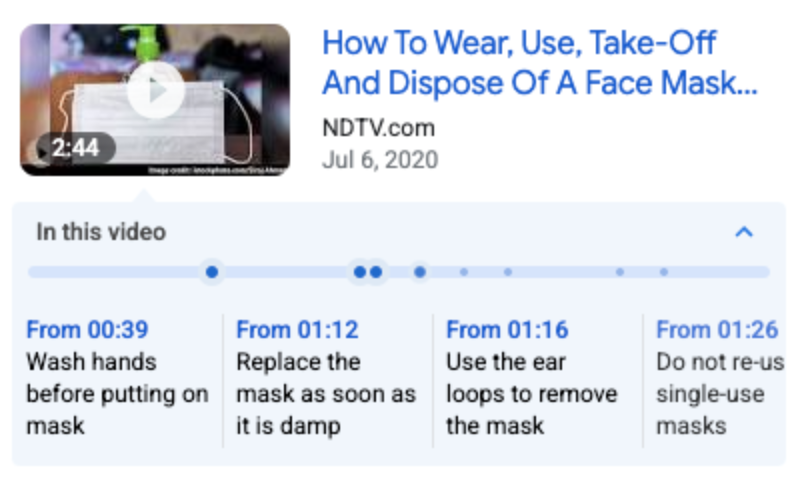
Here is the dimension of YouTube chapters that most creators — even experienced ones — do not fully appreciate: chapters are one of the primary mechanisms through which YouTube content appears in Google search results in a way that highlights specific sections of the video rather than simply linking to the video as a whole.
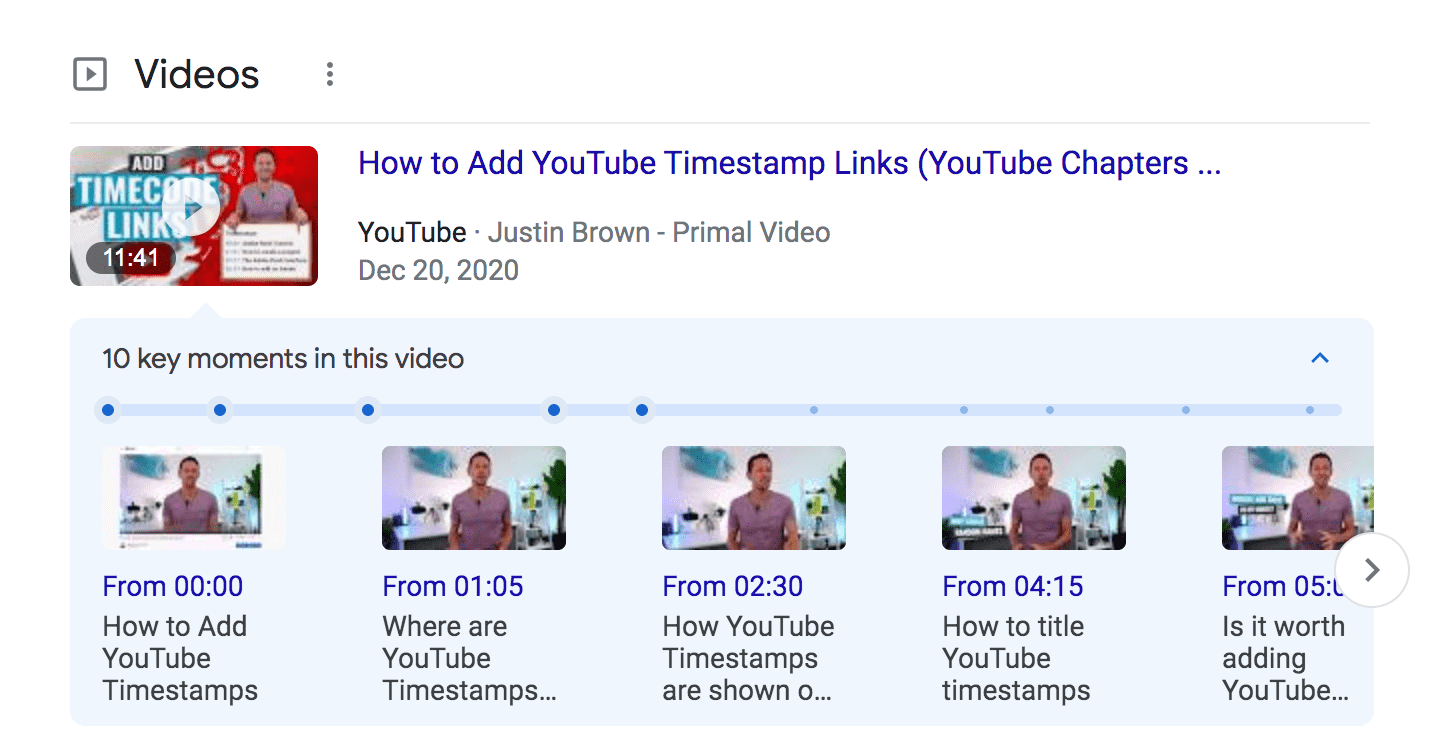
Google has a feature called Key Moments — also sometimes called Featured Timestamps or Chapter Previews — that appears in Google search results for certain queries. When Google identifies a YouTube video that contains a section directly relevant to a specific search query, it can display a link to that specific section — with a preview thumbnail and the chapter title — directly within the Google search result.
This means a viewer searching Google for “how to calculate deferred tax liability” might see, in Google’s search results, not just a link to a twenty-two-minute accounting video but a highlighted link to the specific chapter of that video titled “How to calculate deferred tax liability with a real example” — with a direct jump link to that section.
This Key Moments feature is activated by YouTube chapters. Google reads the chapter structure — the timestamps and titles that the creator has added to the description — and uses it to identify which portions of the video are relevant to which queries.
The implications are significant. A video with well-structured, specifically titled chapters is eligible for Key Moments appearances in Google search that un-chaptered videos are not. Each chapter is a potential Key Moment — a potential direct appearance in Google search results for the specific query the chapter title addresses.
For educational and informational content — the categories that tend to generate the most specific and intent-driven searches — this Key Moments eligibility represents a meaningful source of additional traffic. Traffic that comes not from viewers who found the video on YouTube but from viewers who found it through Google — and who clicked directly to the specific section that answered their question.
This is double distribution: the video generates traffic from both YouTube search and Google search, with chapters enabling the Google distribution in ways that titles and descriptions alone cannot achieve.
Writing Chapter Titles That Work — The Craft That Determines the Benefit
The technical act of adding timestamps to a description is straightforward. The craft that determines how much value those timestamps deliver — in viewer experience, in search performance, and in Google Key Moments eligibility — is the writing of the chapter titles.
Chapter titles are not just organisational labels. They are, as we have established, search queries in miniature. They are the signals through which the algorithm understands what specific portions of the video cover. They are the text that Google reads to determine whether a specific section is relevant to a specific search. They are what the viewer scans to decide which section is relevant to their specific question.
Writing chapter titles that serve all three of these functions simultaneously requires the same discipline that applies to title and description writing generally: use the language that viewers actually search for, not the language the creator uses internally.
The wrong approach: organisational labels
“Part 1: Introduction” “Part 2: Background” “Part 3: Main concept” “Part 4: Examples” “Part 5: Conclusion”
These labels tell the viewer and the algorithm absolutely nothing about what each section specifically covers. They are placeholders — structures that exist for the creator’s organisational convenience rather than for the viewer’s navigation or the algorithm’s indexing.
A viewer scanning these chapter titles learns only that the video has five sections in a conventional order. They cannot determine which section answers their specific question. The algorithm learns only that the video has an introduction, some background, a main concept, examples, and a conclusion — information that is true of essentially every educational video ever made.
The right approach: specific, searchable descriptions
“0:00 Why deferred tax confuses most CA students — and how to fix that” “2:45 The core principle: accounting profit vs taxable profit” “7:30 Timing differences explained with a real company example” “13:15 Step-by-step calculation of deferred tax liability” “19:00 When deferred tax becomes an asset instead of a liability” “23:45 The three mistakes students most often make in exam answers” “27:30 Summary: what to remember and what to practise”
These chapter titles tell the viewer exactly what each section covers — clearly enough that they can identify, before watching, which section answers their specific question. They tell the algorithm specific, searchable phrases that appear in the natural search behaviour of the relevant audience. And they tell Google what each section covers in the precise language needed for Key Moments eligibility.
The difference in search value between the two sets of chapter titles is not marginal. It is the difference between chapters that serve as organisational decoration and chapters that serve as a distributed SEO strategy across every section of the video.
Specific guidance for chapter title writing
Each title should describe what the viewer will learn or understand from the section — not what the creator will cover. “The core principle” describes the creator’s content. “Why accounting profit and taxable profit are different and why it matters” describes the viewer’s learning. The latter is more searchable, more viewer-centric, and more useful for the algorithm.
Chapter titles should be specific enough to be distinct. A video with ten chapters all beginning with “How to…” or “Understanding…” has failed the specificity test — each title should describe something specific enough that no two titles could be confused with each other.
Chapter titles should use the vocabulary the target audience actually uses in search. Technical terms are appropriate when the audience uses them — a CA student searching for deferred tax will use the technical term. Simpler language is appropriate when the audience searches in plain language — a small business owner searching for help with their accounts will not use technical accounting vocabulary.
Chapter titles should be concise enough to read quickly in the progress bar preview — typically five to ten words is optimal. Long titles get truncated in the preview and lose their navigational value.
The Watch Time Dimension — How Chapters Affect Retention Metrics
YouTube’s algorithm weights watch time and viewer retention heavily in its distribution decisions. Videos that retain viewers — where people watch long proportions of the total length — receive more algorithmic distribution than videos where viewers leave early.
The relationship between chapters and retention is nuanced and instructive.
The naive assumption is that chapters hurt retention by making it easy for viewers to skip sections. If a viewer can jump directly to Chapter 7 and ignore Chapters 1 through 6, they are watching less of the video — which should reduce the video’s watch time metrics and therefore its algorithmic performance.
This reasoning is correct at the individual level — a viewer who uses chapters to skip sections watches less of the video than one who watches from beginning to end. But it is wrong at the aggregate level — across the total population of viewers, chapters tend to increase average watch time rather than decrease it.
Why? Because the counterfactual to a viewer using chapters to skip to the relevant section is not that viewer watching from the beginning. The counterfactual is that viewer leaving the video entirely.
A viewer who arrived with a specific question, found the video did not have chapters, and left within thirty seconds to search for something more navigable would have contributed thirty seconds of watch time. The same viewer, finding the video had chapters, jumping to the relevant section, watching that section completely, and staying to watch adjacent sections, contributes three, five, or eight minutes of watch time.
The chapter-enabled viewer watches more than the chapter-frustrated viewer who left. The aggregate effect across thousands of viewers who make similar navigation decisions is positive for watch time metrics.
This is consistent with the general principle that making content more accessible and useful to viewers — reducing friction, improving navigation, helping them get what they came for — produces better metrics, not worse. The YouTube algorithm rewards genuine viewer satisfaction, and chapters are one of the most direct available tools for improving the navigability that drives that satisfaction.
Chapter Best Practices Across Different Content Types
Chapters are not one-size-fits-all. The optimal chaptering strategy varies meaningfully by content type — and understanding these variations helps creators apply the tool more effectively.
Educational and tutorial content
This is the category where chapters are most critical and most immediately valuable. Viewers of educational content typically arrive with specific questions and a specific point in their own understanding from which they need to advance. The chapter structure should reflect the conceptual progression of the content — from foundational to advanced — with titles that describe the specific concept or skill covered in each section.
For tutorial content specifically — software tutorials, cooking techniques, craft or DIY instructions — chapters should correspond to distinct steps or phases in the process. “Step 3: Preparing the base layer” is a navigational aid for the viewer who wants to revisit a specific step without rewatching the setup.
Long-form interview and conversation content
Podcasts and interview-format YouTube content benefit enormously from chapters because the natural structure of conversation — which does not follow a predetermined outline — can be opaque to viewers seeking specific topics.
For interview content, chapters should correspond to topic shifts in the conversation — the moments where a new subject is introduced. The chapter titles should describe the topic in terms of what was discussed, not in terms of the conversational structure: “Why conventional hiring criteria fail for creative roles” rather than “Discussion of hiring.”
This topic-based chaptering makes long-form conversation content navigable and searchable in ways that topic-shifting interviews otherwise are not — capturing search traffic from viewers who are interested in specific topics the interview addressed.
Travel and vlog content
For travel and lifestyle content, chapters typically follow a geographical or chronological structure — segments corresponding to different locations, different days, or different activities. The chapter titles should be specific enough to be useful: “Day 2: The living root bridges of Mawlynnong” rather than “Day 2.”
For travel content, specific location names in chapter titles are particularly valuable for search — they match the search queries of viewers who are specifically researching those destinations, making the video discoverable to exactly the audience most likely to be engaged by it.
Product reviews and comparisons
Review and comparison content benefits from a chapter structure that follows the evaluation framework: “Design and build quality,” “Camera performance in daylight,” “Battery life test results,” “Pricing and value assessment.” This structure mirrors the questions that potential buyers typically have — and each chapter title is a direct match for the specific questions those buyers search.
A phone review chaptered this way might capture search traffic not just for the broad query “OnePlus 13 review” but for the specific queries “OnePlus 13 camera quality,” “OnePlus 13 battery life,” and “OnePlus 13 price India” — each of which is searched by viewers at a specific point in their purchase decision process.
A Real Example — Before and After Chapters
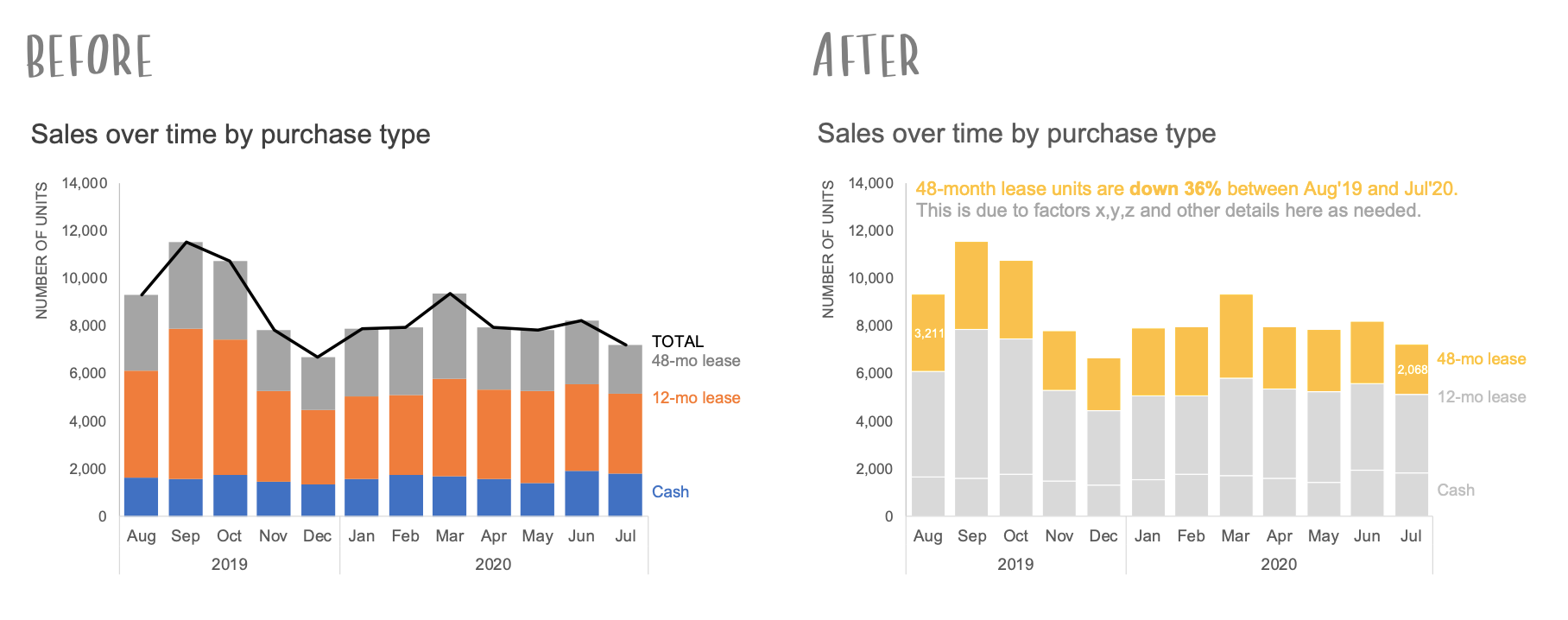
Let me walk through a specific example that illustrates the concrete difference chapters make to a video’s searchability and viewer experience.
Consider a twenty-five-minute video about “How to invest your first salary” — a topic with strong and sustained search demand from young working professionals in India.
Without chapters:
The video appears in YouTube search for the broad query “how to invest first salary” and similar queries. It may or may not rank for more specific queries like “should I invest in PPF or mutual funds as a beginner” or “how much to invest in emergency fund first” — because the algorithm has limited information about whether those specific topics are covered within the video.
A viewer who arrives specifically wanting to know about emergency funds must watch from the beginning or drag through the progress bar hoping to find the relevant section. Many leave. Watch time suffers.
With chapters:
0:00 Why your first salary is the most important financial decision you will make 2:30 The emergency fund — how much and where to keep it 6:45 Term insurance — why you need it before you invest anything else 10:30 PPF versus mutual funds — the honest comparison 15:00 How to start an SIP with 2000 rupees per month 18:30 Tax saving — understanding 80C before March 22:15 Common mistakes first-time investors make and how to avoid them 24:30 A simple action plan for your first month
Now the video is eligible to appear in search results for “emergency fund how much to keep,” “PPF versus mutual funds for beginners,” “how to start SIP 2000 rupees,” “80C tax saving explained,” and “common investment mistakes beginners” — each of these being a specific query that a specific viewer is making, and each of which is answered by a specific chapter.
The viewer who arrives wanting specifically to know about PPF versus mutual funds jumps directly to Chapter 4. They get a focused, relevant answer. They stay. They continue to adjacent chapters. They subscribe.
Google’s Key Moments feature may display this video in Google search results for any of these specific queries — with a direct link to the relevant chapter.
The same video. The same content. The same information. Dramatically different discoverability and navigability — achieved purely through the addition of thoughtfully written chapters.
Technical Details and Common Errors
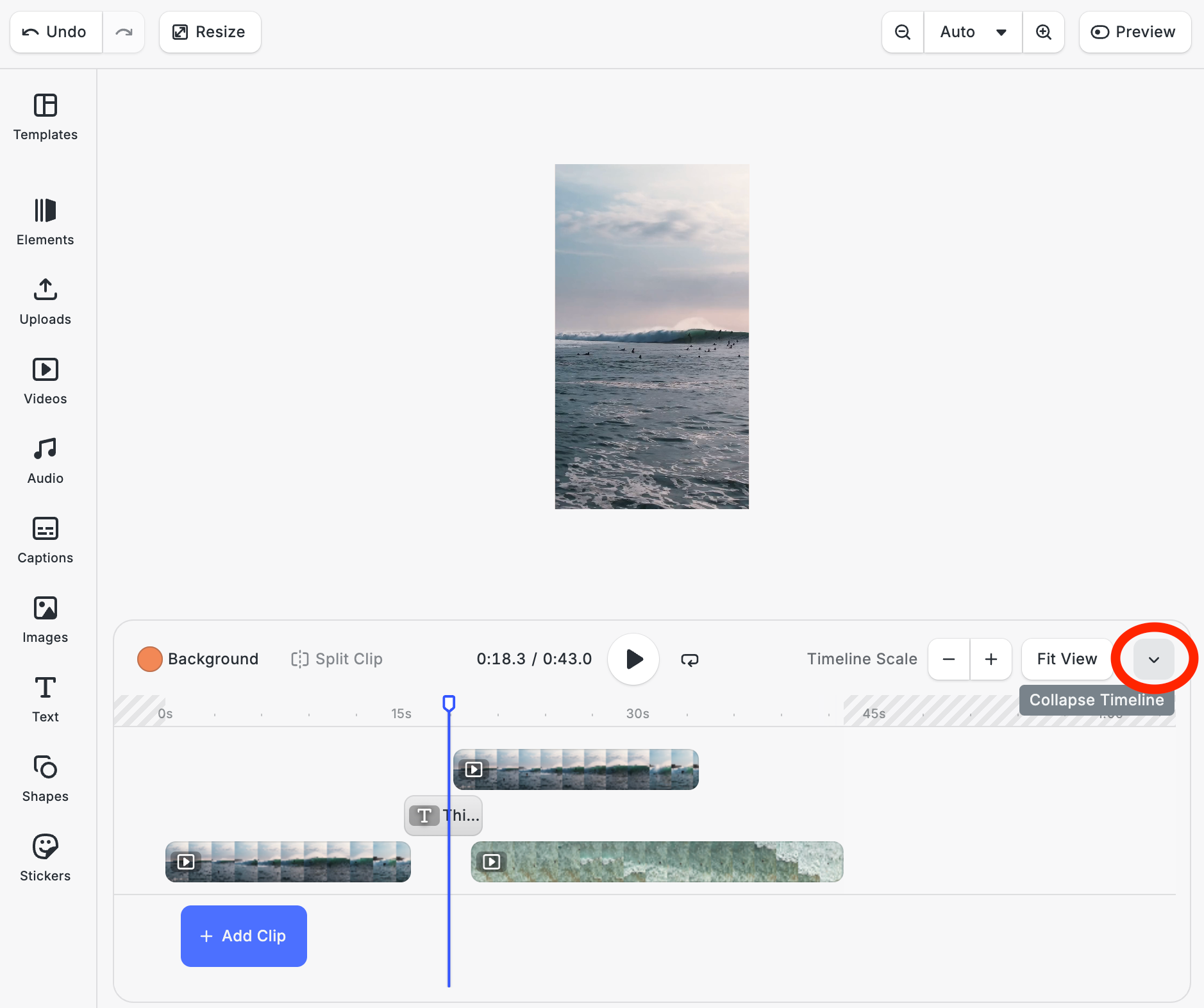
For creators who are new to adding chapters, a few technical details are worth knowing to avoid the common errors that prevent chapters from activating.
The 0:00 requirement
The first timestamp in a chaptered description must be 0:00. This is a technical requirement with no exceptions. Chapters will not activate if the first timestamp is, for example, 0:05 or 0:30. The video must begin its chapter structure at the very start.
The minimum chapter requirement
YouTube requires at least three timestamps to activate chapter navigation. A description with only one or two timestamps will not display as chapters on the progress bar.
Chronological order
Timestamps must appear in ascending chronological order. A description where timestamps appear out of order will not correctly generate chapters — the navigation will be incorrect or the feature may not activate.
Accurate timing
Chapter timestamps should correspond accurately to the moments in the video where each section actually begins. Inaccurate timestamps — where the chapter title describes content that begins significantly before or after the timestamp — create a poor viewer experience when they jump to a chapter and find themselves in the wrong section. Check timestamps carefully before publishing.
Avoiding special characters in chapter titles
Some special characters — particularly certain bracket types, hash symbols, and asterisks — can cause chapters to not render correctly. Use plain text for chapter titles wherever possible.
Chapters in Shorts
YouTube Shorts — videos under sixty seconds — do not support chapters. The chapter feature is only available for standard-length videos.
The Creator Who Added Chapters to His Old Videos
Let me close the practical section of this discussion with a specific scenario that many creators have experienced — and that illustrates the immediate, measurable impact that adding chapters to existing videos can produce.
A creator with a library of forty tutorial videos — none of them chaptered — decides to spend a week adding chapters to their entire back catalogue. They do not change a single other element: no new thumbnails, no updated descriptions, no re-editing of any content. Only chapters are added.
Within the month following this update, two observable things happen.
First, the average view duration across the channel’s videos increases. Viewers who previously left early because they could not find the specific section they needed now navigate directly to it and stay longer. The channel’s overall watch time metrics improve.
Second, several older videos begin appearing in new search results — both on YouTube and in Google’s Key Moments — for specific queries that correspond to the chapter titles. These queries were always being searched, and the videos were always covering the topics, but the algorithm had not previously had the specific, structured signal it needed to make the match. The chapters provided that signal.
The creator has made no new content. They have invested approximately five to ten minutes per video to add chapters. The return on that investment is sustained improvement in search performance and viewer retention across the entire existing library.
This is one of the highest-return activities available to a creator with an existing back catalogue. The content work is already done. The chapters are the final step that makes that content fully legible to both viewers and the algorithm.
Chapters and the Future of Video Search
Looking forward to how video search is evolving in 2026 and beyond, chapters sit at the intersection of two trends that are making them progressively more important rather than less.
The first trend is the increasing granularity of search intent. As search behaviour matures and search engines become more capable of handling specific, nuanced queries — “what should I do differently in month three of training for a half marathon if I have been experiencing knee discomfort” rather than “half marathon training tips” — the value of content that addresses specific questions within longer, comprehensive videos increases. Chapters are the mechanism through which this specificity is communicated to the algorithm and surfaced in search results.
The second trend is the integration of YouTube and Google search. Google’s continuing development of Key Moments and video-in-search features means that well-chaptered YouTube content is increasingly eligible for prominent placement in Google’s own search results — not as a link to a video but as a direct, navigable section of a video. As this integration deepens, chapters will become one of the primary levers through which video content captures Google search traffic.
Both trends point in the same direction: chapters are not a nice-to-have feature that organised creators use for aesthetics. They are a foundational element of how video content is discovered, indexed, and distributed in a search-driven internet.
Closing Thought — The Map Is Not the Territory, But It Gets You There
There is a distinction in philosophy between the map and the territory — between the representation of something and the thing itself. The video content is the territory. The chapters are the map.
A great territory without a map is difficult to navigate. Many travellers will turn back rather than venture into unmapped terrain, even when what they are looking for is genuinely there. The map does not change the territory. But it makes the territory accessible to people who would otherwise not find their way through it.
YouTube chapters are the map for your video content. They do not change what is in the video. They make what is in the video accessible to the viewer who needs a specific section and the algorithm that needs to understand what specific questions the video answers.
The creator who makes excellent content but leaves it unmapped — who trusts that viewers will find what they need and the algorithm will understand what the video covers without structured guidance — is leaving significant value unrealised. Not because the content lacks value, but because the map that would allow both viewers and algorithms to discover that value has not been provided.
Add the chapters. Write the titles with the care they deserve. Give both your viewers and YouTube’s algorithm the map they need to find what is worth finding in your work.
The territory is already there. Make it navigable.
Written by Digital Drolia — helping video creators understand the technical and strategic foundations that determine whether great content gets found. Found this valuable? Share it with a creator who has excellent content that is not reaching the audience it deserves because the content is not yet structured for discovery.