


You Learned Digital Marketing. Now What? Here Is How to Actually Get Your First Client | Digital Drolia

Let me paint you a picture.
You spent months learning digital marketing. You watched hundreds of hours of YouTube tutorials. You completed online courses — maybe even got certified. You know what SEO means, how Facebook Ads work, what a content calendar looks like, and why email marketing still matters.
You are ready. Or at least, you think you are.
And then reality hits.
You sit down, open your laptop, and ask yourself the one question that nobody in those courses ever really answered — “Okay. But how do I actually get a client?”
Silence.
That moment — that gap between knowing digital marketing and actually doing digital marketing for someone — is where most beginners get stuck. Not because they are not skilled enough. Not because the market is too competitive. But simply because nobody taught them the business side of building a freelance or agency career.
This blog is going to fix that.
No fluff. No “just network more” advice. Real, actionable steps that have worked for thousands of digital marketers who started exactly where you are right now — talented, motivated, and completely clientless.
Let’s go.
Why Getting the First Client Feels So Hard
Before we talk solutions, let’s be honest about the problem.
Getting your first client in digital marketing is genuinely difficult — not because you lack skills, but because of a specific psychological trap most beginners fall into.
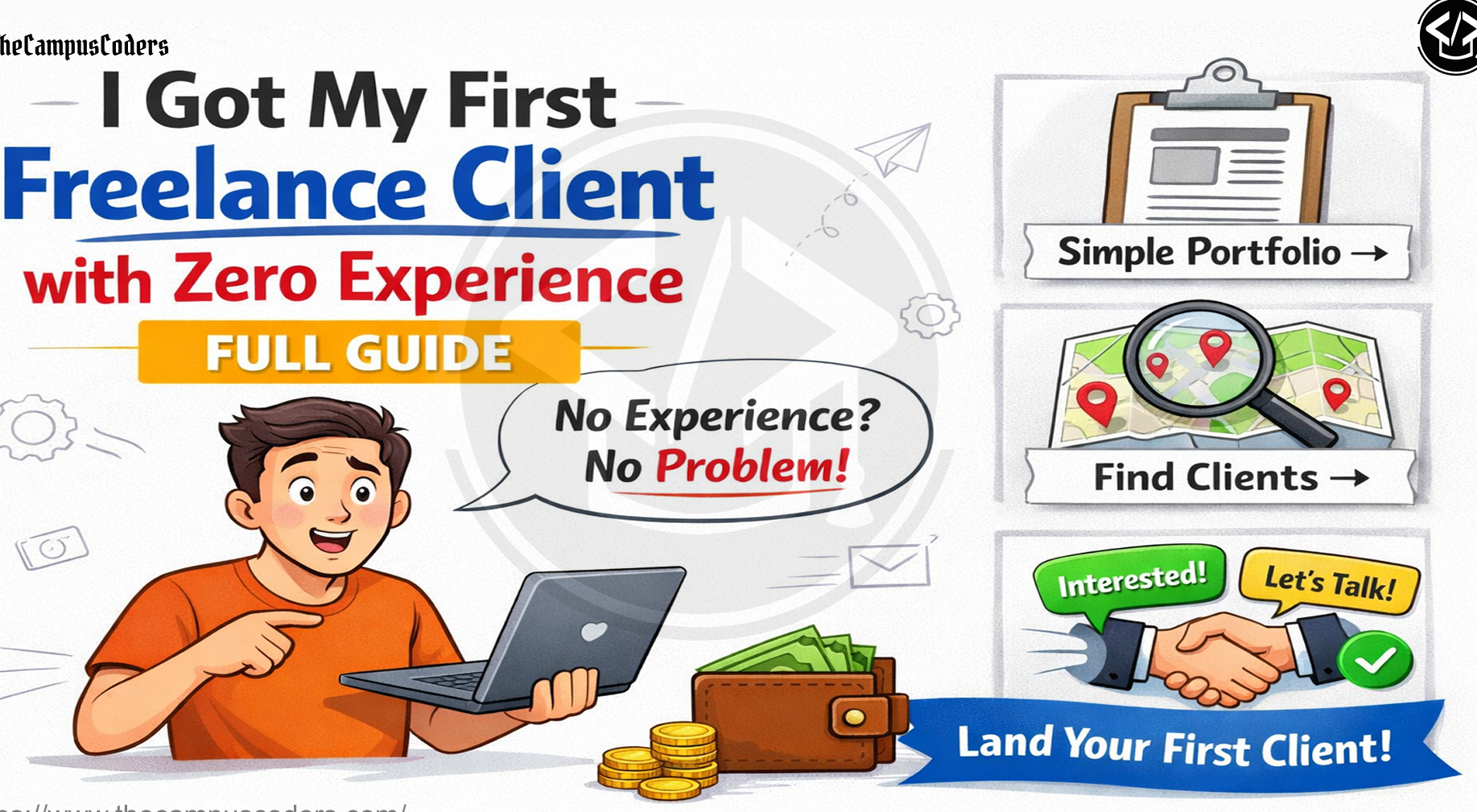
It goes like this: You feel like you need a portfolio to get clients. But you need clients to build a portfolio. So you wait. And wait. And wait. Until six months pass and you are still “almost ready” to start.
This is what is called the portfolio paradox — and it is the #1 reason talented digital marketers never get off the ground.
The second problem is positioning. Most beginners approach potential clients with something like, “Hi, I do digital marketing. Do you need help?” That is not a pitch. That is a question. And vague questions get ignored.
The third problem is looking in the wrong places. If your client-getting strategy is “post on LinkedIn and hope someone messages me,” you are going to be waiting a very long time.
Understanding these three root problems is the first step. Because once you see them clearly, the solutions become obvious.

Step 1 — Stop Waiting to Feel “Ready”
Here is something nobody wants to hear: You will never feel completely ready. And waiting until you do is just a comfortable excuse to avoid the discomfort of actually putting yourself out there.
The truth is, you do not need to know everything to get your first client. You just need to know more than they do. And if you have spent even three to four months seriously learning digital marketing, you already know more than 95% of small business owners.
Think about it from a local business owner’s perspective. They are running a restaurant, or a boutique, or a coaching center. They know their business inside out. But they have absolutely no idea how to run a Facebook Ads campaign, optimize a Google My Business listing, or create a content strategy.
You do.
That knowledge gap is your opportunity. Stop trying to be the world’s best digital marketer before getting started. Start with what you know, deliver results, learn more as you go.
The best digital marketers in the world are not the ones who knew the most before starting. They are the ones who started before they felt ready — and learned everything else along the way.

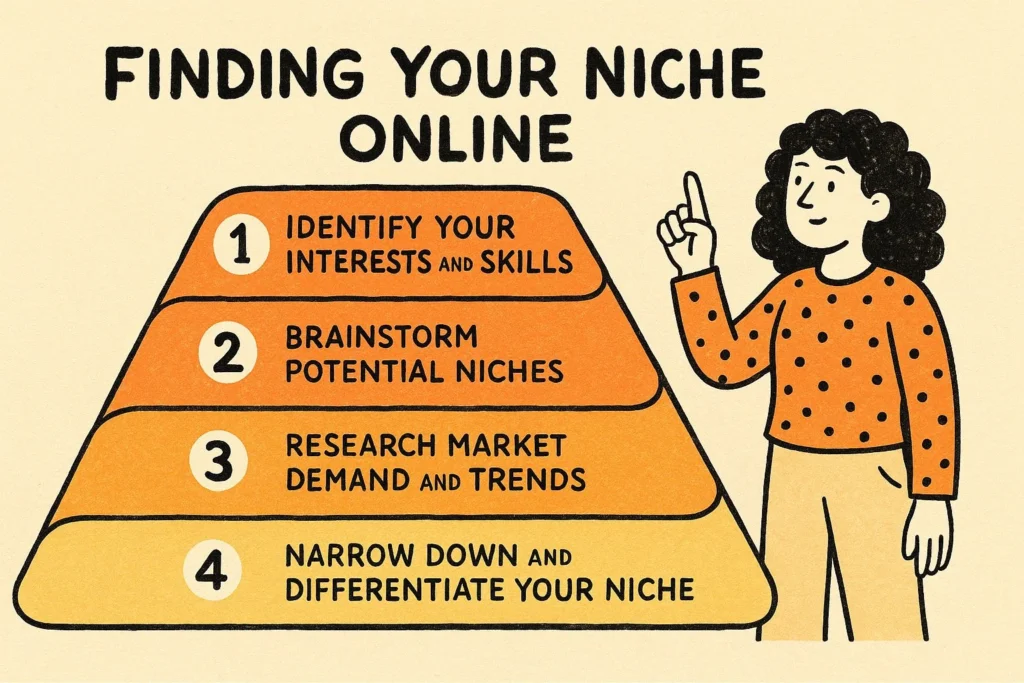
Step 2 — Pick a Niche. Seriously, Pick One.
“I do digital marketing” is the most forgettable thing you can say.
“I help dentists in India get more appointment bookings through Instagram and Google Ads” is something people remember. It is specific. It signals expertise. It makes a potential client think — this person knows my world.
Niching down is the single most powerful thing a new digital marketer can do to accelerate client acquisition. And yet it is the thing most people resist the hardest, because it feels like they are limiting themselves.
You are not limiting yourself. You are making yourself findable.
When you specialize in a specific industry, several things happen automatically. You learn the language, pain points, and buying patterns of that industry faster. You build a portfolio that speaks directly to that audience. Referrals happen naturally because dentists talk to other dentists, and restaurant owners talk to other restaurant owners. And when a potential client in your niche searches for help, your name comes up — because everyone else is still saying “I do digital marketing.”
How to choose your niche:
Start with what you already know. Did you grow up around a family business? Do you have a passion for fitness, fashion, food, or finance? Prior knowledge of an industry gives you an unfair advantage.
Consider local opportunities. What kinds of businesses are in your city that are clearly not using digital marketing well? Walk around your neighborhood. Visit local markets. That observation exercise alone can reveal your niche.
Think about where the money is. Doctors, lawyers, real estate agents, educational institutions, and restaurants all spend money on marketing and have clear ROI metrics. These are strong niches.
You do not have to commit to a niche forever. But pick one to start. You can always expand later — but right now, being specific is what will get you hired.
Step 3 — Build Your Portfolio Without Clients
Yes, this is possible. And no, it is not dishonest.
Before you have paying clients, you need to show potential clients what you can do. Here are five legitimate ways to build portfolio pieces from scratch.
Work for free — strategically. Pick one or two local businesses — ideally in the niche you are targeting — and offer to manage their social media, run a small ad campaign, or optimize their Google My Business listing completely free for one month. Tell them upfront: you are building your portfolio and they get free work. In exchange, you want a testimonial and permission to share the results.
This is not desperation. This is smart positioning. And in that one month, if you genuinely help them — even slightly — you have a real case study with real numbers.
Create spec work. Choose a real local business that has poor digital marketing. Without contacting them, create a sample social media content plan for them, redesign their Instagram bio, or write a sample Google Ads campaign. This shows your thinking and approach. When you approach clients later, you can say, “I actually analyzed your business and prepared something — want to see it?” That kind of initiative is almost impossible to ignore.
Run campaigns for yourself. Create an Instagram page or a YouTube channel around digital marketing tips — specifically aimed at small business owners. Growing your own audience IS proof of digital marketing skills. A page with 2,000 engaged followers you built from scratch is more impressive than most credentials.
Document your learning journey. Start a LinkedIn page where you share weekly insights — what you learned, campaigns you studied, results you found interesting. Consistency on LinkedIn, even without a big following, positions you as someone serious about the craft.
Get a small internship or part-time role. Even a short stint at a digital marketing agency — paid or unpaid — gives you real experience, real tools exposure, and real results you can talk about.
The goal here is simple: when a potential client asks, “Have you done this before?” you have something to show them. It does not have to be a huge brand. It just has to be real.

Step 4 — Your First Clients Are Closer Than You Think
Most people imagine their first client will come from a cold email to a stranger, or a viral LinkedIn post, or a random DM. And sometimes that happens.
But statistically, your first few clients almost always come from your existing network.
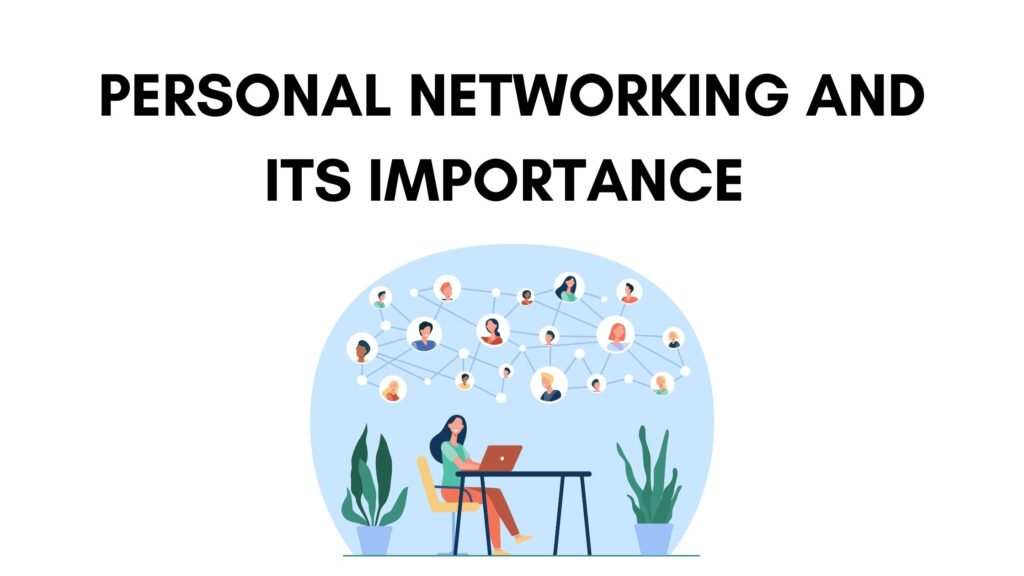
Think about every person you know — friends, family, college batchmates, former colleagues, neighbors, relatives. Now ask yourself: how many of them run a business, or know someone who does?
The answer is almost always: more than you think.
Your uncle who runs a catering company. Your college friend who just started a clothing brand. Your neighbor who teaches music lessons. Your cousin’s husband who owns a pharmacy. These are not random strangers — these are people who already trust you. And trust is the hardest part of selling any service.
The warm outreach approach:
Do not send a mass message. Do not post a generic announcement on WhatsApp saying “I now do digital marketing, please refer me.” That gets ignored.
Instead, reach out personally. One person at a time. Something like:
“Hey [Name], hope you are doing well! I recently got serious about digital marketing and I am currently helping small businesses grow their online presence. I know you run [their business] — I would genuinely love to help you out. No pressure at all, I am just starting and looking to build some experience. Can we catch up over a call or chai sometime?”
That message is personal. It is specific. It is humble without being desperate. And it opens a conversation rather than making a direct pitch.
Do this for every business owner you know — or know of — in your network. Even if only two out of twenty respond positively, that is two potential first clients. And two is all you need to start.
Step 5 — Cold Outreach That Actually Works
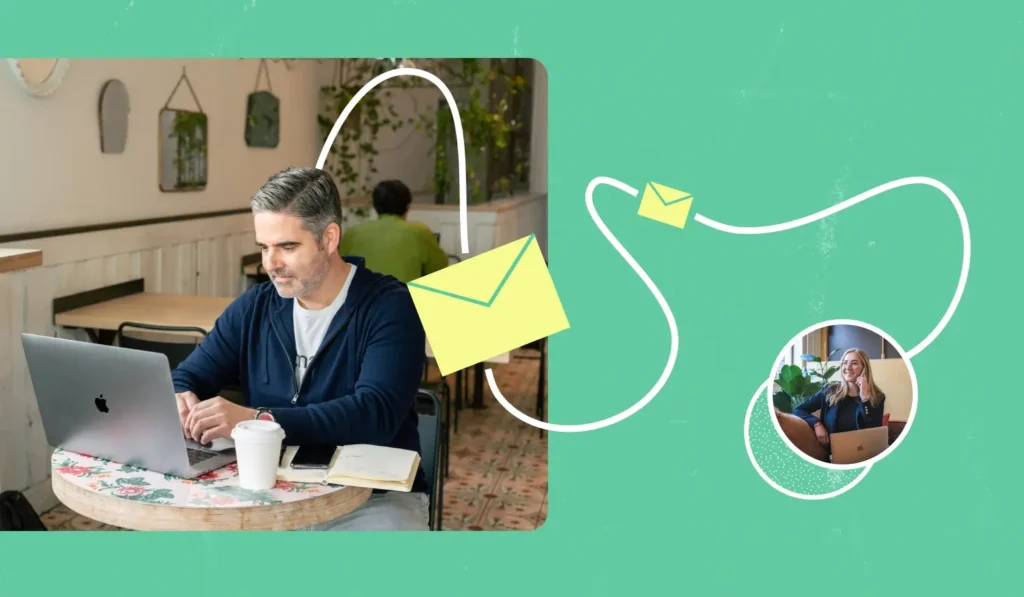
Once you have exhausted your warm network, it is time to reach out to strangers. And yes, cold outreach works — but only if you do it right.
The biggest mistake people make with cold outreach is making it about themselves. “Hi, I am a digital marketer with skills in SEO and social media. I would love to work with your company.” Nobody cares. That message is about you, not them.
Effective cold outreach is about them.
The three-part cold outreach formula:
First, show that you have done your research. Reference something specific about their business — a recent post they made, a gap you noticed in their online presence, something they could be doing better. This immediately shows you are not just copy-pasting the same message to everyone.
Second, offer a specific value. Not “I can help with your digital marketing” — but “I noticed your Google My Business listing has no photos and your last review was eight months ago. I can fix that and show you how it directly impacts how many people call you.”
Third, make the next step easy. Do not ask for a big commitment. Ask for a short call. A fifteen-minute conversation. A free audit. Lower the barrier to say yes.
Where to find cold outreach prospects:
Google Maps is massively underrated for this. Search your niche in your city — “restaurants in Pune,” “salons in Bangalore,” “coaching centers in Delhi.” Look at their listings. Many will have incomplete profiles, few or no reviews, no website linked. Every one of those gaps is an opening for your pitch.
Instagram and Facebook are also goldmines. Search local business hashtags. Look at businesses with small followings and inconsistent posting. Slide into their DMs — but do it as someone offering genuine value, not as someone begging for work.
LinkedIn is powerful for B2B niches. If you are targeting marketing managers, startup founders, or service-based businesses, LinkedIn direct messages with a thoughtful, personalized note can get impressive response rates.
The follow-up rule: Most sales happen after the third or fourth follow-up. If someone does not respond to your first message, follow up in three days. And again a week later. Politely, without being pushy. Persistence — done respectfully — is what separates people who get clients from people who give up.
Step 6 — Use Social Media as a Client Magnet
Instead of always going to clients, you can structure your social media presence so clients start coming to you.
This is called inbound marketing — and when it works, it is magical.
The mechanism is simple: You consistently share valuable content about digital marketing — tips, case studies, behind-the-scenes, industry insights — and over time, business owners who need help start reaching out to you because they already see you as an expert.
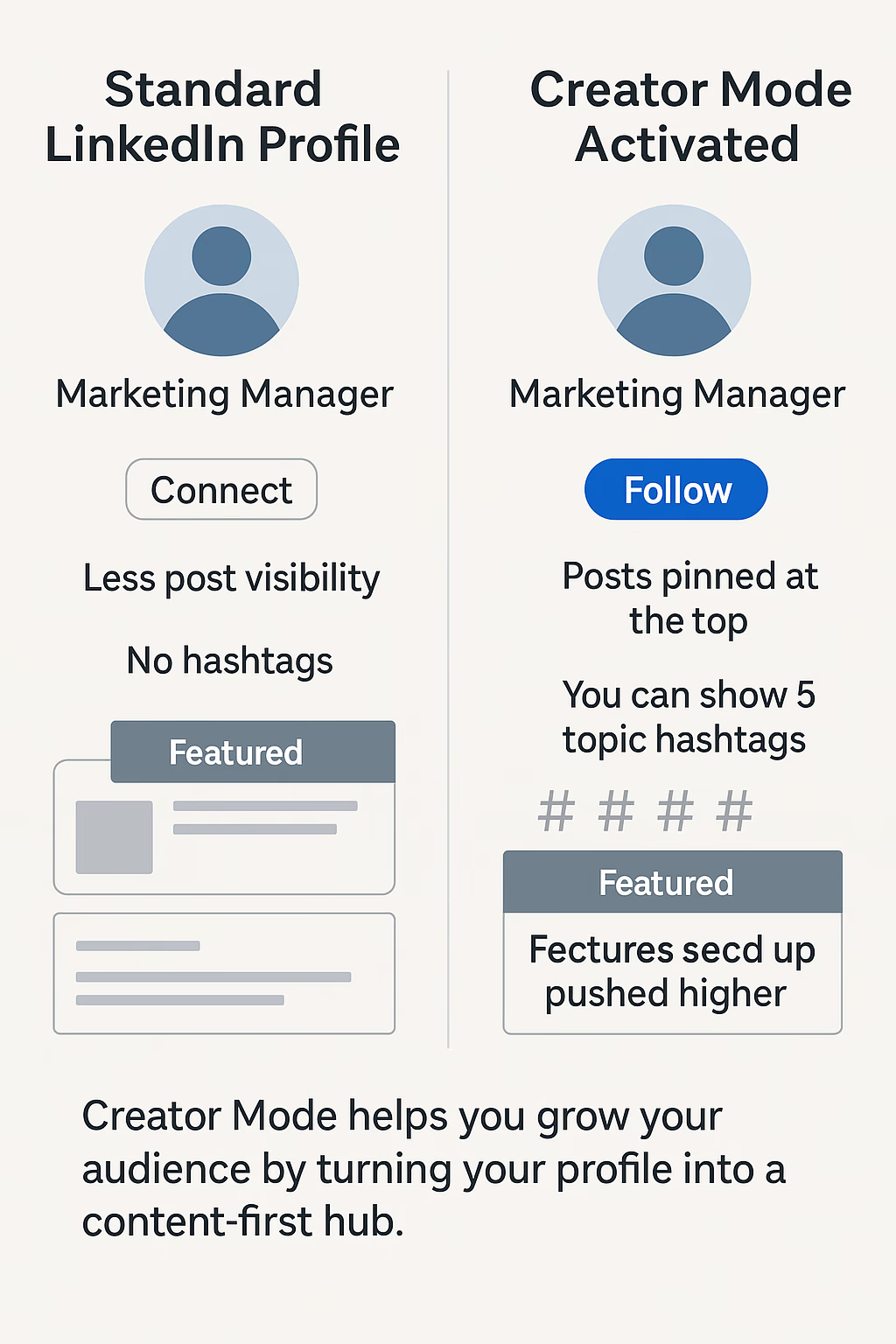
LinkedIn is the best platform for this as a freelance digital marketer. Here is the playbook:
Post three to four times per week. Mix of formats — written posts, carousels, short videos. Topics should alternate between showcasing your expertise (“Here is why most small businesses waste money on Facebook Ads”), sharing results (“I helped a local bakery increase their Instagram followers by 340% in 60 days — here is exactly how”), and being relatable and human (“Honest truth about starting as a freelance digital marketer that nobody tells you”).
Comment thoughtfully on posts by business owners, startup founders, and marketing professionals. Not “Great post!” comments — actual insights that add to the conversation. This gets you visibility with exactly the right audience.
Instagram is powerful if your niche is local businesses or consumer-facing brands. Create content that educates local business owners — “5 things your competitor’s Instagram page is doing that yours isn’t,” “Why your Google My Business listing is costing you customers,” “Simple reel ideas for local businesses with no content team.” These are posts local business owners share, save, and come back to — and then reach out.
The key to making social media work for client acquisition is consistency over virality. You do not need a viral post. You need forty-five consistent posts that show the same small audience, week after week, that you know what you are talking about.
Step 7 — Partnerships and Referrals: The Fastest Growth Engine
Here is a secret that experienced freelancers and agency owners know but rarely talk about: referrals are the best source of clients. Bar none.
A client who comes through a referral already has trust. They already have a positive impression. The sales conversation is shorter. The deal closes faster. The relationship tends to be better.
So how do you build a referral engine when you are just starting?
Partner with complementary service providers. Think about who else serves your ideal clients. If you target restaurants, who else do they hire? Website designers. Photographers. Accountants. Printing companies. Reach out to these people and propose a referral arrangement — you send them clients, they send you clients. No money changes hands. Just mutual benefit.
Make your existing clients your sales team. Every time you deliver good results for a client, ask them directly: “Is there anyone else in your network — a friend, a fellow business owner, anyone — who you think could benefit from this kind of help? I would really appreciate an introduction.” Most people are happy to refer if you just ask. Most freelancers never ask.
Join local business communities. Rotary clubs, startup meetups, industry associations, local chamber of commerce — these are rooms full of business owners. Show up consistently. Contribute value. Do not pitch. Just be genuinely helpful and curious. Over time, people start asking what you do — and that is when relationships convert into clients.

Step 8 — Pricing: The Question Nobody Wants to Answer
“How much should I charge?” is the second-most-asked question after “How do I get clients?” And the honest answer is: more than you think, less than you fear.
Most beginners massively underprice themselves. They charge ₹2,000-3,000 per month for managing a brand’s entire social media — scared that charging more will cost them the deal. But ironically, very low pricing often hurts your credibility. Clients wonder: “If this person is this cheap, can they really be good?”
A reasonable starting point for an Indian market:
Social media management (2-3 platforms, 15-20 posts/month): ₹8,000 to ₹20,000 per month. Google Ads management: 10-15% of ad spend, minimum ₹5,000 per month. SEO: ₹10,000 to ₹25,000 per month depending on scope. Full digital marketing retainer: ₹20,000 to ₹50,000 per month.
These are not fixed rules. They vary by city, by client size, by niche. But they give you a ballpark that is both fair to you and reasonable for a small or medium business.
One important principle: Never compete on price. There will always be someone willing to do it cheaper. Compete on value — the results you deliver, the clarity you bring, the peace of mind you offer. When you are the cheapest option, you attract clients who only care about cheap. When you are the most valuable option, you attract clients who care about results.

Step 9 — The First Sales Call: How to Handle It Without Being Salesy
Most digital marketers dread sales calls. They feel awkward, pushy, and uncomfortable. Here is the mindset shift that changes everything: a sales call is not about selling. It is about understanding.
Go into every first call with the goal of understanding their business, their challenges, their goals, and their current situation. Ask questions. Listen more than you talk. Take notes.
By the end of a genuine discovery conversation, one of three things happens. Either you realize you genuinely cannot help them — in which case, tell them honestly and refer them to someone who can. Or they realize you are not the right fit — and that is fine too. Or — most often, if you have done your research and targeted the right people — you both realize there is a clear opportunity, and the proposal feels like a natural next step rather than a hard sell.
Key questions to ask on a first call:
What does your business currently do for online marketing? What has worked and what hasn’t? What does success look like for you in the next six months? Have you worked with a digital marketer before? What was that experience like? What is holding you back from growing faster right now?
These questions are not manipulation tactics. They are genuine curiosity. And genuine curiosity is the most magnetic quality a service provider can have.
End every call with a clear next step — “I will send you a proposal by Thursday” or “Let me put together a quick audit of your current digital presence and share it with you by Monday.” Never end a call without a defined follow-up.

Step 10 — After the First Client, Everything Changes
Here is something beautiful that happens once you land your first client and deliver real results.
Everything gets easier.
The second client is easier to get than the first. The third easier than the second. Not because the market changes — but because you change. You gain confidence. You have real stories to tell. You have proof that you can do this.
The first client is not just a source of income — it is a source of evidence. Evidence for potential clients that you know what you are doing. Evidence for yourself that this path you have chosen is real, viable, and worth pursuing.
So treat your first client like they are your most important client — because in many ways, they are. Over-deliver. Communicate clearly. Show up on time. Be proactive. Do more than was agreed.
Not because you are a pushover. But because a delighted first client is worth ten times a satisfied one. They refer you. They give you glowing testimonials. They stay with you for years. They become the foundation of everything you build.
The Honest Timeline
People want to know: how long will this take?
Here is a realistic expectation. If you start reaching out today — warm network, cold outreach, social media content — and you are consistent and persistent, you can realistically get your first client within four to eight weeks.
Not four to eight months. Four to eight weeks.
But only if you actually start. Not when you finish one more course. Not after you redesign your portfolio website for the third time. Not once your LinkedIn profile is “perfect.”
Now. Today. This week.
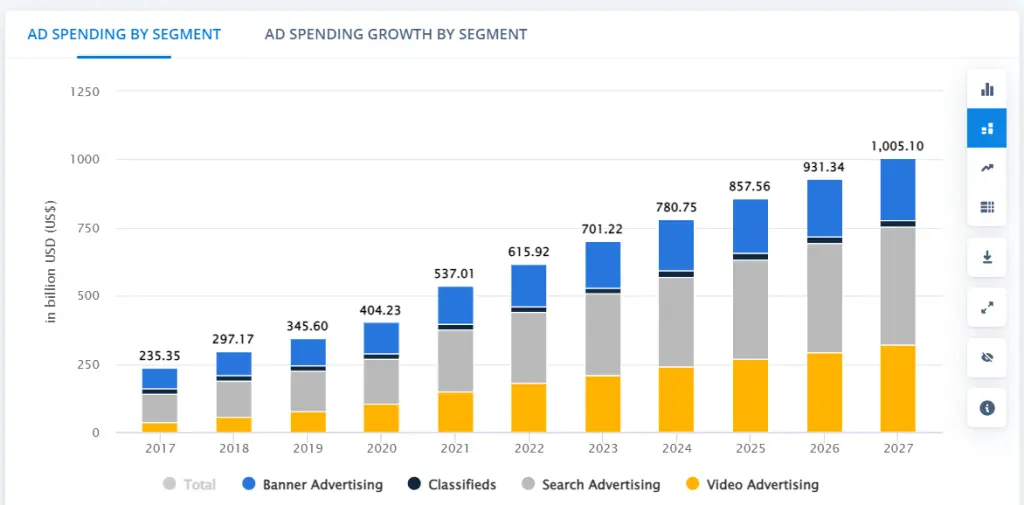
The digital marketing industry in India is growing at a pace that means there is genuinely more demand than supply for good, reliable, results-driven digital marketers. The opportunity is enormous. The only question is whether you are going to step into it.
Final Words — The Client Is Out There. Go Find Them.
You learned digital marketing for a reason. Maybe it was financial freedom. Maybe it was creative fulfillment. Maybe it was the flexibility to work on your own terms.
Whatever that reason was — it is still valid. It is still waiting for you.
But it will not come to you. You have to go get it.
Pick your niche today. Reach out to three people in your network this week. Create one piece of content that shows your expertise. Send five cold outreach messages to local businesses you could genuinely help.
Do those four things, and you will have more momentum in one week than most “aspiring digital marketers” build in six months.
Your first client is not some distant dream. They are a real business owner, right now, struggling with something you know how to solve — and waiting for someone like you to show up and offer to help.
Go show up.

Written by Digital Drolia | For every digital marketer who knows their craft and just needs to find the people who need it.