

How a Fitness Trainer in Chennai Built a 6 Figure Business Using Instagram Alone


Let me tell you about a Monday morning in Chennai that changed the way Kavitha Rajan thought about her career.
Kavitha had been a personal fitness trainer for six years. She had built her client base the traditional way — word of mouth, referrals from her gym, the slow and uncertain accumulation of one satisfied client recommending her to another. It was honest work. She was genuinely good at what she did. Her clients got results.
But the economics of it frustrated her.
She was limited by geography — she could only train clients who could physically come to where she was. She was limited by hours — there are only so many training sessions a human being can conduct in a day. She was limited by the gym’s commission structure, which meant that a significant percentage of what clients paid never reached her. And she was perpetually dependent on the goodwill of referrers she had no control over.
She had been quietly watching what some fitness creators were doing on Instagram — the transformation posts, the workout videos, the nutrition content, the behind-the-scenes glimpses of training sessions. She had dismissed it, initially, as vanity content. A space for the photogenic and the already-famous.
On that Monday morning, sitting with a client list that had barely grown in eight months, she decided to try something different.
She opened Instagram on her phone, went to her personal account — which had a few hundred followers, mostly friends and family — and recorded a sixty-second video. She was standing in her kitchen in her workout clothes, hair pulled back, no lighting equipment, no ring light, no script. She explained one common mistake she saw clients making with their squat form, demonstrated the mistake, demonstrated the correct form, and said: “If this helps you, save it and share it with a friend who needs it.”
She posted it, put her phone down, and went to train her morning client.
By evening, the video had twelve thousand views.
She had two new clients by the end of the week.
That was two years ago. Today, Kavitha’s fitness business generates over twenty lakhs annually — substantially more than the combination of her gym employment and private training income had ever produced. She works from anywhere. She has clients across India and in five countries. She employs a part-time assistant to manage her inbox. She has a waitlist for her online coaching programme.
She did not build this through YouTube or a podcast or a website or paid advertising. She built it almost entirely through Instagram — through a consistent, disciplined, genuinely useful presence on a platform she had previously dismissed as not for people like her.
This is the complete story of how she did it.
The Foundation — Understanding What Instagram Could Do That Her Previous Business Could Not

Before Kavitha posted a single video, the most important shift she made was in how she understood what she was building.
Her previous business was a service delivery operation. She trained clients. She was paid for the training. The income was directly proportional to the hours she worked. This is a fundamentally limiting business model because the inputs — her time and physical presence — are finite.
Instagram, she came to understand, was a leverage tool. It could amplify her expertise beyond the clients she could physically reach, beyond the hours she could physically work, and beyond the geographic boundaries that had always constrained her.
The specific leverage Instagram offered was this: a demonstration of expertise that could be seen by thousands of people simultaneously, that continued working after the moment of its creation, and that pre-built trust with potential clients before she ever spoke to them.
When Kavitha explained a concept correctly in a sixty-second Reel, that explanation reached not one client in one session but potentially thousands of viewers across the country. Each viewer who found it useful either became a lead or shared it with someone who might. The work of the sixty-second video compounded over time in a way that no individual training session could.
This understanding — that Instagram was a leverage and trust-building machine, not a vanity platform — was the cognitive shift that made everything else possible.
The Content Strategy She Built — What She Posted and Why
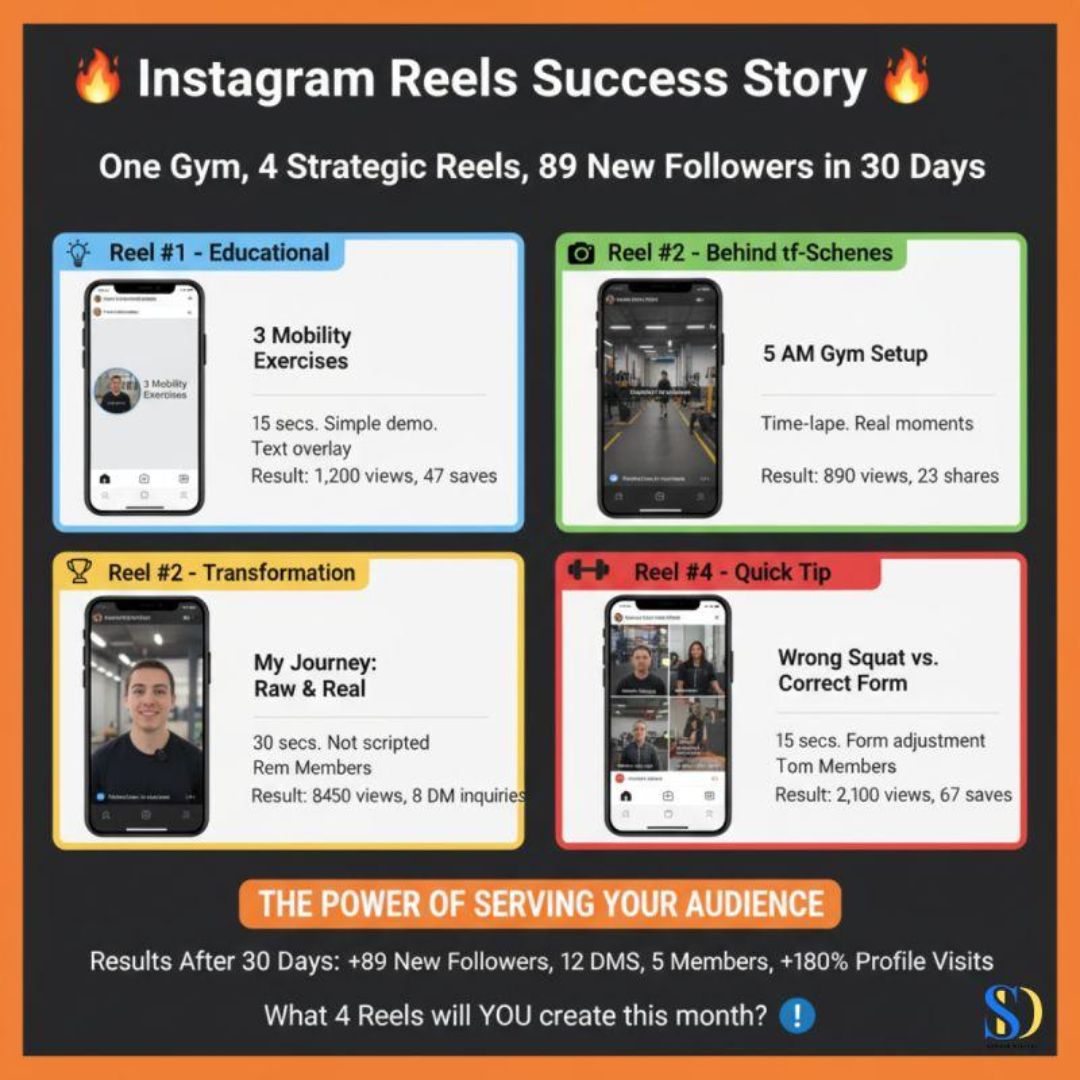
Kavitha did not stumble into a content strategy. After the squat video’s unexpected success, she spent a week analysing what had made it work and building a framework she could replicate consistently.
The squat video worked, she concluded, for three specific reasons. It was immediately useful to a specific person with a specific problem. It was simple enough to understand in sixty seconds. And it ended with a clear invitation to act — save it and share it.
These three principles became the foundation of her content strategy.
Principle One: Every piece of content must be immediately useful to a specific person
Kavitha made a list of the twenty most common problems, questions, and misconceptions she encountered in her work as a trainer. These became her content calendar for the first six months.
Not “fitness tips for beginners” — too broad. Not “the importance of exercise” — too obvious. Specific, real problems her actual clients had encountered. Why is your knee going inward when you squat? Why is your lower back hurting after deadlifts? Why are you not losing weight despite consistent cardio? Why do you feel worse in the first week of a new routine before you feel better?
Each of these questions was one that a real person, somewhere in India, was searching for the answer to at that very moment. Each answer was a demonstration of genuine expertise that could not be faked because it addressed the specific, nuanced reality of the problem rather than a generic platitude.
This specificity was the first thing that distinguished Kavitha’s content from the vast majority of fitness content on Instagram — content that spoke generally to general audiences and therefore resonated deeply with almost nobody.
Principle Two: Every explanation must fit in sixty seconds
This was a discipline constraint that improved her content rather than limiting it. Sixty seconds — the maximum length of Reels when she started, since expanded — required her to isolate the single most important thing about each topic and communicate it without any wasted words.
This constraint also solved the problem that many professional experts face on social media: the tendency to demonstrate the full depth of their knowledge rather than the single piece of it that is most useful to the viewer right now. A sixty-second video cannot contain everything. Choosing what to leave in is easy. Choosing what to leave out is the skill.
Kavitha became rigorous about this. Before recording any video, she identified the single most important sentence — the one thing, if the viewer retained nothing else, that would make the video worth having watched. She opened every video with that sentence.
Principle Three: End with a specific call to action that serves the viewer
The call to action at the end of Kavitha’s videos was consistently “save this for reference” or “share this with someone who needs it.” Never “follow me” or “click the link in my bio” — at least not in the first moments of her growth.
This choice was deliberate. A call to action that serves the creator feels like an ask. A call to action that serves the viewer — by helping them retain useful information or helping them look after someone they care about — feels like a gift. The viewer who saves a useful video has benefited from the save. The viewer who shares a useful video has done something kind for a friend. Neither of these acts feels like helping Kavitha — but both of them do help Kavitha, by extending the reach of the content and by deepening the algorithm’s sense of the video’s value.
The Posting Rhythm — Consistency That Built Momentum

In her first three months, Kavitha posted a Reel every day. This was ambitious — it required identifying a topic, recording the video, editing it (minimal editing, typically jump cuts and captions), writing a brief caption, and selecting hashtags, every single day.
She maintained this pace because she had made a specific calculation: at one Reel per day for ninety days, she would have ninety pieces of content working for her in the world. Each one was a potential entry point through which someone who needed what she knew could find her. The more entry points, the more discovery. The more discovery, the faster the growth.
She was also, she acknowledged privately, using the daily posting discipline to develop her skills. The first week of Reels were good but not great. By the sixth week they were noticeably better — clearer, tighter, more confident on camera. By the twelfth week she had developed an on-camera presence and a communication efficiency that would have taken months to develop through any other means.
This deliberate skill development through output volume is one of the most underappreciated aspects of social media content creation. The act of producing content consistently — not waiting until it is perfect, but shipping it regularly and learning from each iteration — compresses the skill development timeline dramatically.
After the first three months, Kavitha settled into a rhythm of five Reels per week. This maintained the consistency that the algorithm rewarded while giving her the time and creative space to develop longer-form content — specifically carousel posts and Stories that addressed topics requiring more depth than sixty seconds could hold.
The Formats That Worked — A Breakdown of Her Content Mix
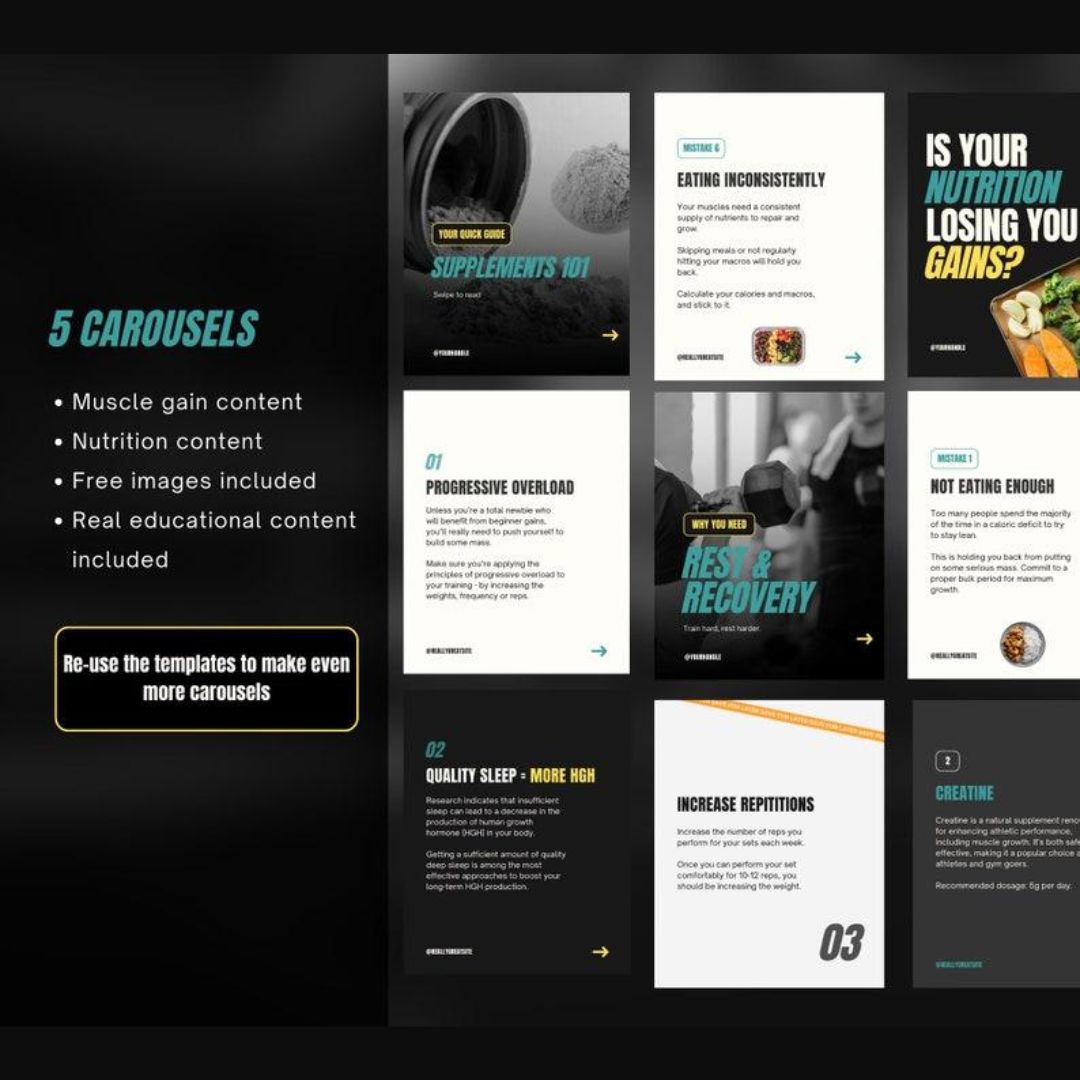
Kavitha’s Instagram content over two years settled into a mix of formats that each served a different function in her audience development and business generation.
Reels — Discovery and Trust Building
Reels remained the primary discovery mechanism throughout her growth. The Reels algorithm consistently delivered her videos to people who had never seen her content before — people who were interested in fitness but had not yet found her specifically.
The most successful Reels consistently shared certain characteristics. They opened with a specific problem statement rather than a greeting or introduction. They were between forty-five and ninety seconds long. They used captions throughout — essential for viewers watching without sound, which represented a significant proportion of her audience. They ended with the specific, viewer-serving call to action.
The topics that generated the widest organic distribution tended to be slightly counterintuitive — content that challenged commonly held beliefs about fitness rather than confirming them. “Why running is making your weight loss worse” reached far more people than “the benefits of running” because the counterintuitive framing triggered the psychological mechanism we described in our post on YouTube titles — creating cognitive tension that compelled viewers to watch and engage.
Carousels — Depth and Save Rate
Carousel posts — multiple images that viewers swipe through — became Kavitha’s second most important format for reasons connected to the save-rate algorithm signal we discussed earlier.
Carousel posts on Instagram naturally generate higher save rates than single images or short Reels because they function more like reference materials — something useful to keep. A carousel titled “7 Signs Your Workout Form Needs Correction — With Photos” was not entertainment. It was a reference guide. Viewers saved it because it was genuinely useful to return to.
Each carousel Kavitha produced took significantly longer than a Reel — she designed them on Canva, wrote the content for each slide, ensured the progression across slides built toward a useful conclusion. But the sustained save rates meant these posts continued generating engagement and algorithmic distribution weeks after posting, rather than the rapid-rise-and-fall pattern of Reels.
Stories — Relationship and Conversion
If Reels were her discovery mechanism and carousels were her reference content, Stories were her relationship-building and conversion channel.
Stories showed what Kavitha was like as a person and as a professional — not the curated best-of version that Reels presented, but the daily reality of her work. A training session with a client who had just hit a personal best. A nutrition question she was often asked, answered informally. Her own workout on a morning when she did not feel like training. A poll asking followers what their biggest fitness challenge was this week.
This informal, regular, personal content built the kind of familiarity that turns followers into clients. A person who has watched forty of Kavitha’s Stories has a sense of who she is, how she thinks, what it would be like to work with her. When she introduced her online coaching programme in a Story, her audience was not hearing from a stranger. They were hearing from someone they had been watching for months.
Stories were also where she placed her commercial content — the call to action for her coaching programme, the link to her DMs for consultations, the announcement of available slots. Keeping commercial content primarily in Stories, where the audience was already warm and the context was personal, produced significantly higher conversion rates than commercial content in the main feed would have.
The DM Strategy — How She Converted Followers Into Clients
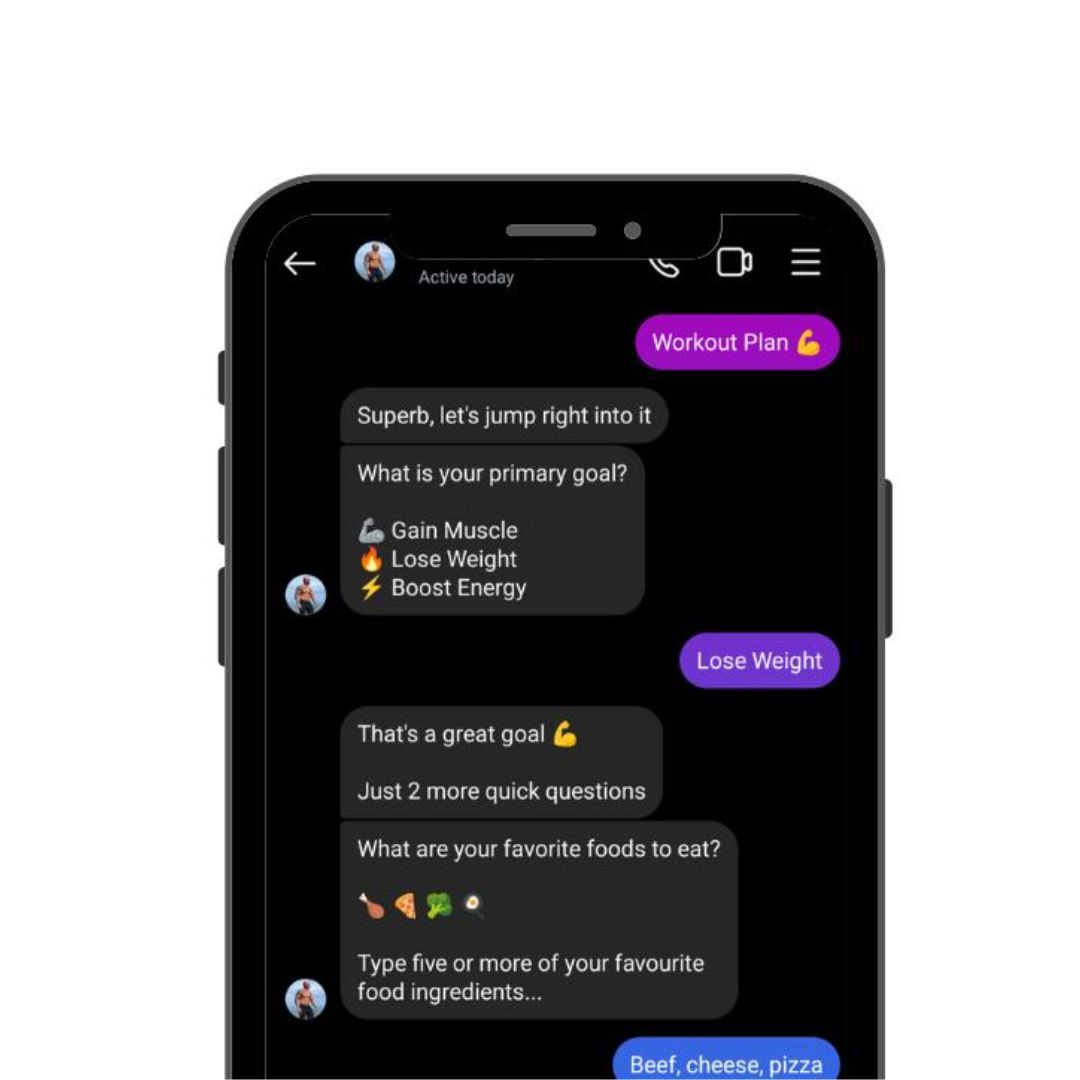
The conversion from Instagram follower to paying client happened almost entirely through direct messages — a dimension of Instagram business development that most creators either underinvest in or misunderstand entirely.
Kavitha’s DM strategy was built on three observations about how her followers behaved.
First observation: people who watched multiple Reels, saved content, and engaged consistently with her account had already decided they trusted her before they ever contacted her. The DM was not the beginning of the sales process — it was closer to the end. By the time someone DMed her, the selling had largely been done by the content.
Second observation: the first DM from a potential client was almost never a direct purchase inquiry. It was a question. A specific question about their specific situation. “I have lower back pain and want to start strength training — is that safe?” or “I have been trying to lose weight for two years and nothing is working — what would you do differently?” These questions were invitations into a conversation, not requests for a sales pitch.
Third observation: how she responded to these opening questions determined whether the conversation resulted in a client. A response that immediately directed the person to a link to book a consultation treated them as a sales target. A response that genuinely engaged with their specific situation — that demonstrated the same quality of understanding and insight that her public content demonstrated — treated them as a person. The latter approach converted significantly better.
Her DM response formula was simple. Acknowledge the specific situation they had described. Ask one clarifying question that showed genuine interest in their context. Provide one piece of genuinely useful guidance. And then, if the conversation had established rapport and they had shown interest in working with her, offer a consultation.
This approach took more time than a templated response. It produced dramatically better conversion rates — and it produced clients who arrived at the first session already trusting her and prepared to engage fully, rather than clients who arrived skeptically evaluating whether their decision was correct.
The Programme She Built — Translating Audience Into Business


The Instagram presence Kavitha built was the discovery and trust mechanism. The business behind it was what converted that trust into income.
She built two primary offerings.
One-on-one online coaching
Kavitha’s flagship offering was personalised online coaching — a service she had discovered could be delivered entirely through video calls, app-based workout programming, and WhatsApp check-ins, without any requirement for geographic proximity.
Online coaching removed the fundamental constraint that had limited her previous career: the need for physical co-presence. A client in Hyderabad was as accessible as a client in Chennai. A client in Dubai was as viable as a client across town. The expertise was location-independent.
Her online coaching programme was priced at a premium — significantly above what she had charged for in-person training — because the offering was genuinely more comprehensive. Personalised programming, weekly video consultations, daily check-ins, nutrition guidance, and the ability to reach her with questions at any time produced outcomes that sporadic gym sessions could not match.
The premium pricing was not a gamble. It was supported by the trust her content had built. Clients who arrived from Instagram having watched sixty or eighty of her videos did not question the price the way a cold lead from a gym noticeboard might. They knew what they were buying because they had already experienced her expertise for weeks or months through her free content.
Group coaching programmes
The second offering was a structured group coaching programme — a twelve-week course with a defined curriculum, delivered to a cohort of clients who went through it together. Group coaching allowed Kavitha to serve more clients per unit of her time, reducing her effective cost per client while maintaining the personalisation and relationship that she had built her reputation on.
The cohort model also created community among clients — participants who were going through the same programme simultaneously supported and motivated each other, reducing dropout rates and increasing the probability of positive outcomes that would result in testimonials and referrals.
Both offerings were sold with a waiting list model — new spots in the one-on-one programme and the group cohorts opened at specific times, were announced through Instagram Stories to a warm audience, and filled quickly from existing followers who had been waiting for the opportunity.
This scarcity was not manufactured. It reflected genuine capacity constraints. But the announcement to an audience of highly engaged followers who had been watching her content for months produced near-instant sell-outs when spots opened — a conversion dynamic that no cold advertising approach could have replicated.
The Numbers — A Transparent Look at What Instagram Built

Kavitha is unusual among successful creators in her willingness to be specific about numbers — she believes transparency about the financial reality is itself a service to other fitness professionals who are considering a similar path.
Her Instagram account grew from a few hundred followers to approximately one hundred and forty thousand over two years. This is not a massive following by Instagram standards — there are fitness accounts with millions of followers. But it is a highly engaged, specifically relevant following — people genuinely interested in evidence-based fitness guidance, who had found her content specifically useful, and who trusted her enough to engage seriously with commercial offerings.
The income her business generates — over twenty lakhs annually — comes from three sources. One-on-one coaching clients, who pay a premium monthly rate and represent the largest income component. Group programme cohorts, which run twice per year and fill quickly. And brand partnerships, which she takes selectively — only with brands whose products she actually uses and genuinely believes in, because her audience’s trust is the asset that makes the partnerships valuable and she will not compromise it for a fee.
She emphasises that the Instagram following size is less important than the engagement quality and the trust depth. A trainer with fifty thousand highly trusting, highly engaged followers who have watched hundreds of hours of her content will generate more business than a trainer with five hundred thousand followers who followed because of a single viral moment and have no ongoing relationship with the content.
This is the distinction between an audience and a community. Kavitha built a community — people who genuinely know and trust her, who watch her consistently, and who will act on her recommendations. The size of that community, measured in absolute follower count, understates its commercial value.
The Mistakes She Made — The Honest Account

No story of success is complete without an honest account of what went wrong — and Kavitha is specific about her mistakes, both because they are instructive and because she believes the polished success narrative, stripped of difficulty, is itself a form of misinformation.
Mistake One: Starting too product-focused too early
In her second month of posting, encouraged by the early growth, Kavitha ran a promotion for a self-designed online nutrition guide. She had not yet built sufficient trust or sufficient following for a product launch to generate meaningful results. The launch was disappointing — a few sales, no momentum, and a subtle shift in her content toward commercial messaging that temporarily reduced engagement.
The lesson she took from this: trust must be built before trust is monetised. The sequence matters. Audience first, relationship second, commercial offering third. Reversing or compressing this sequence consistently underperforms.
Mistake Two: Neglecting the caption
For the first three months, Kavitha’s captions were minimal — a sentence or two describing the video. She discovered through experimentation that longer, more personal captions — ones that provided context, shared the thinking behind the advice, or told the story of how she had encountered the problem the video addressed — generated significantly higher engagement and reach.
The Instagram algorithm weights caption engagement — comments, saves, shares — highly. A video with a rich caption that people read and respond to generates more algorithmic distribution than the same video with a minimal caption. The caption is not decoration — it is a second piece of content that serves the viewer and signals quality to the algorithm simultaneously.
Mistake Three: Treating all followers the same
Early in her growth, Kavitha treated all followers as equivalent — potential clients who should be moved toward purchase. She eventually understood that her audience had different relationships with her content and different positions in their own decision-making journey.
Some followers were fitness enthusiasts who loved her content but were not in the market for coaching. Some were early in their awareness of the problem — not yet ready to invest in professional guidance. Some were actively considering coaching and needed specific information to decide. Some were ready to buy and just needed the invitation.
Understanding these different audience segments and creating content that served each of them — not always trying to close, but serving the person at whatever stage they were in — produced both better engagement metrics and better eventual conversion rates.
Mistake Four: Underpricing initially out of fear
When Kavitha launched her online coaching programme, she priced it at a level she thought the market would accept — significantly below what she eventually discovered the market was willing to pay. She was afraid that high prices would deter clients.
The fear was unfounded. Clients who came through Instagram — who had invested time in her content and built genuine trust in her expertise — were not price-sensitive in the way that clients found through cold advertising tend to be. They were outcome-sensitive. If the price was commensurate with the outcome they expected, they paid it.
When she raised her prices to reflect the genuine value of the transformation she produced, her conversion rate did not significantly decrease. Her income per client increased dramatically. And the quality of client she attracted improved — because clients who invested significantly in the coaching were more committed to the process and more likely to produce the results that generated referrals and testimonials.
What Kavitha Would Tell a Fitness Trainer Starting Today

When Kavitha is asked — as she frequently is, in her DMs and in the courses she now runs for fitness professionals — what she would tell someone beginning the Instagram journey in 2026, her advice is consistent and specific.
Pick the narrowest possible niche, not the broadest
“General fitness for everyone” is a category that is overwhelmingly crowded with large accounts that have been building for years. A trainer who defines themselves narrowly — strength training for women over forty in South India, posture correction for software engineers who sit all day, fitness for people with Type 2 diabetes — has a smaller potential audience but a dramatically higher probability of being found and remembered by exactly the right person.
The narrower the niche, the more clearly the ideal client recognises the content as specifically for them. That recognition is more powerful than any algorithm optimisation.
Your first hundred videos are practice, not performance
The anxiety about each individual piece of content performing well is understandable but counterproductive in the early phase. The function of the first hundred videos is skill development — finding your voice, learning what resonates, developing on-camera confidence, building the editorial instincts that will serve the following hundred videos.
Treat the early period as a learning phase and post with the specific intention of getting better rather than with the expectation of going viral. The standards and habits formed in this period shape the trajectory of everything that follows.
Build the relationship before building the business
Every piece of advice in this post points in the same direction: earn trust before asking for money. The Instagram presence that genuinely serves the audience — that provides useful, honest, expert guidance without a constant commercial agenda — builds the kind of trust that converts more efficiently and more durably than any sales funnel.
The business should feel like a natural extension of the service the content has always provided. When clients arrive already trusting the trainer, the sales conversation is not a sales conversation. It is an intake form.
Show your actual self, not your aspirational self
The fitness industry on Instagram has an authenticity problem — a proliferation of content that shows idealized bodies, perfect meals, and effortless results that do not reflect the reality most people experience. This is not just ethically problematic. It is commercially limiting.
Clients want a trainer who understands their reality — who knows what it is like to be tired and unmotivated, to have a complicated relationship with food, to live in a body that does not cooperate with the aspirational vision. The trainer who shows their own complicated days, their own continued learning, their own humanity — that trainer builds more trust than the trainer who presents only the polished surface.
The Replicable Principle — What Makes This More Than One Story
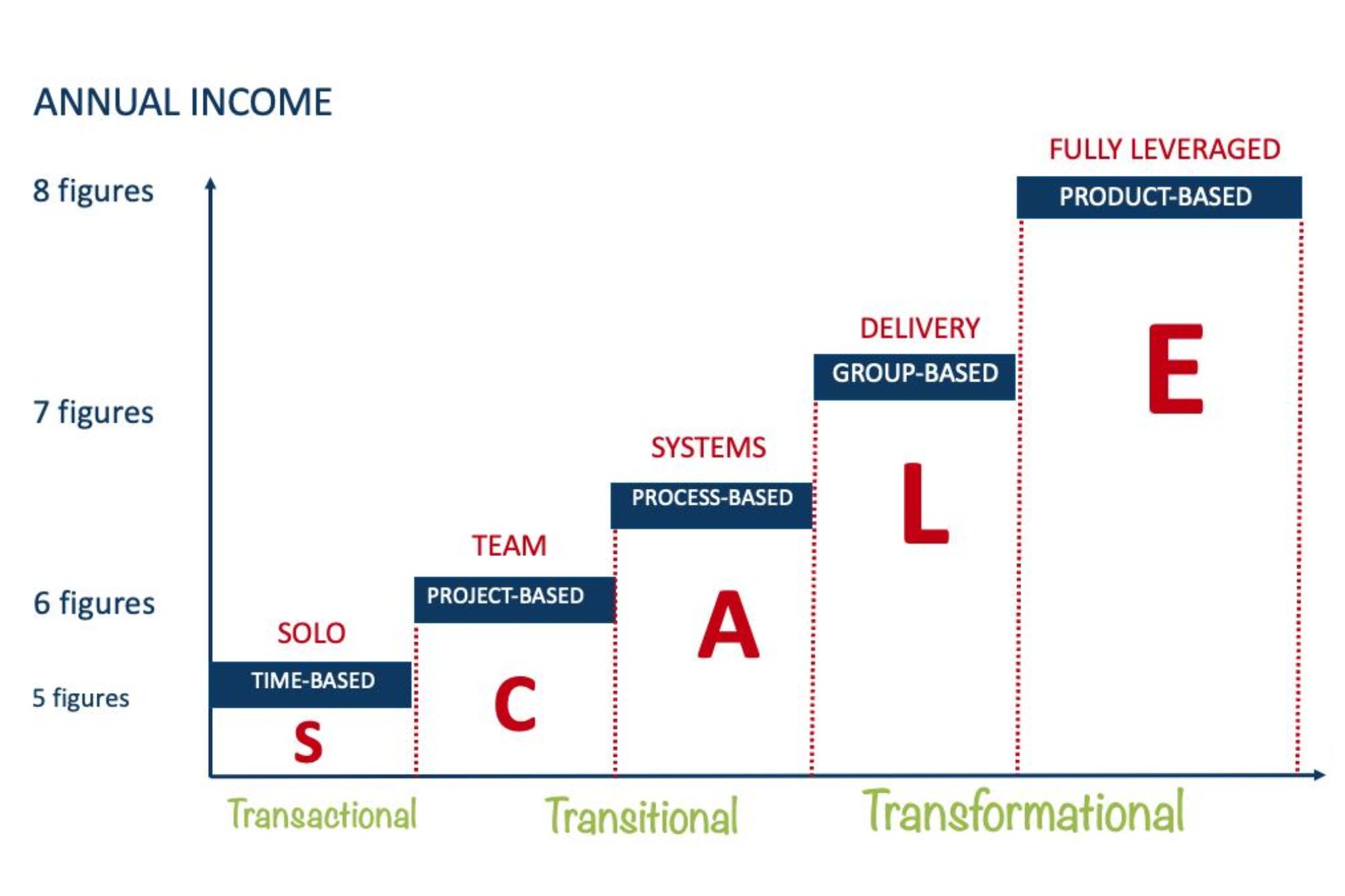
Kavitha’s story is specific to her — her expertise, her personality, her market, her timing. But the principle it demonstrates is not specific to fitness or to Instagram or to any particular demographic.
The principle is this: genuine expertise, consistently demonstrated for a clearly defined audience, through a platform that rewards sustained quality with organic discovery, will build an audience that trusts the expert. That trust, when extended to a genuinely valuable offering at an appropriate price, converts into a business.
This principle applies to any professional with genuine expertise and genuine willingness to demonstrate it publicly. A chartered accountant who explains tax concepts clearly and consistently. A lawyer who demystifies legal processes for small business owners. A nutritionist who gives evidence-based guidance rather than trend-chasing advice. A language teacher who demonstrates effective methodology in short video lessons.
In every case, the mechanism is the same. The platform is the leverage. The expertise is the product. The trust is what the content builds. The business is what the trust enables.
Instagram in 2026 provides the infrastructure for this mechanism to work at a scale and speed that would have been impossible a decade ago. The question is not whether the infrastructure exists. It is whether the professional has the genuine expertise to demonstrate, the discipline to demonstrate it consistently, and the patience to let the trust compound into the business it eventually produces.
Kavitha had all three.
Her inbox had been quiet for eight months. On the Monday she posted her first Reel, she did not know it was going to change everything. She just knew that sixty seconds of honest expertise was worth more than nothing.
She was right. More right than she could have imagined.
Closing Thought — The Expert Who Shares Is the Expert Who Gets Found
For most of professional history, expertise was demonstrated in private — in the consultation room, the training session, the client meeting. The professional’s ability to attract new clients was limited by how many existing clients and referrers knew about their expertise and chose to speak about it.
Instagram has changed this completely. Expertise demonstrated publicly — in thirty-second Reels, in swipeable carousel posts, in genuine, personal Stories — reaches people who are actively looking for exactly what the expert provides, in quantities that no personal referral network can approach.
The fitness trainer who posts genuinely useful exercise guidance every day is reaching tens of thousands of people who need exactly what she knows. A meaningful percentage of them become clients. Those clients produce results that generate more referrals, more testimonials, and more content for the ongoing cycle.
The expertise was always there. The platform to demonstrate it publicly, at scale, to a specifically interested audience, without gatekeepers or minimum advertising budgets — that is new.
Kavitha understood this and built a business with it.
Every professional with genuine expertise to share has the same opportunity. The question is when they will choose to take it.
Written by Digital Drolia — celebrating the professionals who are building real businesses by sharing real expertise on platforms that reward genuine value. Found this valuable? Share it with a fitness professional, coach, or any expert who is still waiting for clients to find them rather than going to find their clients.