



Why Consistency on Instagram Beats Viral Moments Every Single Time

Let me tell you about two Instagram accounts that started on the same day.
Both were in the home décor and interior styling space. Both were run by women in their thirties with genuine taste, genuine knowledge, and a genuine desire to build something on the platform. Both had similar starting points — a few hundred followers, reasonable photography skills, enough content ideas to get started.
Preethi and Kavya. Different cities, different aesthetics, similar ambitions.
Preethi’s approach was disciplined almost to the point of being boring about it. She posted every Tuesday and Friday, without exception. Not when she had something spectacular to share — every Tuesday and Friday. Some weeks her content was genuinely beautiful. Some weeks it was good but not exceptional. On three occasions in the first year she missed her Tuesday slot because life intervened, and she was quietly furious with herself each time. She engaged with comments within twenty-four hours of every post. She responded to DMs. She watched her analytics and adjusted her approach based on what she learned. She made no dramatic moves.
Kavya’s approach was more spontaneous. She posted when inspiration struck — sometimes three times in a week when she was excited, sometimes nothing for three weeks when she felt uninspired or busy. When she posted, she posted genuinely beautiful content — she had exceptional taste and a real eye for composition. She chased trending audio for her Reels, she pivoted her content style when she saw something working for a larger account, she tried giveaways and challenges and collaborations. Occasionally she produced something that caught fire — a Reel that hit twenty thousand views, a photograph that got reshared by a medium-sized aggregator account.
At the six-month mark, Kavya had a significantly higher peak view count on her best-performing content. Preethi had significantly more average monthly reach across all her content.
At the twelve-month mark, Preethi had four times Kavya’s follower count.
At the eighteen-month mark, Preethi had a waiting list for her interior consulting services and was turning work away. Kavya had slightly fewer followers than she’d had six months earlier, was exhausted from chasing trends, and had quietly stopped posting.
This story is not unusual. In fact, with minor variations, it is one of the most common patterns in Instagram content creation — so common that the outcome should feel predictable to anyone who understands how Instagram’s algorithm works and how human behaviour responds to content over time.
Consistency does not just beat viral moments on average. It beats them comprehensively, sustainably, and in every metric that actually matters for building a real business.
Here is why.
What Viral Actually Means — And Why It Is Not What You Think
Before explaining why consistency wins, it is worth examining what a viral moment on Instagram actually consists of — because most people’s mental model of virality is significantly more generous than the reality.
A Reel goes viral. What does that mean?
For most accounts that experience what feels like a viral moment, it means a single piece of content has reached significantly more people than their typical content reaches. For a creator with three thousand followers, a Reel that reaches one hundred thousand people feels explosive — and it is, relative to their normal numbers.
But here is what the analytics behind that moment typically show.
Of the one hundred thousand people who saw the Reel, perhaps six to eight percent paused on it long enough to count as a meaningful view. Of those, perhaps one to three percent followed the account. The follow percentage is lower than most creators expect because Explore and Reel distribution often reaches audiences that are demographically relevant but not specifically aligned with the creator’s niche — they were shown the content because it was engaging, not because they were necessarily the ideal audience.
After the viral moment, the follower growth spike dissipates. The new followers who arrived through the viral content engage at lower rates than the followers who arrived through consistent, relevant content — because they followed out of interest in one specific piece of content rather than genuine alignment with the account’s consistent value proposition.
The algorithm sees the spike, notes the engagement rates of the new followers, and does not necessarily treat the account as meaningfully more trustworthy than before the viral moment. A single anomalous performance does not significantly change the algorithm’s long-term model of what the account produces.
Meanwhile, the creator has spent significant effort producing the content that went viral, has spent time managing the spike in DMs and comments during the viral period, and often experiences a deflating return to normal in the weeks following — which psychologically is harder than never having had the spike at all.
This is not to say that viral moments are worthless. They can introduce the account to genuinely new audiences and can significantly accelerate growth when they occur organically rather than being chased at the expense of consistent content. But as a strategy — as the primary thing a creator is trying to produce — chasing viral moments consistently underperforms consistent content creation.
How Instagram’s Algorithm Builds Trust Over Time

To understand why consistency beats virality, you need to understand how Instagram’s algorithm evaluates accounts rather than individual pieces of content.
Instagram does not just make distribution decisions about posts. It makes distribution decisions about accounts. Over time, based on the accumulated engagement data from an account’s content history, the algorithm builds a model of what that account produces and how audiences respond to it.
An account with a consistent history of generating strong engagement signals — good completion rates on Reels, meaningful save and share rates, genuine comment activity — is an account the algorithm has learned to trust. When this account posts something new, the algorithm has high confidence that the new content will perform similarly to previous content. It distributes the new content with appropriate confidence — giving it a meaningful initial distribution, showing it to the account’s engaged followers and potentially to new audiences through Explore.
An account with an erratic posting history — long gaps, inconsistent engagement levels, wildly varying content types — is an account the algorithm has difficulty modeling. It has less confident predictions about how new content will perform. It distributes new content more conservatively — smaller initial distribution, less willingness to extend the distribution based on early signals because those signals have historically been unpredictable.
This asymmetry is fundamental and has compounding effects. The consistent account gets progressively more favourable algorithmic treatment as its track record deepens. The inconsistent account does not build this track record because it keeps interrupting it with gaps and pivots.
The algorithm’s trust is an asset that appreciates over time for consistent accounts and deprecates over time for inconsistent ones. The consistent creator is building an asset. The inconsistent creator is starting from a lower base with every new post.
The Audience Psychology — What Consistency Does to the Human Relationship

Beyond the algorithmic dimension, consistency builds something in the human audience that no viral moment can create: familiarity.
Familiarity is the psychological foundation of trust. We trust what we know. We know what we encounter repeatedly. The brain does not naturally trust strangers — it trusts familiar things, familiar people, familiar voices. Repeated, consistent exposure to a creator’s content builds the specific kind of familiarity that allows trust to develop.
A follower who has seen Preethi’s Tuesday and Friday posts for six months has seen her content perhaps fifty times. They know her aesthetic. They recognise her voice. They have seen her perspective on dozens of different topics within her niche. When she posts something on Tuesday morning, they feel a specific positive anticipation — the same kind of mild pleasure of familiarity that accompanies seeing a regularly read column or hearing a favourite presenter.
This familiarity is something that Kavya’s followers — who saw excellent content occasionally and then nothing for weeks — could not develop. The relationship was repeatedly interrupted before it could deepen. The audience could not settle into the rhythm of connection that regular posting enables.
The psychological research on parasocial relationships — the one-sided social connections that audiences develop with creators — consistently shows that they develop through regular, repeated contact over time. Not through a single spectacular encounter. Through the slow accumulation of familiarity that repetition creates.
This is why consistent creators are referred to by their followers in language that implies genuine connection — “she really gets it,” “I always look forward to her posts,” “I feel like I know her.” This language is not metaphorical. The follower has genuinely developed a relationship of familiarity and trust over months of repeated contact. That relationship is what converts followers into customers — not the dopamine hit of a single viral moment.
The Compounding Mathematics of Consistent Content

There is a mathematical dimension to why consistency wins that becomes clearest when you model it over time.
Imagine a creator who posts twice a week, every week. In a year, they produce one hundred and four pieces of content. Each piece is a potential Explore entry point — a way for a new audience member to find the account. Each piece is a potential save or share that generates algorithmic distribution. Each piece is a piece of evidence for the algorithm that this account consistently produces content of a specific quality.
After one year: one hundred and four pieces of content, all working in the world, all continuing to generate views through search and suggested content and algorithmic distribution, all contributing to the account’s algorithmic authority.
After two years: two hundred and eight pieces. Each of the earlier pieces still working. The algorithmic authority built on two years of consistent data. The follower familiarity built on two years of regular contact.
The content library is compounding. The algorithmic trust is compounding. The audience relationship is compounding.
Now imagine the inconsistent creator who averages perhaps one post per week when posting but has significant gaps — perhaps sixty posts in the same year.
The difference at the one-year mark is not just sixty percent fewer pieces of content. It is the difference in algorithmic authority built from consistent versus inconsistent data. It is the difference in audience familiarity built from regular versus irregular contact. It is the difference in the trust each creator has earned from the algorithm and from their audience.
These differences compound. The consistent creator enters year two from a significantly stronger position — and the gap between the two creators widens rather than closes as both continue.
What Consistency Actually Means — Defining the Term Correctly
One of the most common misunderstandings about consistency on Instagram is what it actually means — and this misunderstanding leads creators to set themselves up for the kind of erratic posting pattern that undermines the benefits consistency is supposed to deliver.
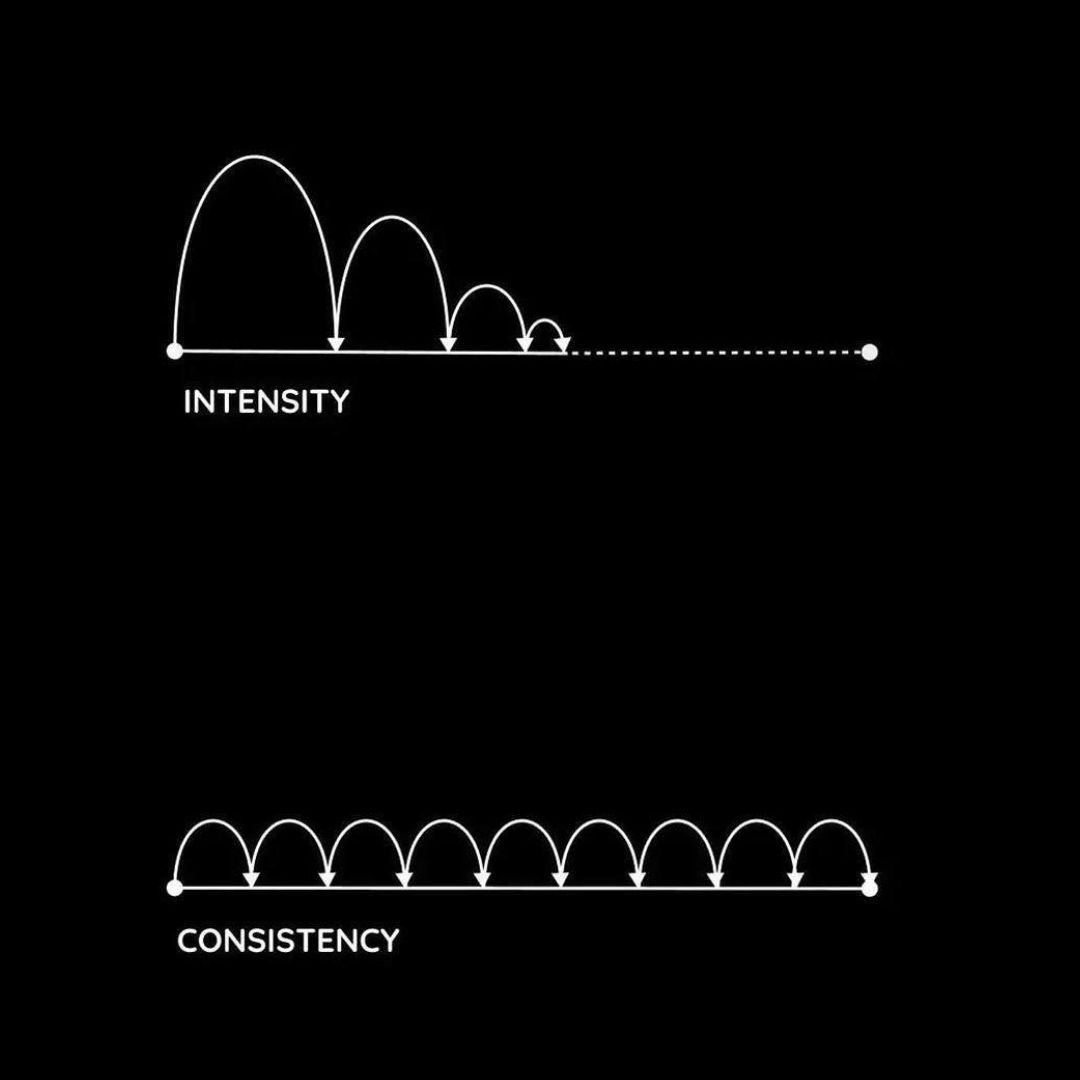
Consistency does not mean posting as frequently as possible. It does not mean posting every day or multiple times per day. Posting so frequently that quality degrades is not consistency — it is content production volume that trades quality for quantity, and the algorithm and audience will both notice the quality degradation.
Consistency means posting at a specific, maintained frequency — whatever that frequency is — without significant gaps.
A creator who posts three times per week, every week, for twelve months has been more consistent than a creator who posts seven times per week for three months and then nothing for two months and then four times per week for a month. Despite the second creator having posted more content in total, the first creator’s consistent rhythm has built more algorithmic trust and more audience familiarity.
The question is not: how many posts should I make per week? The question is: what posting frequency can I sustain at the quality level my audience deserves, indefinitely?
Indefinitely is the operative word. The frequency should be one that you can maintain not for a month, not for a quarter, but for years — through busy periods, through creative blocks, through personal challenges, through the periods when the growth feels slow and the motivation is hard to find.
For some creators, this sustainable frequency is five posts per week. For others it is two. For some in complex, time-intensive niches it might be one. The specific number matters less than the consistency with which it is maintained.
Preethi’s twice-weekly schedule worked not because twice a week is the magic number — it worked because she could maintain it. It was realistic. It fit her life. When she set the schedule, she was not committing to something heroic. She was committing to something manageable, which meant she could actually keep the commitment.
This is the practical wisdom behind any successful consistency strategy: set a frequency you can genuinely maintain, rather than an aspirational frequency that sounds impressive and then collapses under the weight of real life.
The Creative Benefit of Consistency — What Regular Posting Does to Your Craft

There is a benefit to consistency that has nothing to do with algorithms or audience psychology and everything to do with the quality of the work itself.
Regular posting is a regular creative practice. And regular creative practice is how skills develop.
The creator who posts twice a week is creating twice a week. They are photographing twice a week, writing twice a week, filming twice a week, editing twice a week. Each iteration is a learning opportunity. Each post is a slightly different creative problem that builds understanding of what works and what does not.
Over a year of twice-weekly posting, this creator has accumulated one hundred and four repetitions of the creative cycle. They have learned what photographs resonate and what does not. They have developed instincts about composition, lighting, caption structure, video pacing, hook writing. They have refined their aesthetic through iteration. They have gotten faster, more efficient, and more confident.
The inconsistent creator who produces occasional bursts of content does not accumulate this learning at the same rate. The gaps between posting are not just gaps in algorithmic contribution — they are gaps in creative development. The craft does not compound in the same way.
Kavya’s posts were genuinely beautiful when they appeared. But without the regular practice that consistency provides, her ability to produce at that level was dependent on inspiration and circumstance rather than built skill. When inspiration faded or circumstances became difficult, the posting stopped — because there was no practiced routine of creation to carry her through.
Preethi’s content was sometimes beautiful and sometimes merely good. But over twelve months of regular practice, her average quality rose significantly. The gap between her best and her typical narrowed because her typical was continually improving. She was getting better at a rate that occasional posting cannot match.
When Life Interrupts — How to Maintain Consistency Through Difficulty

The theory of consistency is straightforward. The practice confronts reality — the reality that life is unpredictable, that creative energy fluctuates, that motivation rises and falls, that personal and professional demands compete with the posting schedule.
Every consistent creator has periods where posting feels impossible. Understanding how to maintain rhythm through these periods is essential for real-world application of the consistency principle.
Batch creation as buffer
The most reliable protection against posting gaps is having a content buffer — a stock of posts created in advance that can be published during periods when creating new content is not possible.
The discipline of batch creation — setting aside time once every week or two to create multiple pieces of content in a single session — produces a buffer that absorbs the interruptions of daily life. A creator with three to four posts in draft can take a week away from content creation without the audience seeing any gap in the posting schedule.
Preethi maintained a buffer of approximately two weeks of content at all times. When her mother was ill and she could not create for ten days, her posting schedule continued uninterrupted because the content had already been made. Her audience never knew anything had changed.
Planning for creative block
Creative block is real and predictable — it visits every creator periodically. Having a specific strategy for generating ideas during these periods, rather than stopping posting until inspiration returns, is essential for sustained consistency.
Common strategies include: going back through audience questions and comments to find content topics that have been explicitly requested; reviewing analytics to identify themes from high-performing past content that could be revisited from a different angle; returning to foundational educational content in the niche that is always relevant regardless of current trends; doing a simplified version of the usual content format rather than stopping posting entirely.
The consistent creator does not wait for inspiration. They show up for the creative work whether inspired or not — because the practice of showing up is itself what sustains the consistency that makes inspiration more likely to arrive.
Communicating honestly with the audience during difficult periods
When genuine life circumstances — illness, bereavement, significant personal challenges — make consistent posting genuinely impossible rather than merely difficult, transparent communication with the audience is always better than silence.
A brief Story acknowledging that the creator is going through a difficult period and posting will be reduced or paused for a specific time maintains the audience relationship more effectively than an unexplained disappearance. The audience’s connection with a creator they trust is resilient — a communicated break maintains the relationship in a way that an unexplained absence does not.
The Metrics That Show Consistency Working — What to Look For
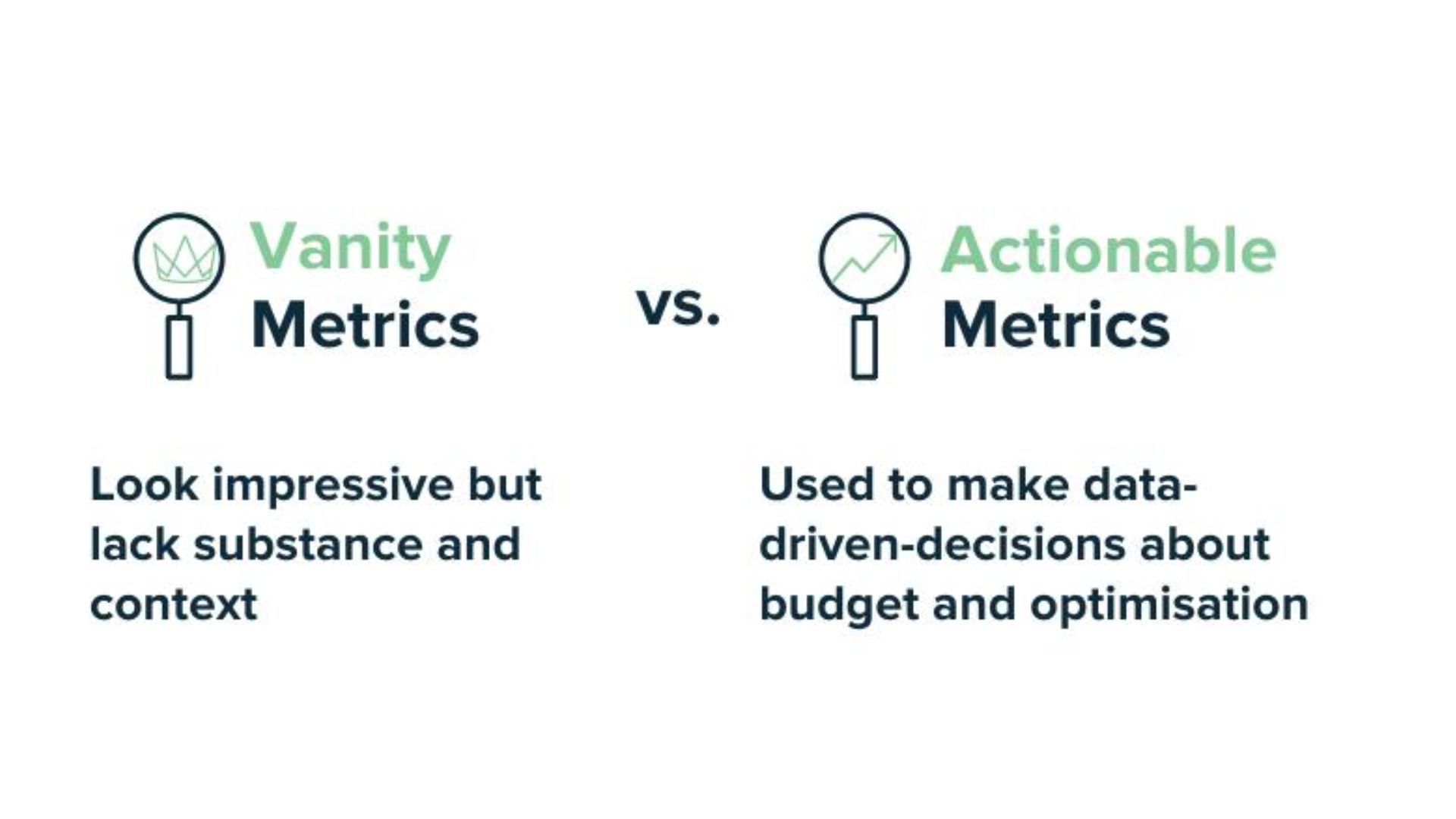
One of the challenges of the consistency strategy is that its benefits are not always immediately visible in the metrics that creators tend to watch. Follower count does not spike dramatically. Individual post reach does not show a sudden jump. The progress feels gradual and is sometimes hard to see week by week.
The metrics that show consistency working are longer-term and require a different kind of observation.
Average reach trend
Rather than looking at any individual post’s reach, track the average reach across all posts in a given month. Plot this month by month. For a consistent account, this number should trend upward over time — slowly and with month-to-month variation, but directionally upward.
This upward trend reflects the compounding algorithmic trust and growing audience engagement that consistency builds. It is not dramatic in any given month. Over twelve months, it is significant.
Follower engagement rate stability
An account that gains followers through consistency tends to maintain relatively stable engagement rates as it grows — because the followers arriving through consistent, niche-specific content are genuinely interested in that content.
An account that gains followers through viral moments often sees engagement rates decline as the follower count increases — because the viral-sourced followers are less consistently interested in the account’s typical content than in the specific piece of content that went viral.
Stable or improving engagement rates as follower count grows is a reliable indicator that the growth is being built on genuine audience connection rather than algorithmic anomaly.
Save and share rates
Consistent improvement in save and share rates over time reflects improving content quality driven by the regular creative practice that consistency enables. As the creator develops their craft through repetition, the content becomes more genuinely useful and more naturally shareable — and the save and share metrics reflect this.
Inbound enquiries and business outcomes
For creators using Instagram for business purposes, the most meaningful metrics are ultimately business metrics — not follower counts or reach numbers but actual enquiries, consultations, sales, partnerships, and revenue attributable to the Instagram presence.
These business metrics accumulate most reliably through consistent presence and genuine audience relationship rather than through viral spikes. Preethi’s waiting list for consulting services did not appear after a viral Reel. It appeared after eighteen months of consistent posting that built genuine trust with a genuine audience who eventually needed what she offered.
The Mindset Shift That Makes Consistency Possible

Everything described in this post is ultimately dependent on a fundamental mindset shift — one that is easier to describe than to genuinely make, but that is the difference between creators who sustain consistency and those who do not.
The shift is from thinking about each post as a performance to be evaluated to thinking about each post as a deposit into a long-term investment.
The creator who thinks of each post as a performance is asking: how did this do? Did it get enough likes? Did it reach enough people? Is the algorithm rewarding my work? When a post underperforms, this mindset produces discouragement. When a post overperforms, it produces a hunger for the next hit. Both reactions destabilise the consistency that actually drives growth.
The creator who thinks of each post as a deposit is asking a different question: did I give something genuine to my audience today? Every post that answers yes is a deposit into the relationship account — adding to the accumulated trust, familiarity, and algorithmic authority that compounds over time.
From this perspective, the post that gets modest reach but genuinely helps a small number of people is not a failure. It is a deposit. The post that is merely good rather than exceptional is not a disappointment. It is a deposit. The Tuesday post made during a difficult week when creativity felt impossible but the creator showed up anyway is not a waste. It is one of the most important deposits — the ones that demonstrate to the algorithm, to the audience, and to the creator themselves that this account is reliably present.
The investment mindset removes the emotional volatility that makes consistency difficult. When you are making deposits rather than chasing performances, the individual result of any particular post matters less than the cumulative balance being built.
Preethi was never excited about every post she made. Some weeks felt like going through the motions — the creative energy was low, the content was solid but uninspiring, the post went up because it was Tuesday and that was the commitment. Those weeks were not failures. They were deposits.
The waiting list that appeared eighteen months later was built on all of them.
The Compound Interest of Human Attention

There is an analogy that captures the economics of consistency on Instagram better than any marketing framework.
Compound interest.
When money is invested consistently over time, it earns returns. Those returns are then reinvested and earn their own returns. Over time, the compounding effect produces growth that is disproportionate to the initial investment — the later stages of growth are much faster than the early stages because the base has been built through consistent accumulation.
Instagram consistency works the same way.
Each post generates some engagement, some followers, some algorithmic trust. That trust enables better distribution of the next post, which generates slightly more engagement and slightly more trust. The improved engagement improves the account’s authority, which provides better initial distribution for the next post, which generates even more engagement.
The early stages feel slow because the base is small. The compounding is happening but the absolute numbers are modest. This is the period when inconsistent creators give up — when the work feels disproportionate to the visible results.
The creators who persist through this period — who keep making deposits even when the balance seems low — are the ones who eventually reach the stage where the compounding becomes visible and then becomes dramatic. The followers are arriving faster. The reach is growing. The enquiries are coming in. Not because anything has changed about the quality of the work but because the base has grown large enough that the same percentage growth represents a much larger absolute number.
This is the point Kavya never reached. She stopped posting before the compounding became visible. The investment she had made was abandoned before it could mature.
Preethi persisted through the early period because she understood — either intuitively or explicitly — that the numbers she was seeing were not the real measure of what she was building. The real measure was the accumulating foundation: the algorithmic trust, the audience familiarity, the improving craft, the growing library of content all working in the world simultaneously.
When the compounding became visible, it seemed to happen suddenly. But it had been happening all along. She had simply been building it long enough to see it.
Practical Starting Points — Building Your Consistency System

For creators who want to build the kind of consistency that compounds, here is a practical framework for starting.
Define a sustainable posting frequency. Not an aspirational one — a realistic one. Look at your life honestly and decide what frequency you can genuinely maintain for two years, including during busy periods, difficult weeks, and periods of low creative inspiration. That is your frequency.
Create in batches when energy is high. When you feel creative and the conditions are good, produce more than you need for immediate posting. Bank the excess as a buffer. Aim to maintain a buffer of at least two to three weeks at all times.
Schedule rather than impulse-post. Use Instagram’s scheduling functionality or a third-party tool to schedule posts in advance rather than posting spontaneously. Scheduled posts do not depend on the creator’s real-time availability or mood. They simply appear, maintaining the rhythm regardless of what is happening in the creator’s life that day.
Define what “good enough” looks like for a standard post. Not every post will be your best work. Know in advance what the minimum acceptable quality is for a post to be published — and post anything that meets that standard, rather than waiting indefinitely for exceptional quality. Consistency at a high but not exceptional standard beats inconsistency at an exceptional standard.
Review and learn quarterly. Every three months, look at your analytics and ask: what have I learned about what works? What content format, what topic area, what caption structure, what visual approach is generating the strongest engagement signals? Adjust your approach based on what the data tells you — not drastically, but with small, evidence-based refinements that improve the quality of the consistent output over time.
Closing Thought — The Work That Quietly Compounds
Kavya’s best post — the one that reached twenty thousand views, the one that felt like a breakthrough — generated more immediate attention than anything Preethi produced in her first year.
But it did not build anything lasting. It was a peak without a foundation. The attention came and went, unconnected to an ongoing relationship, unanswered by the consistent presence that would have turned momentary attention into genuine audience.
Preethi’s best week was unremarkable by conventional metrics. It was a week somewhere around month twelve when her typical reach was higher than it had ever been, her enquiries were coming in steadily, and her waiting list had just formed. Nothing went viral. No single post stood out dramatically. The week was simply the natural outcome of a year of consistent work finally becoming visible.
The viral moment arrives unbidden, performs dramatically, and departs, leaving little trace.
The consistent work builds slowly, sometimes invisibly, quietly accumulating the trust and familiarity and algorithmic authority that eventually produce the kind of results that feel sudden from the outside and are, from the inside, the inevitable consequence of patient, sustained effort.
Show up. Every week. Post. Engage. Learn. Adjust. Return.
The compounding is happening whether you can see it or not.
Give it time to become visible.
Written by Digital Drolia — written for every creator who is doing the work, week after week, wondering if it is making a difference. It is. Keep going. Found this valuable? Share it with a creator who is exhausted from chasing viral moments and needs permission to simply be consistent.