

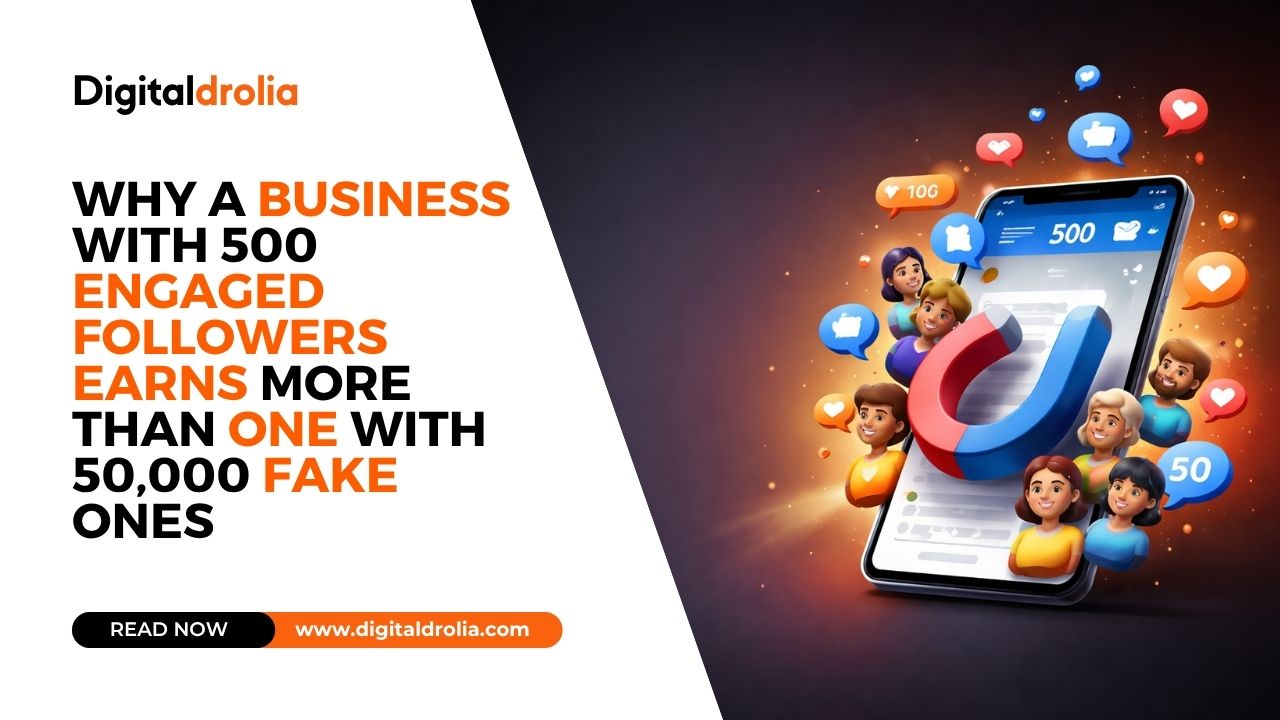
Why a Business With 500 Engaged Followers Earns More Than One With 50,000 Fake Ones

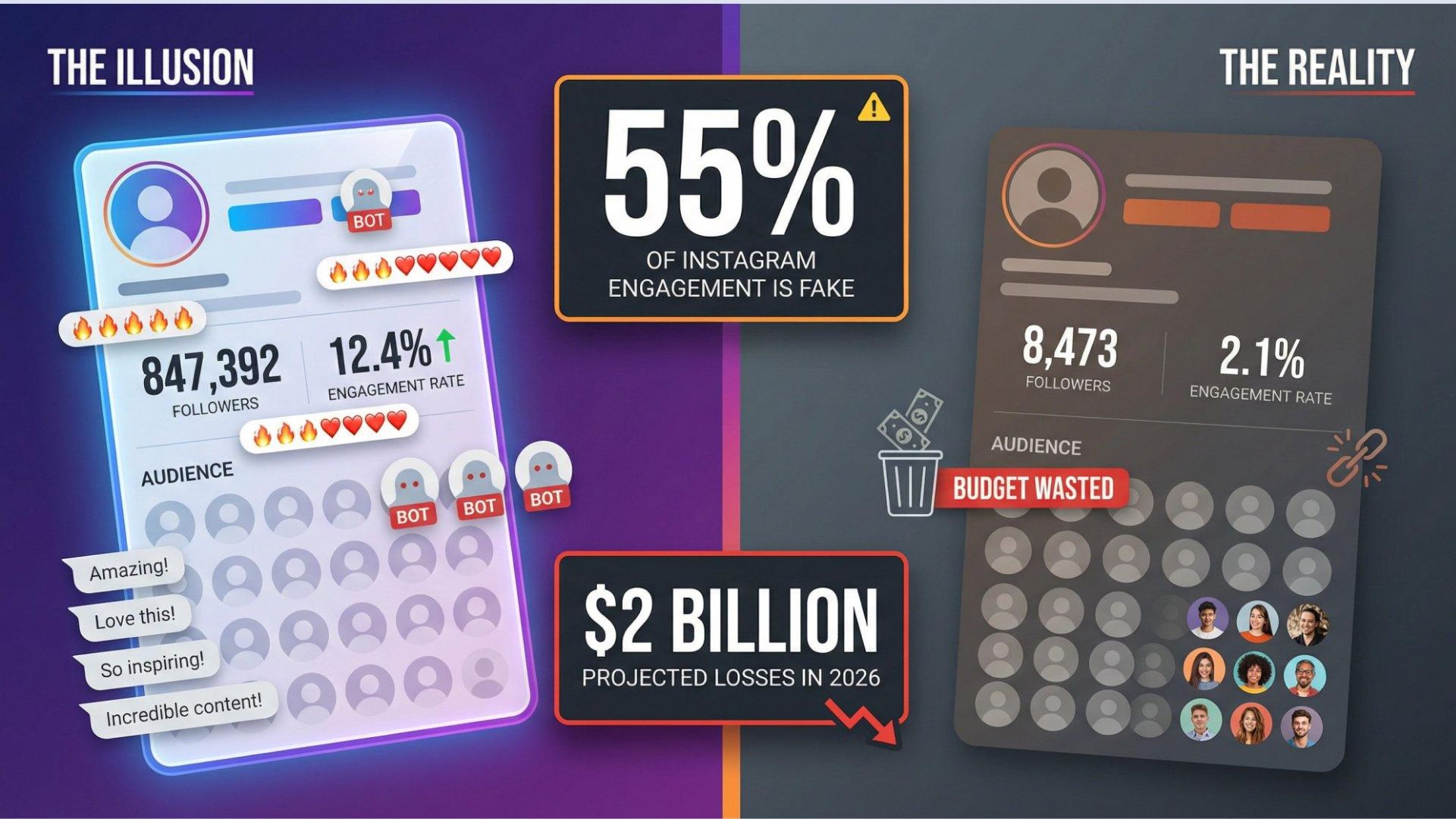
Let me tell you about two Instagram profiles that tell completely different stories when you look at them carefully.
Profile One: 52,000 followers. Every post has between eight hundred and fourteen hundred likes. The comments section has dozens of responses — single words, generic phrases, emoji sequences. “Great post!” “Amazing content 🔥🔥” “Love this!” “So inspiring 💯” The account has been growing by approximately two to three thousand followers every month for the past year.
Profile Two: 480 followers. Posts receive between forty and ninety likes. Comments are specific and conversational — people asking follow-up questions, sharing their own experiences, tagging friends with the context “you need to see this.” The account has been growing by thirty to fifty genuine followers per month.
From the outside, looking only at the numbers, Profile One appears to be a successful Instagram account and Profile Two appears to be a struggling one.
From the inside — from the perspective of the businesses behind each account — the picture is completely reversed.
Profile One belongs to a clothing boutique owner named Sana who bought followers two years ago and has supplemented them with engagement pods and automated bot activity ever since. Her actual monthly sales attributable to Instagram: approximately twelve thousand rupees. Her engagement rate, when the fake interactions are stripped away: around 0.04 percent.
Profile Two belongs to a handmade ceramic artist named Deepa who has never bought a follower and has spent two years building her small but genuine audience through consistent, quality content. Her monthly sales attributable to Instagram: approximately forty-five thousand rupees. Her engagement rate: between 8 and 12 percent depending on the content.
Deepa earns three and a half times what Sana earns from Instagram. With one percent of Sana’s follower count.
This post is the complete explanation of why.
What Fake Followers Actually Are — And How Prevalent They Are
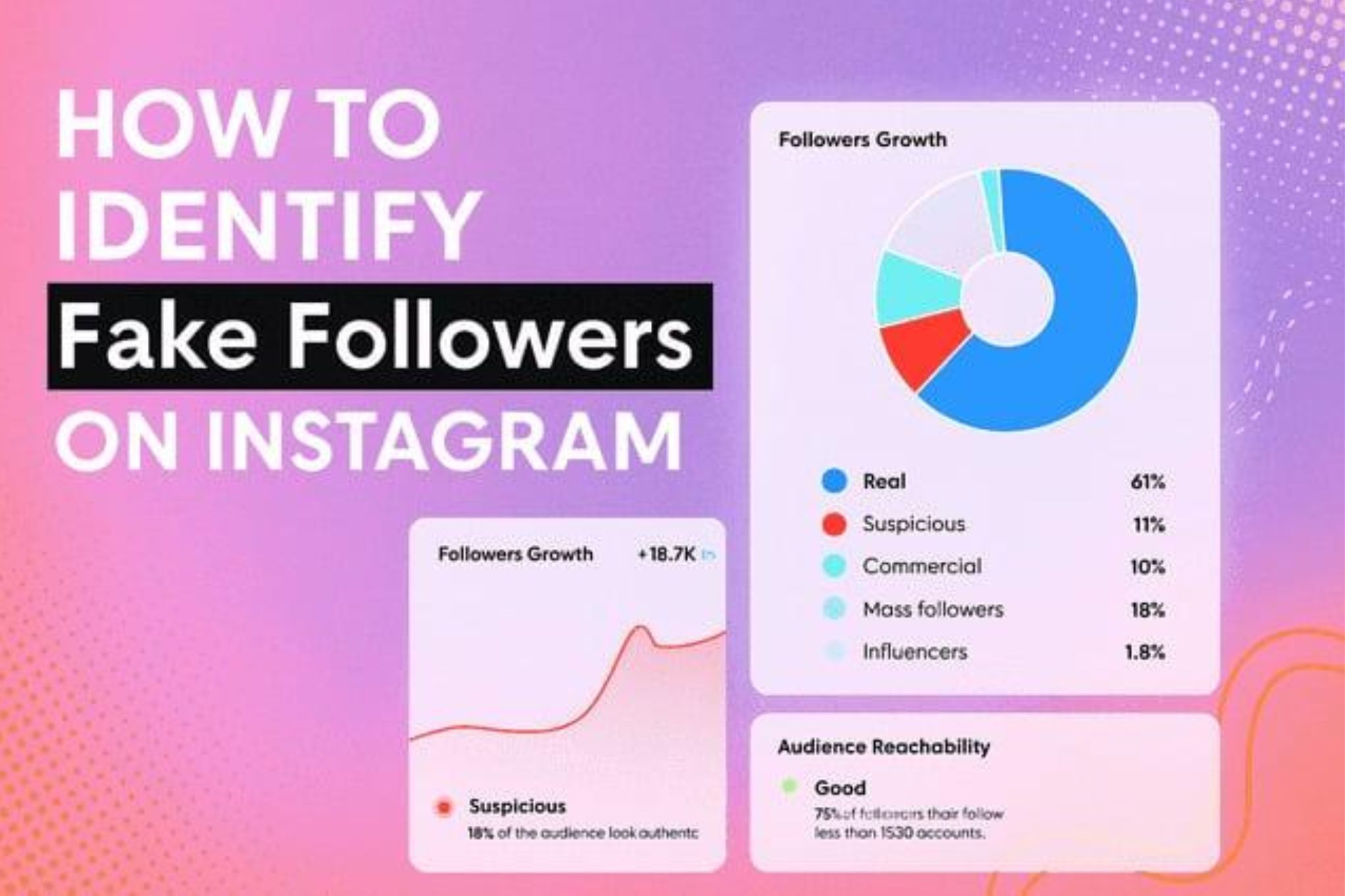
Before examining the economics, it is worth being specific about what we mean by fake followers — because the term covers a range of practices with different characteristics and different impacts.
Bot accounts
Bot accounts are automated accounts created specifically to inflate follower counts and engagement metrics. They are not real people. They have no genuine interest in any content. They are programmed to follow, like, and sometimes comment on accounts that have paid for their activity.
Bot accounts can be detected by several characteristics: profiles with no posts or very few posts, unusual follower-to-following ratios, usernames that look generated rather than chosen, and profile pictures that are either absent or clearly stock images. When an account has a large number of bot followers, the engagement those bots provide is empty — it generates numbers without generating any human interest, consideration, or purchase behaviour.
Purchased followers from click farms
Click farms operate in countries with low labour costs and employ real people to manage multiple social media accounts simultaneously. These people follow, like, and comment on behalf of accounts that pay for this activity.
Click farm engagement is more sophisticated than bot engagement because it comes from real human activity — but from humans who have no genuine interest in the content and are following hundreds or thousands of accounts simultaneously. The engagement they provide is similarly empty of commercial value.
Engagement pods
Engagement pods are groups of real accounts that agree to like and comment on each other’s content, often through automated systems that queue the mutual engagement. Unlike bots or click farms, the people in engagement pods are genuine Instagram users with genuine interests — but their engagement with any individual account’s content is mechanical rather than genuine. They like and comment to receive likes and comments in return, not because the content has engaged them.
Engagement pod activity inflates vanity metrics — likes and comment counts — without creating genuine audience connection. The pod members who comment “love this content!” on a post they have not read are not potential customers.
Ghost followers
Ghost followers are real people who followed an account at some point — perhaps attracted by a viral moment, a giveaway, or another one-time event — but who have no ongoing interest in the content and never engage. They are counted in the follower total but are functionally absent from the audience.
Ghost followers accumulate naturally over time as following behaviour changes and old accounts lie dormant. But on accounts that have used growth hacking tactics — mass following and unfollowing, participation in follow-for-follow schemes — ghost followers can constitute a significant majority of the total follower count.
In aggregate, fake followers in all their forms are widespread on Instagram. Estimates vary significantly by category and geography, but it is generally accepted that a meaningful proportion of followers across the platform are non-genuine in some form — with accounts that have actively purchased engagement having fake follower percentages that can range from thirty to ninety percent of their total count.
The Fundamental Economic Reason Fake Followers Have No Value
The explanation for why five hundred real followers generates more revenue than fifty thousand fake ones is, at its core, extremely simple — so simple that it should be obvious, yet the continued prevalence of fake follower purchasing suggests it is not as obvious in practice as it is in principle.
Fake followers do not buy things.
They cannot buy things. They are either not real people, or real people with no genuine interest in the account’s content and offerings. A bot account cannot experience desire for a handmade ceramic bowl. A click farm worker managing three hundred accounts simultaneously has no purchasing context for any of them. An engagement pod member who mechancially liked a post without reading it is not going to visit a product page.
The entire economic value of an Instagram following — in terms of direct sales — comes from one thing: the degree to which followers have genuine, felt interest in what the account offers, combined with sufficient trust in the account to act on that interest with a purchase.
Genuine followers accumulate genuine interest and genuine trust through repeated, authentic exposure to an account’s content. They follow because something the account posted resonated with them. They stay following because subsequent content continues to provide value or enjoyment. Over time, they develop the familiarity and trust that converts interest into purchase behaviour.
Fake followers accumulate none of this. They are numbers without psychology, counts without commerce, metrics without meaning.
The business that spends money purchasing fake followers is not investing in audience growth. It is investing in an aesthetic of popularity — an appearance of success that does not correspond to any underlying commercial reality.
The Engagement Rate Reveal — How to See Through the Numbers
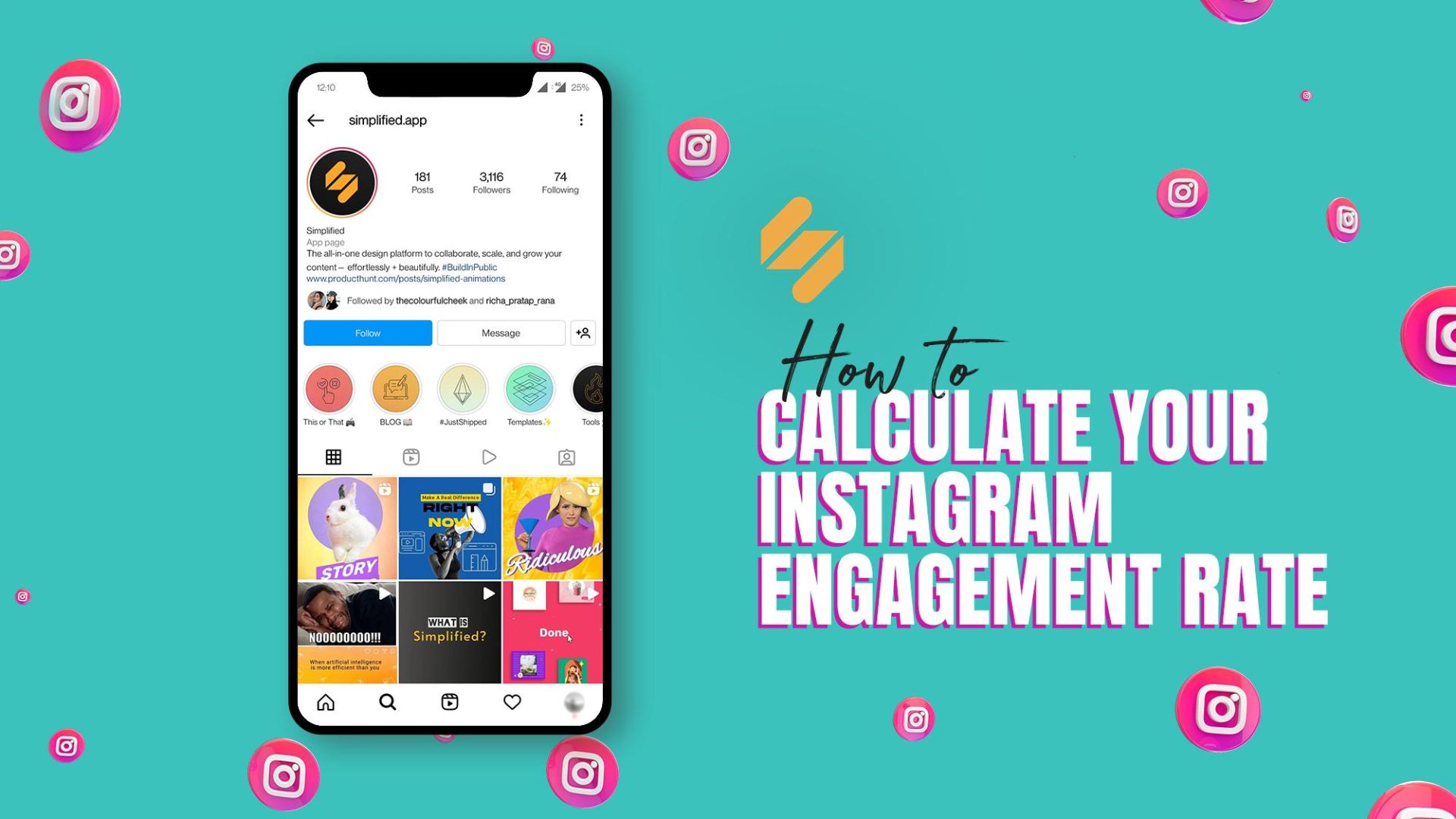
The clearest indicator of the difference between a genuine and inflated following is the engagement rate — the percentage of followers who meaningfully interact with the content. Understanding how to read engagement rates correctly reveals the genuine commercial health of an Instagram account.
The formula is simple: divide the average number of likes and comments per post by the total follower count, and multiply by one hundred to get a percentage.
Industry benchmarks for genuine engagement rates on Instagram vary by follower count — larger accounts naturally have lower engagement rates as a proportion of their total following than smaller accounts. But as general guidance:
For accounts under ten thousand followers, a genuine engagement rate is typically between three and eight percent. Accounts with rates above this are performing exceptionally well. Accounts with rates below one percent warrant scrutiny.
For accounts between ten thousand and one hundred thousand followers, genuine rates typically fall between one and five percent.
For accounts above one hundred thousand followers, genuine engagement rates typically range from 0.5 to 2 percent.
When an account’s engagement rate falls significantly below these benchmarks, it is a strong indicator of inflated follower counts with non-genuine engagement.
Sana’s account: 52,000 followers, approximately 1,000 likes per post, minimal genuine comments. Engagement rate: approximately 2 percent — which, for her follower count bracket, is at the low end of plausible. But when those likes are analysed more carefully — looking at the profile characteristics of the likers, checking whether they have activity suggesting genuine Instagram use, examining the comment quality — a significant proportion of the engagement is revealed as non-genuine. The actual genuine engagement rate is dramatically lower than 2 percent.
Deepa’s account: 480 followers, approximately 65 likes per post, genuine conversational comments. Engagement rate: approximately 14 percent — dramatically higher than average even for a small account, and substantially all of it genuine.
The engagement rate is not just a vanity metric. For brands considering partnerships and for platforms algorithmically deciding distribution, engagement rate is one of the primary indicators of genuine audience quality. An account with a high follower count and low engagement rate is an account whose audience does not care about the content — which means the account cannot reliably drive any behaviour, including purchase behaviour.
What Deepa’s 480 Followers Actually Are — The Quality of Genuine Audience
To understand why Deepa earns more than Sana despite having a fraction of the followers, it helps to characterise what Deepa’s 480 followers actually consist of.
They are people who discovered her handmade ceramics through Instagram’s organic discovery mechanisms — the Explore page, the Reels distribution, shares from existing followers. They followed because her work genuinely resonated with them — because they appreciate handmade objects, care about craft and process, and find genuine beauty in the specific aesthetic Deepa produces.
They have seen her content repeatedly over months. They have watched process videos showing how pieces are made. They have read captions that explain the thinking behind design choices. They have seen the care and attention that goes into each piece. They have developed familiarity with Deepa as a maker — her aesthetic, her values, her relationship with her materials.
This repeated exposure has built trust. Not the trust that comes from knowing someone personally but the trust that comes from sustained, genuine observation of someone’s work and character over time. The parasocial relationship we discussed in our posts about Instagram consistency — the one-sided connection that builds through regular content consumption — is a real psychological phenomenon with real commercial consequences.
When Deepa posts a new piece and indicates it is available for sale, her 480 followers include people who have been watching her work for months and who have developed a genuine desire to own something she has made. Some of them have been following specifically because they are waiting for a piece in a particular style or colourway. Some of them share the post immediately with friends who they know would want it. Some comment to indicate interest before clicking through to purchase.
This is an audience. Not just followers — an audience. People who genuinely care, genuinely pay attention, genuinely want what is being offered.
Sana’s 52,000 followers include approximately 35,000 who are bots or inactive accounts that will never respond to anything. The remaining 17,000 or so are real people — but a significant proportion followed for reasons unrelated to genuine interest in her products: they were attracted by a giveaway, they follow back everyone who follows them, they clicked follow while scrolling without particular intention and forgot they had followed.
The genuine, interested audience within Sana’s account is a small fraction of her total following — much smaller than the impressive-looking number suggests. And it is this genuine interested audience — not the total count — that determines her commercial outcomes.
How Instagram’s Algorithm Punishes Fake Follower Accounts
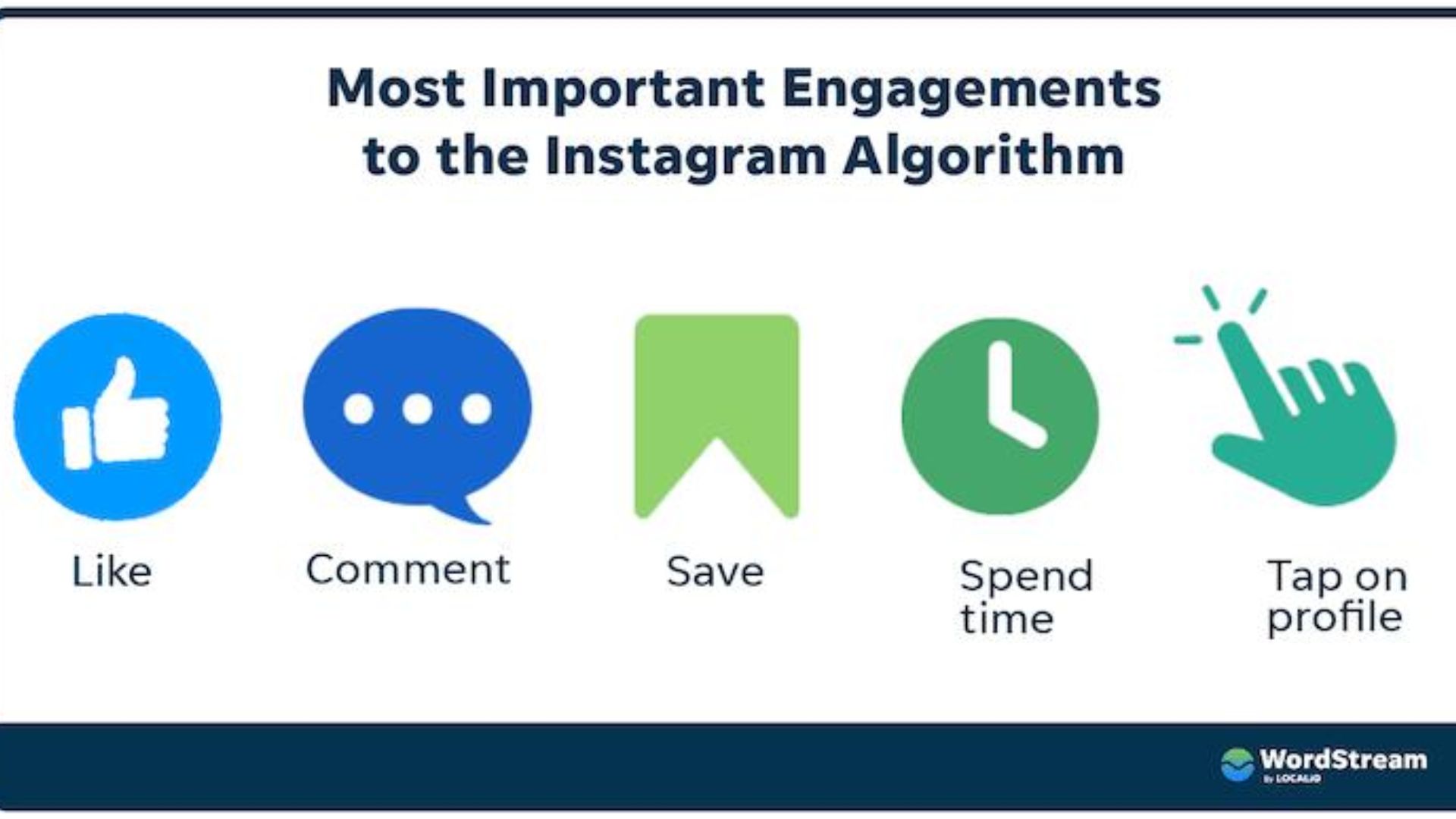
Beyond the direct commercial impact, fake followers actively harm an account’s organic reach through specific algorithmic mechanisms that compound over time.
Instagram’s algorithm distributes content based on engagement signals — specifically how people respond to the content. As we established in our posts on saves and shares, the algorithm is looking for evidence that content is genuinely valued: that people watch it completely, save it for reference, share it with others, and return to the account for more.
When an account has a large proportion of fake followers, what the algorithm observes is this: the content is being shown to a large nominal audience, and almost none of them are engaging meaningfully. The completion rate is low because bots do not watch. The save rate is negligible because bots do not save. The share rate is nonexistent because bots do not share.
The algorithm interprets this signal straightforwardly: this content is not resonating with the people who see it. It does not know that those “people” are bots — it simply sees that the audience is not engaging. And content that audiences do not engage with receives reduced distribution in future.
This creates a compounding negative dynamic for fake follower accounts. The more fake followers an account accumulates, the lower its genuine engagement rate becomes as a proportion of its nominal following. The lower the genuine engagement rate, the less algorithmic distribution future content receives. The less distribution it receives, the harder it becomes to reach the genuine audience that might actually care. The account is effectively penalising itself for its own fake follower strategy.
Deepa’s account experiences the opposite dynamic. Her small but genuine following generates engagement rates the algorithm interprets as exceptional quality signals. Her content is distributed with algorithmic confidence because every time it has been shown to her audience, that audience has responded. The algorithm trusts Deepa’s content to perform — because it consistently does — and rewards it with distribution beyond her existing follower base, including through the Explore page.
The consistent creator with a small genuine audience gets an algorithmic multiplier. The account with a large fake following gets an algorithmic penalty. Over time, these divergent dynamics produce dramatically different reach and growth trajectories.
The Brand Partnership Economics — Where Fake Followers Destroy Value

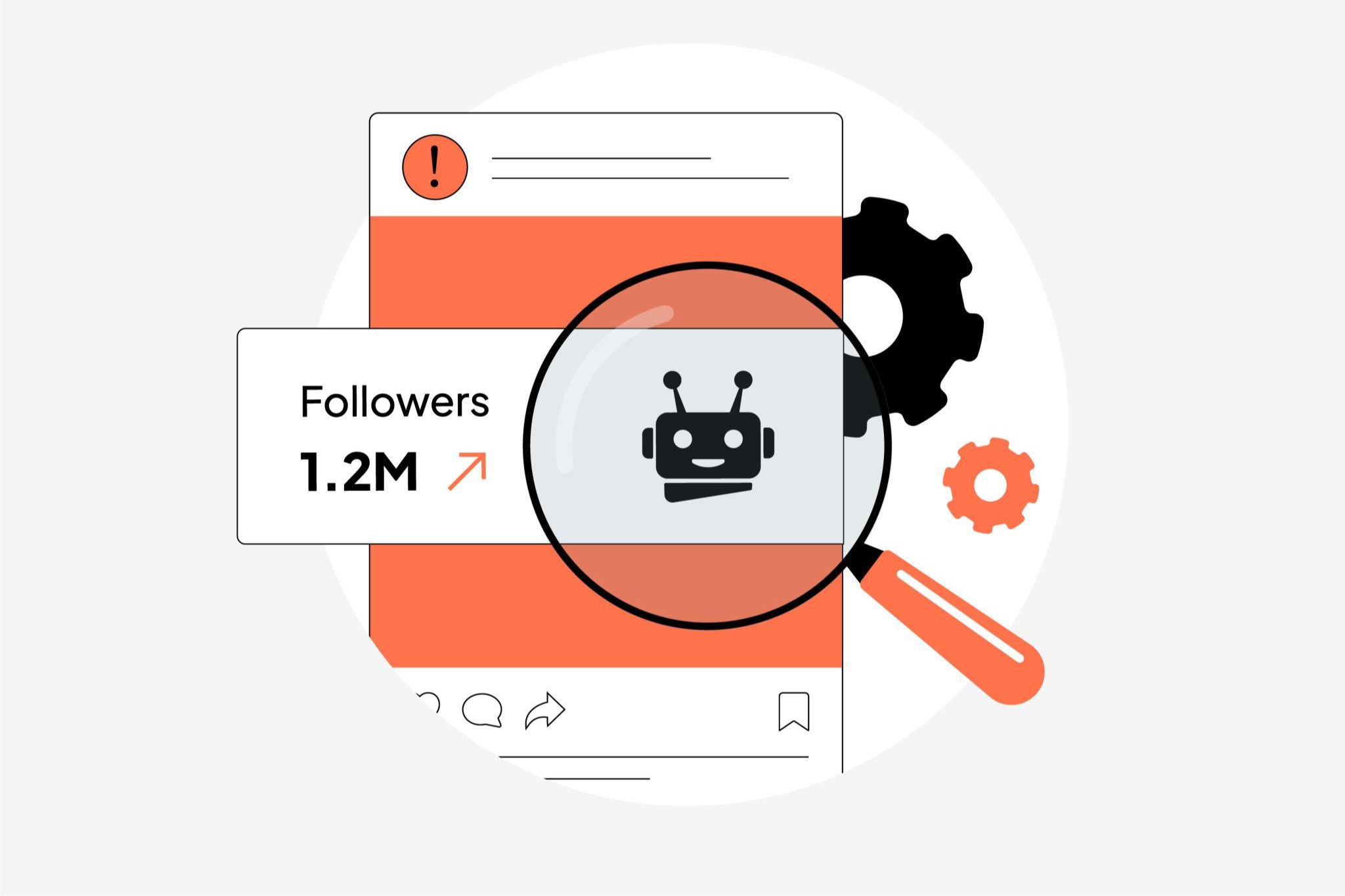
Beyond direct sales, many businesses and creators pursue income through brand partnerships — collaborations with other brands who pay for access to their audience.
The economics of brand partnerships are directly tied to audience quality. Brands are paying for access to genuine potential customers — people who actually care about the content and who might be influenced to consider or purchase the brand’s offering.
Experienced brand partnership managers evaluate Instagram accounts for partnership potential not by looking at follower counts but by analysing engagement rates, audience demographics, comment quality, and in many cases tools that identify fake follower percentages. They are buying access to a genuine audience, not to numbers on a screen.
An account with 50,000 followers but low genuine engagement receives partnership offers at rates that reflect the genuine audience quality — which, for an account heavily inflated with fake followers, is a small fraction of what the follower count would suggest.
More significantly, brands with access to fake follower detection tools — and most serious brand marketing teams now use these — increasingly refuse to work with accounts that show significant fake follower percentages. The partnership offers simply do not arrive.
Deepa’s account, with 480 genuine followers and 12 percent genuine engagement, has received partnership enquiries from a ceramics materials brand and a sustainable home goods retailer. Both brands used engagement rate as their primary selection criterion. Both found that Deepa’s small but genuine audience was worth paying to access — at rates per genuine follower that were, in absolute rupee terms, meaningful to her business.
Sana, with her inflated following, has received partnership enquiries from lower-tier aggregator accounts and dubious “free product in exchange for posts” offers that do not provide meaningful income. The brands that would be genuinely valuable partnership partners have either detected or inferred the lack of genuine engagement and passed.
The brand partnership market is increasingly sophisticated at identifying genuine from inflated audiences. The value of fake followers in this market has declined toward zero as detection tools have improved.
The Trust Destruction That Cannot Be Undone

There is a dimension of the fake follower problem that goes beyond economics — one that concerns the fundamental nature of the relationship between a brand and its genuine audience.
When genuine followers discover that an account has purchased followers or engagement — and this discovery happens more often than accounts using these tactics typically assume — the trust destruction is rapid and often irreversible.
Real followers who have developed genuine connection with an account feel something specific when they discover the follower count is inflated: they feel deceived. Not just that the numbers are wrong — but that the entire relationship they thought they were having was being maintained under false pretenses. The authenticity they believed they were connecting with was itself a performance.
This feeling of deception — of having trusted someone who was not being honest — damages the relationship in ways that apologies and explanations rarely fully repair. The genuine follower who feels deceived unfollows. More damagingly, they tell others. In tight-knit niche communities — which are often exactly the communities where genuine small-audience accounts find their most valuable customers — news of inauthenticity travels quickly.
The handmade goods communities, the sustainable living communities, the craft and artisan communities where Deepa operates are communities that particularly value authenticity. In these communities, the discovery that an account has purchased followers is not treated as a minor marketing transgression. It is treated as a fundamental betrayal of the values the account was supposed to represent.
Deepa has never had to worry about this. Her authentic, unglamorous build — thirty to fifty real followers per month, earned through genuine quality content — is itself a brand value. Her genuine audience knows she has earned every follower, and that knowledge reinforces the trust that makes them willing to buy.
The Long-Term Trajectory — Where Each Path Leads

Looking five years forward from the current position of each account makes the divergence in outcomes even clearer.
Sana’s path, if she continues the current approach: ongoing expenditure on fake engagement to maintain the appearance of a large following; declining organic reach as the algorithm continues penalising the account’s low genuine engagement rates; increasing irrelevance of the account to her actual customers; eventual recognition that the Instagram strategy is not working combined with difficulty diagnosing why because the metrics look superficially reasonable.
Deepa’s path, if she continues her genuine approach: ongoing compound growth of genuine followers as the algorithm rewards consistent, high-engagement content; increasing brand partnership opportunities as her account’s quality metrics attract authentic partnership offers; growing direct sales as her loyal audience deepens in trust and expands in size; a business that is genuinely enabled by Instagram rather than merely decorated by it.
The five-year difference between these trajectories is not slight. It is the difference between a business that has used Instagram as a vanity project and a business that has used Instagram as a genuine growth engine.
What Counts as “Fake” — A Nuanced View
In the interest of completeness, it is worth acknowledging that the boundary between “genuine” and “fake” follower practices is not always perfectly clear — and that there are tactics in the grey area that also damage account quality without being as obviously problematic as buying followers.
Mass follow-and-unfollow tactics — following large numbers of accounts in the hope that some will follow back, then unfollowing them — generate ghost followers rather than genuine ones. The followers acquired this way did not follow because of genuine interest in the content.
Giveaway-based follower acquisition — offering prizes in exchange for follows — attracts followers motivated by the prize rather than the content. The post-giveaway retention rate is typically low, and the followers who do remain are less engaged than organically acquired followers.
Participation in follow-for-follow communities — where accounts agree to mutually follow each other — generates nominal followers without genuine interest.
None of these are as harmful as direct fake follower purchasing, but they all contribute to the quality degradation that reduces genuine engagement rates and undermines commercial effectiveness.
The cleanest, most commercially valuable Instagram growth is growth that happens because people genuinely want to follow — because the content is genuinely compelling, genuinely useful, or genuinely beautiful, and finding it feels like a discovery worth holding onto.
This is the growth Deepa is building. It is slow by the standards of manufactured follower accumulation. It is fast by the standards of what it will eventually produce.
The Practical Audit — Understanding Your Own Account’s Genuine Audience
For any business that wants to understand the genuine quality of their Instagram following — whether they have engaged in fake follower practices or simply accumulated ghost followers over time — a basic audit provides actionable clarity.
Calculate your genuine engagement rate
Take your last ten posts. Add up the total likes and genuine comments (excluding obviously generic or bot-like comments). Divide by ten to get your average. Divide that average by your follower count and multiply by one hundred.
Compare this rate against the benchmarks described earlier in this post. A rate dramatically below the expected range for your follower count is a reliable indicator of audience quality problems.
Review the comment quality on recent posts
Scroll through the comments on your last five posts. How many are specific and conversational — asking follow-up questions, sharing personal experiences, making observations about the specific content of the post? How many are generic phrases or emoji sequences that could have been posted on any content in any category?
The ratio of specific to generic comments is a reliable indicator of genuine audience engagement. Accounts with genuine audiences have comment sections that feel like conversations. Accounts with inflated followings have comment sections that feel like empty applause.
Use available audit tools
Several freely available and paid tools allow analysis of an Instagram account’s follower quality — looking at the characteristics of followers to estimate what percentage appear genuine versus bot or inactive. HypeAuditor, Social Blade, and Modash are among the most widely used. Running your account through one of these provides a baseline assessment of your genuine follower percentage.
Track actual business outcomes from Instagram
The most practical audit is commercial: how much revenue is actually attributable to Instagram? How many genuine customer enquiries per month come through Instagram DMs or profile links? If Instagram represents a significant proportion of your marketing effort but a negligible proportion of your actual revenue, the disconnect is likely to be a genuine audience quality problem.
Building It Right — The Only Genuine Path

For businesses that recognise themselves in the Sana side of this comparison and want to build toward the Deepa side, the path forward is straightforward in principle if not always easy in practice.
Stop inflating the numbers. Every rupee spent on fake followers is a rupee not invested in genuine content creation or community building. Every hour spent managing engagement pods is an hour not spent developing the craft and knowledge that would generate genuine interest.
Accept the genuine numbers. The genuine follower count is the real baseline from which genuine growth is possible. Pretending the inflated number is real prevents honest assessment of where the account actually stands.
Focus on the engagement rate rather than the follower count as the primary metric. The question is not “how many followers do I have?” but “what percentage of my followers genuinely engage with my content?” This is the metric that predicts commercial outcomes. This is the metric that determines algorithmic treatment. This is the metric that brands examine for partnership decisions.
Build for the long term. Genuine growth is slow in absolute numbers and fast in compound value. The thirty followers Deepa gains each month are thirty people who have chosen to be part of her audience because they genuinely value what she makes. They are thirty new additions to a community that is growing in commercial power even as it grows slowly in nominal size.
The account with five hundred engaged followers that earns forty-five thousand rupees per month from Instagram is not a paradox. It is the natural outcome of building something real.
The account with fifty thousand fake followers that earns twelve thousand rupees is not a mystery. It is the natural outcome of building something that looked real without being real.
Build something real.
Closing Thought — The Number That Actually Matters
In every post in this series about Instagram — about Reels and captions and consistency and the Explore page and saves and shares — the underlying message has been the same.
The metric that matters on Instagram is not the one that looks most impressive in a screenshot.
It is the metric that corresponds to something real happening between a person and a piece of content — a genuine moment of interest, recognition, desire, trust, or connection. The metric that indicates a real human being was genuinely moved by something they found on their phone.
Five hundred followers who genuinely care are not a consolation prize compared to fifty thousand followers who are bots or ghosts. They are a fundamentally more valuable asset — commercially, algorithmically, and in terms of the human relationships that make building a business on Instagram genuinely worthwhile rather than just numerically impressive.
Deepa knows her followers. Not all of them by name, but by type — by the kinds of people who care about handmade things, who appreciate slow craft, who send a specific kind of DM that shows they have been watching for a while. She is building something with them, for them, and the numbers reflect that building honestly.
That is what a real Instagram following is.
Build one.
Written by Digital Drolia — helping businesses understand that the most valuable Instagram metric is the one that corresponds to genuine human interest, not inflated digital appearances. Found this valuable? Share it with a business owner who is still measuring their Instagram success by follower count alone and wondering why the results do not match the numbers.