How to Write a Great Social Media Bio — The Complete Guide to Making Your First Impression Count | Digital Drolia

You have about three seconds.
That is roughly how long it takes for someone to land on your social media profile, glance at your bio, and decide whether you are worth their attention. Three seconds. Maybe four if you are lucky.
In that blink of a moment, they are making a series of rapid, mostly subconscious judgments. Is this account relevant to me? Does this person or brand seem credible? Do I want to see more of what they post? Should I follow, or should I keep scrolling?
Your bio answers all of those questions before a single post is read, before a single video is watched, before any real content is consumed. It is the handshake, the first impression, the shop window — all compressed into a few lines of text.
And yet, most people treat their social media bio as an afterthought. They type something vague and forgettable in thirty seconds and never look at it again. “Entrepreneur. Coffee lover. Dog mom.” “Official page of XYZ Company.” “We provide quality services to our valued customers.”
These bios are not just bland — they are missed opportunities. Every day, real potential followers, customers, and collaborators land on those profiles, read those bios, feel absolutely nothing, and leave.
This guide is going to make sure that never happens to you again.
We are going to cover everything — the psychology behind why bios matter, how each major platform is different, the exact elements of a great bio, platform-specific formulas, real examples, common mistakes, and a step-by-step process for writing yours from scratch.
By the end, you will not just have a better bio. You will understand exactly why it works — and that understanding will serve you for every platform, every rebrand, and every evolution of your online presence going forward.
Let us get into it.
Why Your Social Media Bio Matters More Than You Think
Before we talk about how to write a great bio, let us talk about why it matters as much as it does.
Think about the last time you discovered a new Instagram account or a Twitter profile that genuinely impressed you. What made you hit follow? It probably was not just one post. It was the combination of the content you saw, the visual identity of the page, and — critically — the bio that told you exactly who this was and why you should care.
Your bio is doing several jobs simultaneously, and most people do not realize how many.
It qualifies your audience. A great bio does not try to appeal to everyone. It speaks directly to a specific type of person and says, in effect, “if you are this kind of person with this kind of need, this account is for you.” When the right person reads your bio and thinks “this is exactly what I was looking for” — that is a follow that will stick.
It establishes credibility instantly. Before anyone reads your posts, your bio is the evidence they use to judge whether you know what you are talking about. Specific, confident, well-written bios signal expertise. Vague, generic bios signal that you have not thought much about your brand.
It drives action. A bio with a clear call to action — “DM for bookings,” “click to shop,” “book a free call” — converts profile visitors into leads and customers. Without it, even interested visitors often leave without doing anything.
It affects discoverability. On platforms like Instagram and LinkedIn, the text in your bio and name fields is searchable. The right keywords in your bio can bring your profile up in search results for people actively looking for what you offer.
It sets expectations. Your bio tells new visitors what kind of content they can expect to see if they follow you. A mismatch between your bio and your actual content is one of the fastest ways to lose followers.
With all of that at stake — in just a handful of words — it becomes obvious why spending real time and thought on your bio is one of the highest-leverage things you can do for your social media presence.
Understanding the Differences Between Platforms
One of the biggest mistakes people make is writing one bio and copy-pasting it everywhere. While consistency in your core message is important, each social media platform has a different culture, a different character limit, a different audience expectation — and your bio needs to be adapted accordingly.
Let us look at the major platforms and what makes each one unique.
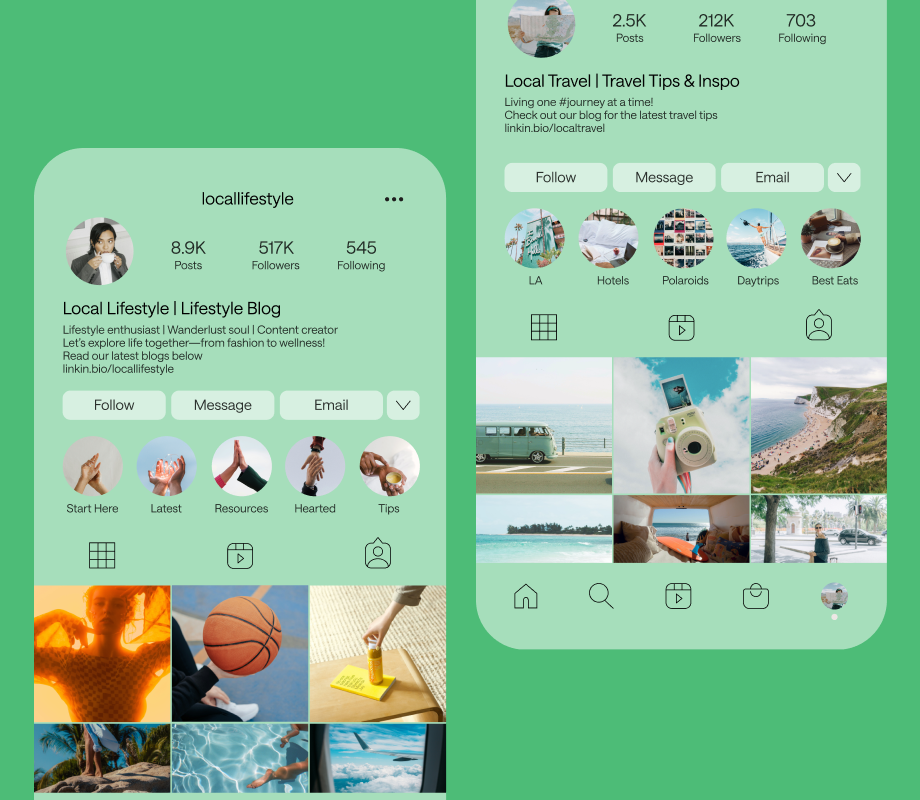
Instagram bios are limited to 150 characters. That is not much — about two to three short sentences. The platform is visual-first, so your bio complements your visual identity rather than replacing it. Instagram users expect bios to be punchy, scannable, and personality-driven. Line breaks, emojis, and bullet-style formatting are common and appropriate here.
Instagram also has a separate Name field (distinct from your username) that is searchable — meaning keywords in your Name field help people find you through search. Your bio itself is not searchable on Instagram, so the Name field is where strategic keywords belong.
The one-link limitation means your bio almost always needs a clear direction toward that link — “Link below,” “Click to book,” “Shop ↓” — because that link is the only clickable destination on your profile.
LinkedIn bios — called “About” sections — are the most generous in terms of length, allowing up to 2,600 characters. This is a professional networking platform, so bios here should be more comprehensive, career-focused, and achievement-oriented.
LinkedIn users expect to understand your professional background, your expertise, and your value proposition. First-person writing tends to perform better here than third-person — it feels more authentic and direct. Storytelling works well on LinkedIn because the platform’s audience is primed to read longer content.
LinkedIn also has a Headline field — 220 characters that appear directly under your name and in search results. This headline is one of the most important pieces of text on your entire LinkedIn presence because it is what people see before they even visit your full profile.
Twitter / X
Twitter bios are limited to 160 characters — similar to Instagram. The platform’s culture is witty, conversational, and fast-moving. Twitter bios often reflect the tone of the tweets that follow — if your content is humorous, your bio can be too. If you are a news account or thought leader, your bio should be concise and authoritative.
Twitter does not have the same visual-first nature as Instagram, so your bio carries more weight in communicating your identity. Hashtags in Twitter bios are clickable and can add to your discoverability.
Facebook Page descriptions — the “About” section — can be longer and more comprehensive. Facebook is used across a wider age range and tends to have a more community-oriented feel. Business pages on Facebook benefit from bios that are warm, trustworthy, and informative — mentioning location, hours, contact information, and a clear description of what the business offers.
YouTube
YouTube channel descriptions appear on your “About” tab and can be up to 1,000 characters. They also play a role in YouTube’s search algorithm — relevant keywords in your description can help your channel appear in search results. A good YouTube bio explains what your channel covers, who it is for, and how often you upload — setting clear expectations for subscribers.
Understanding these platform differences means you will write a bio that fits its context rather than fighting against it.
The Anatomy of a Great Social Media Bio
Regardless of platform, every great social media bio contains some combination of the following elements. Not every bio needs all of them — but understanding each one helps you make intentional choices about what to include.
Element 1 — Who You Are or What Your Business Does
This sounds obvious, but you would be amazed at how many bios fail at this basic level. Your bio should make it instantly clear what you or your business does — not in a technical, jargon-heavy way, but in plain language that your target audience immediately understands.
“I help freelance designers get more clients without cold emailing” is clear. “Strategic growth facilitation for creative entrepreneurship ecosystems” is not.
Clarity beats cleverness every time. If someone has to read your bio twice to understand what you do, you have already lost them.
Element 2 — Who You Serve
This is the element most people skip — and it is often what separates good bios from great ones.
Naming your audience in your bio does something psychologically powerful. It makes the right people feel immediately seen and addressed, and it filters out the wrong people who would not find value in your content anyway.
“For ambitious women building their first online business.” “Helping restaurant owners in India fill more tables.” “Content for first-generation investors under 30.”
When your ideal follower reads something like this and thinks “that’s me” — you have just made them significantly more likely to follow, engage, and eventually buy from you.
Element 3 — Your Unique Value or Differentiator
What makes you or your business different from the dozens of other accounts in your space? What do you offer that others do not?
This does not need to be a complex positioning statement. It can be as simple as your specific methodology, your unusual background, your specific results, or your distinctive point of view.
“Former chef turned food photographer.” “We use psychology-backed design, not just pretty layouts.” “10 years of corporate marketing experience now helping small businesses.”
These details create texture and memorability. They give people a reason to choose your account over a similar one.
Element 4 — Social Proof or Credibility Indicators
If you have something that establishes credibility — mention it. This could be years of experience, number of clients served, notable publications or media features, certifications, awards, or impressive results.
“Trusted by 500+ small businesses.” “Featured in Forbes, HBR, and Economic Times.” “Certified Google Ads Partner.” “Helped 200 entrepreneurs cross ₹1 crore in revenue.”
You are not boasting — you are giving a new visitor a reason to trust that you know what you are talking about. First-time visitors have no history with you. Social proof closes that gap.
Use specific numbers wherever possible. “Hundreds of clients” is weak. “450 clients across 12 countries” is memorable and credible.
Element 5 — Personality and Tone
Your bio is not just an information delivery device — it is also a sample of your personality. How you write it says as much about you as what you write.
A bio can be warm and approachable. It can be witty and playful. It can be direct and no-nonsense. It can be inspirational and aspirational. The tone should match the personality of your broader content — because your bio sets an expectation that your posts either fulfill or disappoint.
If your content is friendly and conversational, a formal, stiff bio creates dissonance. If your content is data-driven and authoritative, a flippant bio undermines your credibility. Aim for alignment between your bio’s tone and the content that follows it.
Element 6 — A Clear Call to Action
Every professional social media bio should end with a call to action — a specific instruction that tells the visitor what to do next.
The call to action is where a passive profile visitor becomes an active lead or customer. Without it, even highly interested visitors often leave without taking any step, simply because no step was made obvious.
Your call to action should match your primary business goal. If you want people to call you — “Call us at [number].” If you want email enquiries — “Email us at [address].” If you want website traffic — “Visit our website ↓” or “Click the link below.” If you want bookings — “DM to book your slot.” If you want followers to engage — “Drop a comment on our latest post.”
Keep it to one clear action. Multiple calls to action dilute the impact of each one. Pick the most important next step and make it obvious.
Platform-Specific Bio Formulas
Now let us get practical. Here are proven bio formulas for each major platform that you can adapt for your own use.
Instagram Bio Formula
Line 1 — What you do + who you help (in plain language) Line 2 — Your credibility or unique angle Line 3 — A specific result, offer, or value statement Line 4 — Location or context (if relevant) Line 5 — Call to action pointing to your link
Example for a fitness coach: Online Fat Loss Coach 🔥 Helped 300+ people lose weight without crash diets Sustainable plans that actually fit your life 📍 Coaching clients across India 👇 Free consultation — link below
Example for a clothing boutique: Handcrafted ethnic wear for the modern Indian woman Small batches. Big style. Zero fast fashion. New collection every Friday ✨ 📦 Ships across India | Custom orders open 👇 Shop now — link below
Notice how each line does a specific job. There is no wasted text. Every line either qualifies the audience, establishes credibility, creates desire, or drives action.
LinkedIn Headline Formula
Your profession or title + who you help + the specific outcome you deliver
Examples: Digital Marketing Consultant | Helping D2C Brands Scale Revenue Through Paid Social Freelance Copywriter | Turning Complicated Ideas Into Copy That Converts HR Professional | Building People-First Cultures at Fast-Growing Startups
The LinkedIn headline appears in search results, connection requests, and comments — so it is working for you constantly. Do not waste it on just a job title.
LinkedIn About Section Formula
Paragraph 1 — The hook: Start with a bold statement, a surprising fact, a compelling question, or a short story that immediately captures attention. Most LinkedIn About sections start with “I am a passionate professional with X years of experience” — which is immediately forgettable. Start differently.
Paragraph 2 — Your story: Who are you, how did you get here, what drives you? A brief, honest origin story creates human connection that a resume cannot.
Paragraph 3 — What you do and who you serve: Your specific expertise, your methodology, the types of clients or problems you work with.
Paragraph 4 — Results and social proof: Specific achievements, client results, notable projects. Use numbers wherever possible.
Paragraph 5 — Call to action: What should someone do if they want to work with you, follow your content, or learn more?
Example opening (hook) for a marketing professional:
Most businesses are not losing customers because their product is bad. They are losing them because their marketing is talking to the wrong people in the wrong way at the wrong time.
That is the problem I have spent the last eight years solving…
See how that immediately creates curiosity and signals expertise? The reader wants to know more. That is exactly what a great LinkedIn opening should do.
Twitter / X Bio Formula
Role or identity + specific angle or niche + optional personality detail + call to action or content promise
Examples: Digital marketer by day, cricket statistics nerd by night. Sharing what actually works in social media — no fluff, no guru nonsense. Tweeting 4x/week.
Helping Indian startup founders build brands people actually love. Views are my own. Retweets are not endorsements.
Food photographer + recipe developer. Obsessed with making everyday ingredients look extraordinary. New post every Tuesday.
Twitter bios work best when they have a slight edge of personality. The platform rewards authentic, opinionated voices — let a bit of that come through in your bio.
Writing Your Bio Step by Step
Now let us walk through the actual process of writing your bio from scratch — because knowing the elements is one thing, but putting them together is where most people get stuck.
Step 1 — Get Clear on Your Purpose
Before you write a single word, answer these questions honestly.
What is the primary goal of this social media account? Is it to sell products? Generate leads for a service? Build a personal brand? Grow a community? Share knowledge?
Who is your ideal follower or customer? Be specific. Not “small business owners” but “first-time female entrepreneurs between 25 and 40 who are building product-based businesses and struggling with marketing.”
What do you want someone to do immediately after reading your bio? Call you? Visit your website? Send a DM? Follow you? Subscribe?
What makes you or your business different from similar accounts in your space?
Write your answers to these questions down before you start drafting your bio. They are the raw material everything else is built from.
Step 2 — List Your Credentials and Proof Points
Make a quick list of every credibility signal you have. Years of experience. Number of clients or customers. Revenue generated for clients. Certifications. Media features. Awards. Notable brands you have worked with. Results you have achieved.
Do not filter yet — just list everything. You will not use all of it, but having the full list in front of you means you can choose the most compelling pieces.
Step 3 — Write Your Value Statement
In one sentence — not a perfect sentence, just a draft — complete this prompt:
“I help [specific audience] achieve [specific result] by [your method or unique approach].”
This is the core of your bio. Everything else supports it. Once you have this sentence, refine it until it is as clear, specific, and benefit-focused as possible.
“I help freelance designers get more clients through portfolio optimization and targeted outreach.”
“I help busy working parents prepare healthy meals in under 30 minutes.”
“I help small retail businesses in India get more walk-in customers through local digital marketing.”
Step 4 — Draft Multiple Versions
Do not try to write the perfect bio in one attempt. Write three completely different versions — varying the tone, the structure, the emphasis.
Version one might be straightforward and professional. Version two might lead with personality and be more playful. Version three might lead with a bold result or claim.
Having three different drafts gives you options to compare and elements to mix and match. Some of the best bios come from combining the strongest line from one draft with the strongest call to action from another.
Step 5 — Edit Ruthlessly
Read each draft out loud. If something sounds stiff, robotic, or like it was written by a committee — rewrite it. Your bio should sound like you talking to someone directly, not a formal document.
Then cut anything that does not do a specific job. If a word or phrase does not qualify your audience, establish credibility, communicate value, show personality, or drive action — cut it. Every word in a bio should earn its place.
Check the character count for your specific platform. If you are over the limit, prioritize ruthlessly — cut the least important element first. Usually that means cutting general statements first and keeping specific, distinctive ones.
Step 6 — Get Feedback
Share your final two or three bio options with people who fit your target audience profile. Not just friends who will be nice — people who genuinely represent the kind of follower or customer you are trying to attract.
Ask them: “If you saw this bio on someone’s Instagram, would you follow? Why or why not? What would make you more likely to follow?” Their answers will often surprise you and reveal things that seemed clear to you but were confusing to them.
Step 7 — Test and Iterate
Your bio is not permanent. It should evolve as your business evolves, as your audience changes, as you refine your positioning, and as you learn more about what resonates with your followers.
Set a reminder to revisit your bio every three months. Ask yourself — does this still accurately reflect what I do? Is the call to action still pointing to the right destination? Is there newer social proof I should include? Has my target audience shifted?
The best bios are living documents. They get better over time as you learn more about yourself, your audience, and what works.

Real Bio Makeovers — Before and After
Sometimes the best way to understand what makes a bio great is to see the transformation. Here are three common bio types, before and after a rewrite.
Makeover 1 — The Local Restaurant
Before: Welcome to Spice Garden Restaurant. We serve delicious Indian food. Visit us today!
After: Authentic North Indian home cooking in the heart of Pune 🍛 Family recipes passed down three generations Dine-in | Takeaway | Catering for events 📞 Call to reserve your table ⏰ Open daily 12pm – 10pm
The after version is specific, warm, and tells a mini-story in five lines. The “three generations” detail creates immediate emotional connection and differentiates it from any other Indian restaurant. The practical information — dine-in, takeaway, catering, hours — answers the most common questions before they are asked.
Makeover 2 — The Freelance Digital Marketer
Before: Digital Marketing Expert. SEO, Social Media, Content Strategy. DM for collaboration.
After: I turn confused small businesses into confident online brands 🚀 Specialist in Instagram growth & Google Ads 50+ clients | ₹2Cr+ in tracked client revenue 📩 DM “AUDIT” for a free profile review
The after version leads with a transformation — “confused businesses into confident brands” — which is far more emotionally compelling than a list of skills. The specific numbers create credibility. The call to action is a specific, low-friction offer that is hard to ignore.
Makeover 3 — The Personal Finance Creator
Before: Talking about money, investments, and personal finance. CA by profession.
After: Making personal finance simple for young Indians 💰 CA | 8 years in investment advisory Because nobody taught us this in school 📊 Weekly money tips every Monday 👇 Free beginner investment guide — link below
The after version has personality and a clear point of view — “because nobody taught us this in school” is relatable, slightly edgy, and immediately establishes a connection with the target audience. The content promise — “weekly money tips every Monday” — gives someone a specific reason to follow rather than just a general one.
Advanced Bio Strategies for Growing Accounts
Once you have the basics right, here are some more advanced strategies that can further elevate your bio’s performance.
Use Pattern Interrupts
Most bios in any given niche sound remarkably similar. The best bios do something unexpected that makes a visitor stop and pay attention. A surprising statistic. A counterintuitive statement. A self-aware joke. An unusual format.
“I am probably the only fitness coach in India who will tell you to eat more.” That is a pattern interrupt. It contradicts the expected message from a fitness account — and it immediately creates curiosity.
Lead With the Outcome, Not the Process
Most bios describe what someone does — their process, their services, their skills. But what potential followers and customers actually care about is the outcome. What will their life look like if they follow this account? What result will they get if they hire this person?
Shift your bio from process-focused to outcome-focused. Instead of “I offer social media management services” — try “I help overwhelmed business owners finally show up consistently online without burning out.”
Create a Sense of Exclusivity or Community
Bios that make followers feel like they are joining something special — a movement, a community, a select group — tend to generate stronger connection and loyalty.
“For the 1% of small business owners who refuse to compete on price.” “Join 50,000 Indians learning to invest smarter.” “Built for women who are done playing small.”
These lines do not just describe — they invite. They make the reader feel like following is a membership in something, not just clicking a button.
Update Your Bio Seasonally
Your bio can be a dynamic marketing tool. Update it around product launches, seasonal offers, major events, or new content series. A bio that mentions “New collection launching March 15 — follow to be first” creates urgency that a static bio never can.
Common Bio Mistakes to Avoid Completely
We have talked about what to do — let us briefly cover the most common mistakes that undermine bios across every platform.
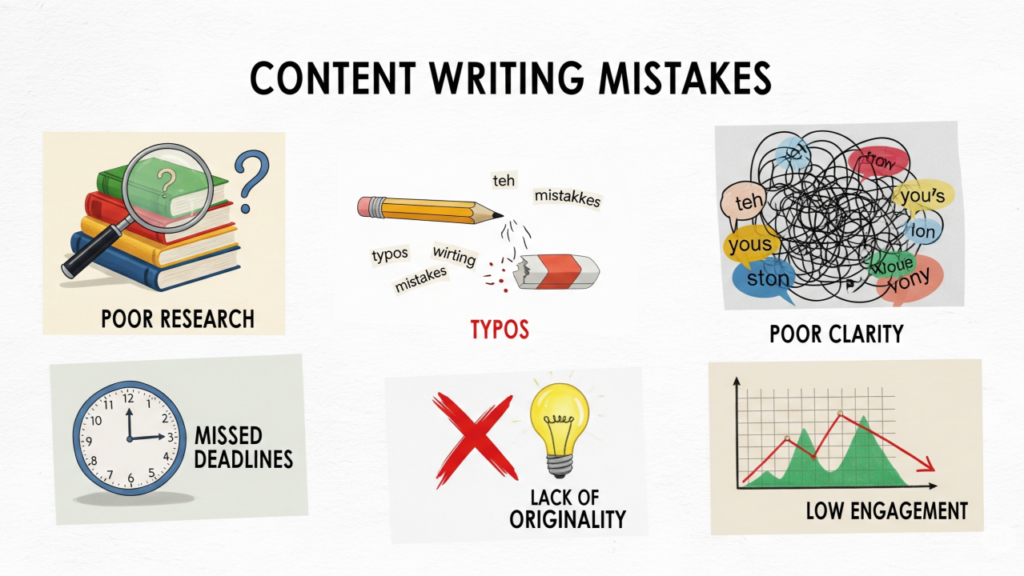
Being too vague. “Passionate professional helping businesses grow” could describe ten million people. Specificity is what makes bios memorable and effective. The more specific you are, the more powerfully you connect with the exact right audience.
Listing skills instead of outcomes. “SEO, PPC, Social Media, Email Marketing, Content Strategy” tells me what tools you use. It does not tell me what problem you solve or what result I will get. Lead with outcomes.
Trying to appeal to everyone. A bio that tries to speak to everyone ends up speaking to no one. The more clearly you define your audience, the more strongly that audience will respond.
Forgetting the call to action. Every bio needs one. If you have a product, a service, a newsletter, a free resource, a booking link — your bio should be directing people there. Do not assume they will figure it out on their own.
Using jargon and buzzwords. “Passionate thought leader disrupting the digital landscape with synergistic solutions” is meaningless. Write like a human being talking to another human being.
Never updating it. Your bio from two years ago probably no longer accurately represents you or your business. Review and update it regularly.
Making it all about you. The best bios are actually about the audience — what they will get, how their life will improve, what problem will be solved. Flip the perspective from “here is who I am” to “here is what I can do for you.”
Quick Reference — Bio Writing Principles
Before we wrap up, here is a condensed reference list of the core principles behind every great social media bio.
Clarity beats cleverness — always lead with what you do in plain language. Specificity creates connection — the more specific you are, the more powerfully you speak to the right person. Outcomes over process — tell people what they will get, not just what you do. One clear call to action — make the next step obvious and easy. Personality matters — your bio should sound like you, not a corporate press release. Proof builds trust — use specific numbers and credentials when you have them. Less is more — cut everything that does not serve a specific purpose. Write for your reader, not for yourself — your bio is about what you can do for them. Keep it updated — your bio should reflect where you are now, not where you were two years ago. Test and iterate — treat your bio like any other piece of marketing and improve it over time.
Final Thoughts — Three Seconds That Change Everything
We started with three seconds. That is how long you have to make an impression with your bio.
But here is the thing about those three seconds — they are not really about those three seconds. They are about everything that happens after. The follow. The click. The DM. The purchase. The long-term relationship with a customer who first landed on your profile as a complete stranger.
Your bio is the beginning of all of that. It is the first word in what could be a very long conversation.
Most people write their bio once, treat it like a checkbox, and never think about it again. The people who win on social media — the creators who build real audiences, the businesses that generate real revenue through their platforms — treat their bio as one of their most important pieces of marketing. Because it is.
Now you know exactly what makes a great social media bio. You have the elements, the formulas, the step-by-step process, the examples, and the principles. You have everything you need.
The only thing left is to write it.
Open your profile right now. Look at your bio with fresh eyes. Ask yourself honestly — if you landed on this profile as a complete stranger, would this bio make you follow?
If the answer is anything other than an immediate, enthusiastic yes — you know what to do.
Go write the bio you deserve.
Written by Digital Drolia | Helping you build a powerful digital presence — one word at a time.