



How a Blog Post Written Today Can Bring You Customers 3 Years From Now

You hit “publish” on your latest blog post, share it on social media, maybe get a few likes and comments, and then… crickets. A week later, it’s buried under newer content. Sound familiar?
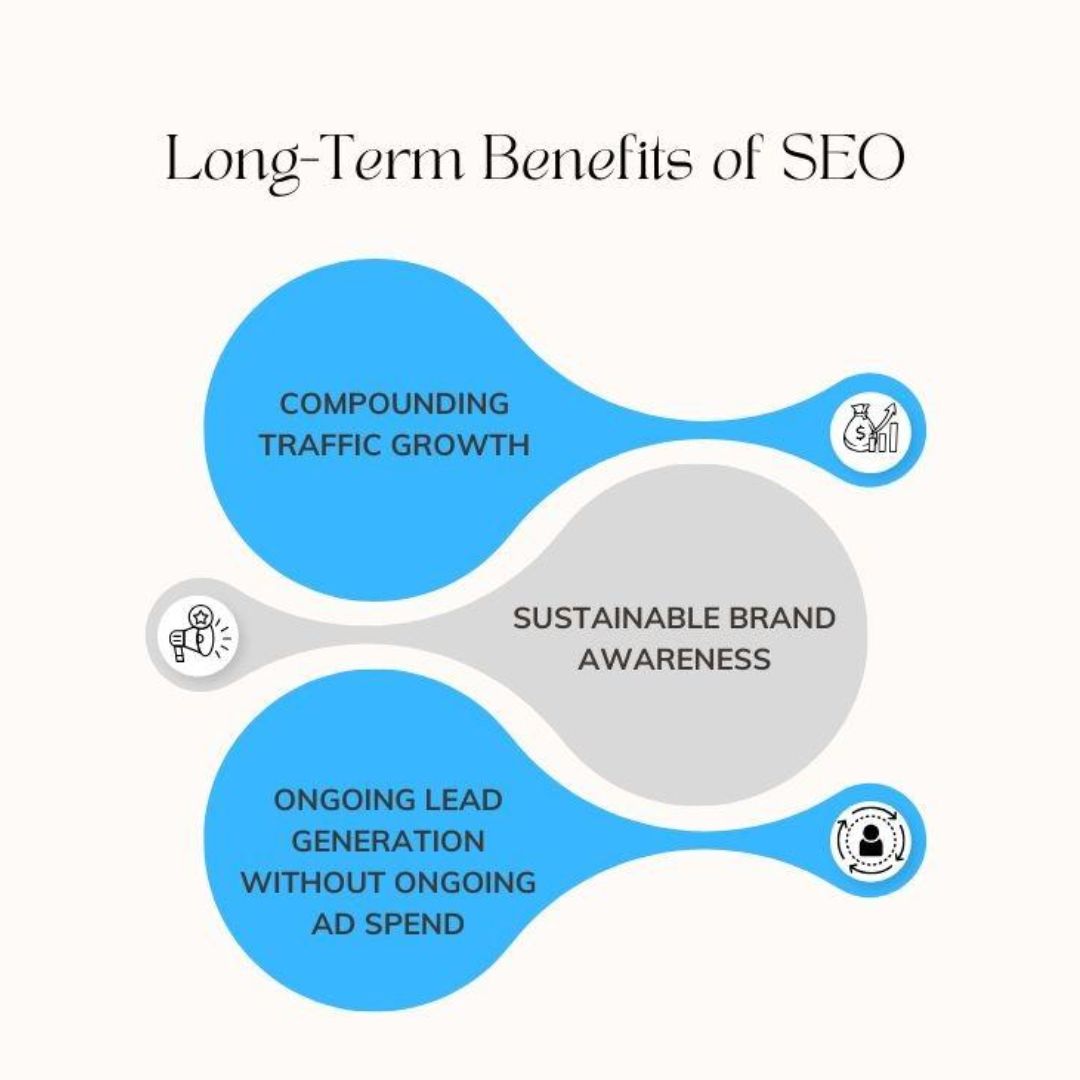
Here’s what most people don’t realize: that blog post you just published? It’s not just content for today. It’s an investment that could be bringing you customers three, five, even ten years from now. While you sleep. While you’re on vacation. Long after you’ve forgotten you even wrote it.
I know it sounds too good to be true, but stick with me. I’m going to show you exactly how a single blog post can become a perpetual customer-generating machine, and more importantly, how to write one that actually does.
The Coffee Shop vs. The Asset: Two Ways to Think About Content

Let me paint you a picture.
Imagine you own a coffee shop. Every morning, you brew fresh coffee, customers come in, buy a cup, and leave. Tomorrow, you have to do it all over again. If you stop brewing coffee, you stop making money. That’s active income.
Now imagine you own the building the coffee shop rents. You found a good tenant once, and now every single month, rent money shows up in your account. Whether you’re working or not. Whether you’re thinking about it or not. That’s passive income.
Most people treat blog posts like the coffee shop. They write, publish, promote, get some traffic, and then move on to the next post. The old post? It just sits there, slowly dying in the archives.
But here’s the thing: blog posts don’t have to work that way.
When done right, a blog post is more like that rental property. You do the work once—the research, the writing, the optimization—and it keeps delivering value (and customers) for years to come.
The Compound Effect: Why Time Is Your Secret Weapon

Let’s talk about something Google doesn’t advertise but every SEO expert knows: brand new content rarely ranks immediately.
Google doesn’t trust new pages right away. Think about it from their perspective. Millions of new pages get published every day. Many are spam, clickbait, or just plain unhelpful. So Google takes a “wait and see” approach.
But here’s where it gets interesting.
As your blog post ages, several powerful things happen:
It builds authority. The longer your content exists and provides value, the more Google trusts it. It’s like a person’s reputation—someone who’s been consistently helpful for years carries more weight than someone new.
It accumulates backlinks. Other websites discover your post over time and link to it. Maybe a journalist writing an article next year finds your post in their research. Maybe a blogger in your industry stumbles upon it six months from now and references it. Each backlink is like a vote of confidence in Google’s eyes.
It gathers social proof. Comments accumulate. Shares add up. User engagement signals to Google that real people find this content valuable.
It captures long-tail keywords you didn’t even target. Here’s something wild: a well-written blog post can rank for hundreds of keyword variations you never specifically optimized for. Google’s AI is smart enough to understand context and relevance beyond exact keyword matches.
I’ve seen this happen with my own content. A blog post I wrote about email marketing strategies barely got any traffic for the first four months. Then suddenly, around month six, it started climbing in rankings. By year two, it was bringing in 2,000 visitors per month. By year three? Over 5,000 monthly visitors, many of whom became customers.
I didn’t touch that post once after publishing it. Time did the heavy lifting.
The Evergreen Advantage: Content That Never Goes Stale
Not all blog posts are created equal. Some have an expiration date. Others can last forever.
A post about “Instagram Algorithm Changes in March 2024” will be outdated by April 2024. But a post about “How to Build Genuine Engagement on Social Media”? That’s valuable today, tomorrow, and five years from now.
This is what we call evergreen content, and it’s the secret to long-term customer generation.
Evergreen topics share a few characteristics:
They address fundamental human needs or business problems. How to save money, how to be more productive, how to build better relationships, how to grow a business. These challenges don’t disappear with the next software update.

They focus on principles over tactics. Tactics change. Principles endure. “How to use this specific WordPress plugin” will be outdated when the plugin updates. But “How to speed up your website” remains relevant because the underlying principle—that website speed matters—doesn’t change.
They answer questions people will always ask. “How do I start a podcast?” “What’s the best way to negotiate a salary?” “How can I overcome writer’s block?” These questions don’t go away.
Think about your own Google searches. How often do you find incredibly helpful blog posts that were written three, four, or five years ago? Pretty often, right? Those are evergreen posts, and they’re still serving readers (and generating customers) years after publication.
The Search Intent Sweet Spot: Give People What They’re Actually Looking For

Here’s where a lot of bloggers go wrong. They write what they want to write instead of what people are actually searching for.
I learned this the hard way.
I once spent two weeks crafting what I thought was a brilliant 5,000-word think piece about the future of content marketing. I was so proud of it. Published it. Promoted it. And… nothing. Maybe 100 visitors total over the next year.
Meanwhile, a quick 1,500-word post I threw together answering a specific question—”How long should a blog post be?”—has brought in over 50,000 visitors and dozens of customers over the past three years.
The difference? Search intent.
The think piece was interesting to me, but nobody was searching for it. The practical “how long” post answered a question thousands of people ask Google every month.
When you align your content with search intent, you tap into existing demand. You’re not trying to create demand for your content; you’re meeting people where they already are, answering questions they’re already asking.
Here’s how to find these golden opportunities:
Use tools like Google’s autocomplete. Start typing a question in Google and watch what suggestions pop up. Those are real searches from real people.
Check “People Also Ask” boxes. When you search for anything, Google shows related questions people are asking. These are content goldmines.
Browse forums and communities. Reddit, Quora, industry-specific forums—these places are full of questions your target audience is genuinely struggling with.
Listen to your customers. What questions do they ask you repeatedly? What confusion do they express? Every customer question is a potential blog post topic.
The beauty of search intent is that it’s remarkably stable over time. People were asking “how to start a blog” ten years ago. They’re asking it today. They’ll be asking it ten years from now. Answer that question well once, and it keeps working for you.
The Trust Factor: From Stranger to Customer Over Time
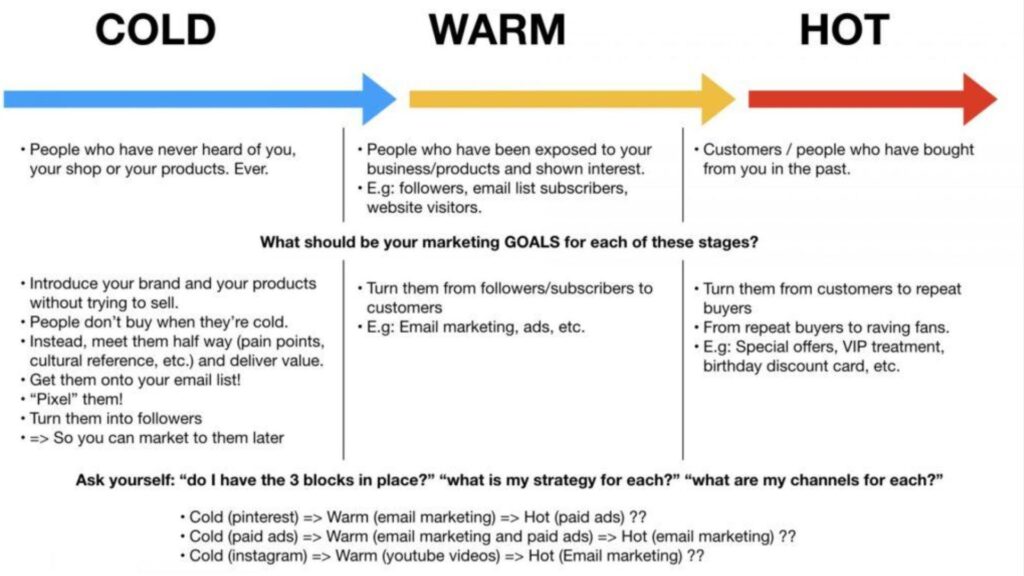
Here’s something powerful about evergreen blog content: it builds trust gradually and naturally.
Think about your own buying behavior. Do you usually buy from the first website you land on? Or do you do research, compare options, read multiple articles, and slowly build confidence in certain brands?

Most buying journeys aren’t linear. They’re messy. People might discover your blog post today, not be ready to buy, and then forget all about you. Then six months later, they search for something related, land on another one of your posts, and think, “Oh, I remember this website.” Then maybe three months after that, they’re finally ready to buy, and guess who they think of first?
Each blog post is a touchpoint in a much longer relationship.
And here’s the thing about evergreen content: it gives people multiple chances to discover you over time. Someone might find your beginner’s guide today, your intermediate strategy post six months from now, and your advanced tactics a year later. By that point, you’ve become their trusted resource. When they need the solution you offer, you’re not just another option—you’re the obvious choice.
I’ve had customers tell me, “I’ve been reading your blog for two years before I finally bought.” Two years! That original blog post they found was working on them all that time, building trust, establishing expertise, nurturing the relationship.
That’s the power of content that lasts.
The Compounding Traffic Phenomenon: When 1 + 1 = 5
Here’s where things get really exciting.
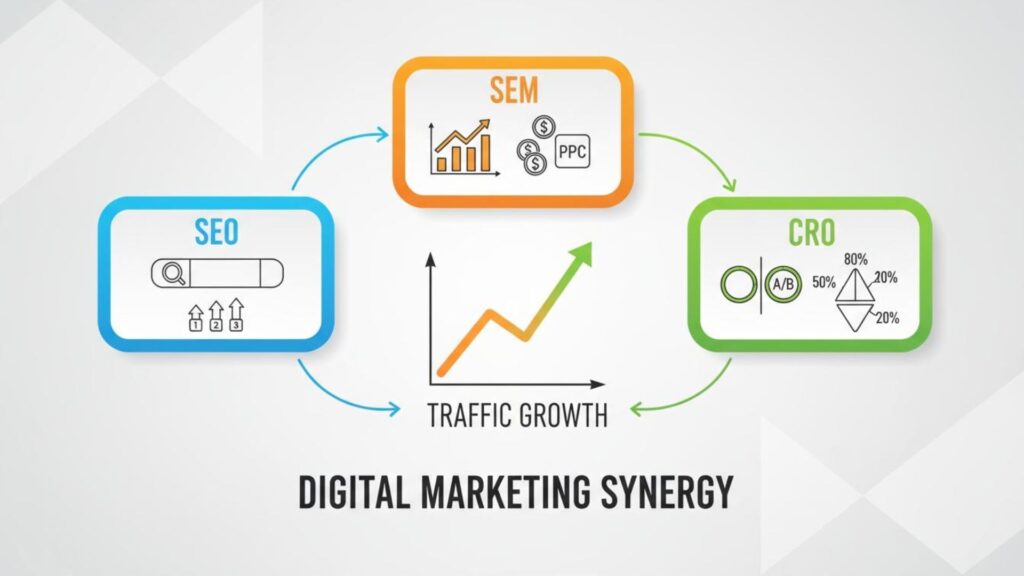
One evergreen blog post is great. Ten evergreen blog posts? That’s not just ten times better—it’s exponentially better.
This happens because of something called the “topic cluster” effect. When you have multiple high-quality posts about related topics, they reinforce each other. They link to each other. They collectively establish you as an authority in that subject area. And Google notices.
Let’s say you write a comprehensive guide about email marketing. Great. That might rank for a handful of keywords and bring in steady traffic.
Now let’s say you also publish posts about:
- Email subject line formulas
- Email automation workflows
- How to grow an email list
- Email copywriting techniques
- Email deliverability best practices
Suddenly, you’re not just ranking for one set of keywords. You’re ranking for dozens, maybe hundreds. And each post points to the others, creating a web of valuable, interconnected content.
Visitors land on one post, find it helpful, and naturally explore your other content. They spend more time on your site. They see you as a comprehensive resource rather than a one-hit wonder. And Google’s algorithm picks up on all these positive engagement signals.
This is how you go from getting a few hundred visitors per month to a few thousand, then tens of thousands. Not from any single post going viral, but from steady, compound growth as your library of evergreen content expands.
I currently have about 80 evergreen blog posts on my website. Individually, they each bring in anywhere from 100 to 10,000 visitors per month. Combined? They generate over 75,000 monthly visitors. That’s 75,000 opportunities every single month for potential customers to discover my business, learn from my content, and build trust in my expertise.
And the beautiful thing? I wrote most of those posts years ago. They’re still working for me today.
The Technical Foundation: Making Your Content Discoverable

Okay, I need to talk about something less exciting but absolutely critical: technical SEO.
You can write the most brilliant, helpful, evergreen content in the world, but if search engines can’t properly crawl, index, and understand it, you’re leaving massive amounts of traffic on the table.
Don’t worry—I’m not going to get super technical on you. But there are a few non-negotiables:
Page speed matters. If your blog post takes seven seconds to load, people will hit the back button before they even see your brilliant writing. Google knows this and ranks faster pages higher. Use tools like Google PageSpeed Insights to check your speed and get specific recommendations for improvement.
Mobile-friendliness is mandatory. More than half of all web traffic comes from mobile devices. If your blog is a pain to read on a phone, you’re alienating the majority of your potential audience. Google prioritizes mobile-friendly sites in search results.
Clean URL structure helps. A URL like “yoursite.com/how-blog-posts-bring-customers” is infinitely better than “yoursite.com/p=12345?ref=category.” Clear, descriptive URLs help both users and search engines understand what your content is about.
Proper heading structure guides readers and search engines. Use H1 for your main title, H2 for major sections, H3 for subsections. This creates a clear hierarchy that makes your content easier to scan and helps search engines understand your content structure.

Internal linking distributes authority. Link to your other relevant blog posts within your content. This helps search engines discover and index all your content, keeps readers on your site longer, and distributes “link juice” across your site.
Meta descriptions matter. That short snippet of text that appears under your link in search results? That’s your elevator pitch. Make it compelling. Tell people exactly what they’ll learn or gain by clicking. Include your target keyword naturally.
These technical elements create the foundation that allows your great content to actually be found. Without them, you’re building a house on sand.
The Human Element: Writing Content People Actually Want to Read

Here’s an uncomfortable truth: most blog posts are boring.
They’re stuffed with keywords, written in corporate-speak, and feel like they were created by a robot trying to pass the Turing test.
But here’s the thing—Google’s algorithm has gotten incredibly sophisticated. It can detect when content is genuinely helpful and engaging versus when it’s just keyword-stuffed fluff.
More importantly, even if you rank #1 in Google, if your content doesn’t engage readers, they’ll bounce right off your page. And those negative engagement signals hurt your rankings over time.
So how do you write content that both ranks well and actually resonates with human beings?
Tell stories. Humans are hardwired for narrative. We remember stories far better than we remember lists of facts. When you can illustrate a point with a real example or anecdote, do it.
Write like you talk. Imagine you’re explaining this topic to a friend over coffee. You wouldn’t use jargon and complex sentence structures. You’d be clear, conversational, and natural. Bring that energy to your writing.
Break up your text. Walls of text are intimidating. Use short paragraphs. Employ bullet points and numbered lists. Add subheadings. Make your content scannable.
Show personality. Don’t be afraid to inject your unique voice and perspective. The internet doesn’t need another generic “10 tips for productivity” post. It needs YOUR take on productivity, informed by your experiences and personality.
Actually solve the problem. Don’t hold back your best insights to sell later. Give genuine, actionable value in your blog posts. When you truly help people, they remember you and trust you.
The posts that continue bringing in customers years later aren’t the ones optimized within an inch of their life for search engines. They’re the ones that genuinely helped someone solve a problem, answer a question, or understand a complex topic.
The Update Strategy: Keeping Evergreen Content Fresh
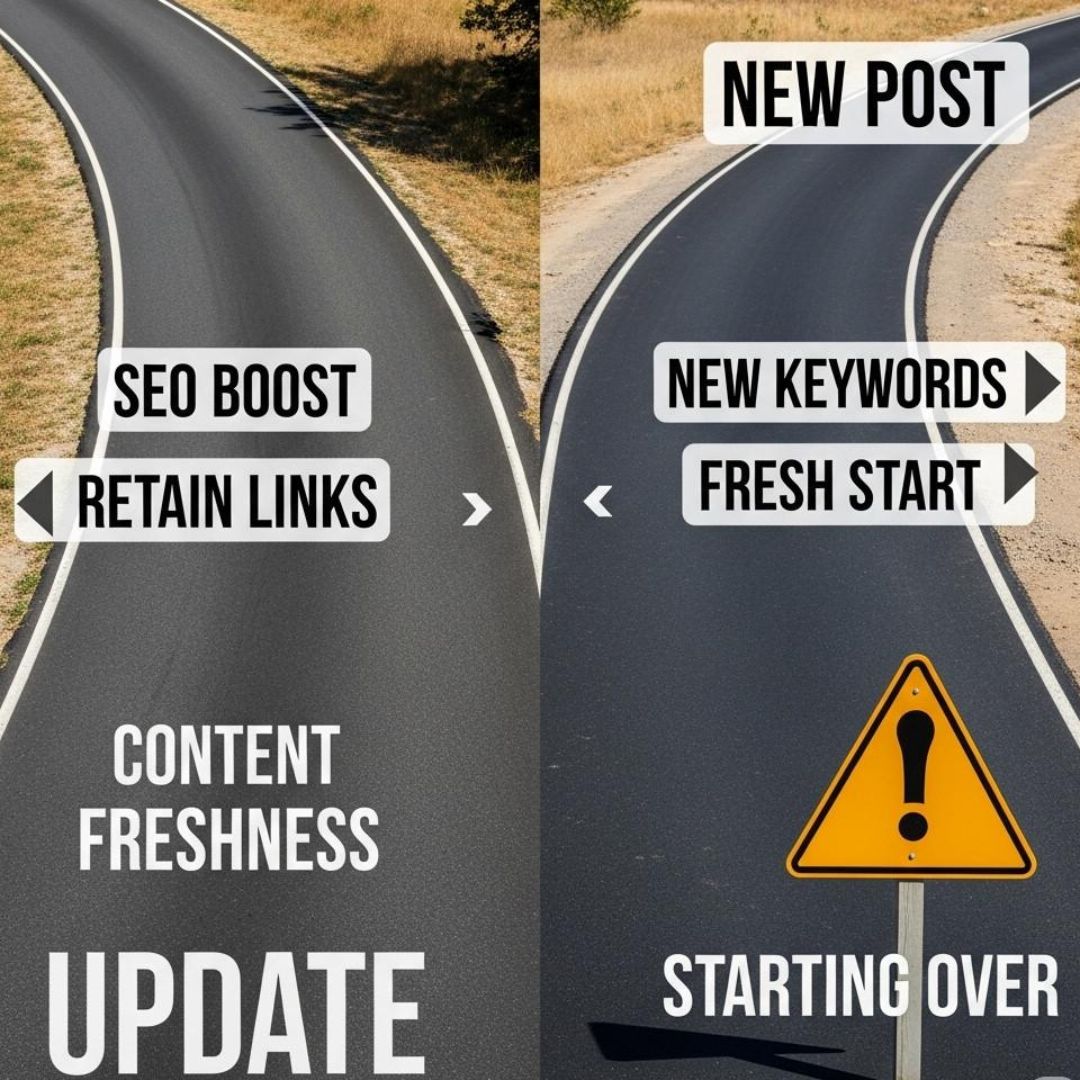
Evergreen doesn’t mean “set it and forget it forever.” Even the best content benefits from occasional updates.
Here’s my approach: every 12-18 months, I revisit my top-performing posts. I check for:
Outdated statistics or examples. If I referenced data from 2020, I’ll update it with 2024 numbers.
Broken links. Nothing kills trust like clicking a link that leads to a 404 error.
New developments in the topic. Has something significant changed in the industry? Add a new section addressing it.
Opportunities to expand. Are people asking new questions related to this topic in the comments? Can I add a section addressing those?
Better media. Could I add a helpful infographic, video, or chart that makes the content even more valuable?
When you update a post significantly, you can update the publication date (though keep the original date in the metadata for transparency). This signals to Google that the content is current and can give you a nice ranking boost.
But here’s what’s crucial: only update when you can genuinely improve the content. Don’t change the date just to game the system. Google is smarter than that, and readers can tell when content hasn’t really been updated in any meaningful way.
The Measurement Game: Tracking Your Long-Term Success

How do you know if your evergreen strategy is working?
Here are the metrics that actually matter:
Organic traffic trends. Is your overall organic traffic growing month over month, year over year? Individual posts will fluctuate, but the overall trend should be upward.
Rankings for target keywords. Are your key posts moving up in search rankings over time? Even small improvements—from position 12 to position 8, for example—can significantly impact traffic.
Time on page and scroll depth. Are people actually reading your content, or bouncing immediately? High engagement signals content quality to Google.
Conversion rates. How many blog visitors are turning into email subscribers, leads, or customers? This is the ultimate measure of success.
Backlink growth. Are other websites linking to your content over time? This is one of the strongest signals of content quality.

Customer attribution. When customers buy from you, ask how they found you. You’d be surprised how many will say, “I’ve been reading your blog for months.”
I track these metrics quarterly. Not daily (that’s madness), not yearly (that’s too infrequent), but quarterly gives me a good sense of momentum without making me obsessive.
And here’s what I’ve learned: evergreen content growth is slow and steady. You won’t see dramatic spikes (usually). But when you look back over a year or two, the compound growth is remarkable.
The Reality Check: This Isn’t a Get-Rich-Quick Scheme

I need to be honest with you about something.
Everything I’ve described works. I’ve seen it work for myself and countless others. But it’s not fast.
You won’t publish a blog post today and wake up tomorrow to thousands of visitors and customers flooding in. That’s not how this works.
The first few months can be frustrating. You’ll write great content and watch it get maybe a hundred visitors. You’ll wonder if you’re wasting your time. You’ll be tempted to give up.
Don’t.
This is the point where most people quit. They don’t see immediate results, so they assume the strategy doesn’t work. But they’re quitting right before the compound effect kicks in.
Think of it like planting a tree. You don’t plant an oak tree seedling and expect shade tomorrow. But you plant it anyway, water it, and five years later, you have a magnificent tree providing shade, beauty, and value.
That’s what you’re doing with evergreen blog content. You’re planting seeds that will grow into valuable assets over time.
The key is consistency. Not perfection, not quantity for quantity’s sake, but regular publication of genuinely valuable content.
Can you commit to one high-quality evergreen post per month? That’s 12 posts in a year. After three years, that’s 36 evergreen posts working for you. After five years? 60 posts. That’s a content library that can generate serious traffic and customers.
Your First Step: Write One Post That Lasts

Feeling overwhelmed? Start simple.
Identify one question your ideal customers ask repeatedly. Just one. Research it thoroughly. Write the most comprehensive, helpful answer you can. Optimize it for search. Publish it.
Then do it again next month with a different question.

You don’t need to revolutionize your entire content strategy overnight. You don’t need to publish daily. You just need to start building your library of evergreen assets, one post at a time.
That blog post you write today might not bring you a customer tomorrow. But three years from now? It could be your most valuable marketing asset, quietly bringing in a steady stream of qualified leads while you sleep.
The best time to start building that asset was three years ago. The second best time is today.
So what are you waiting for? You have customers three years from now who are searching for the exact answer you can provide. Go write it for them.
They’ll thank you. And so will your future self.